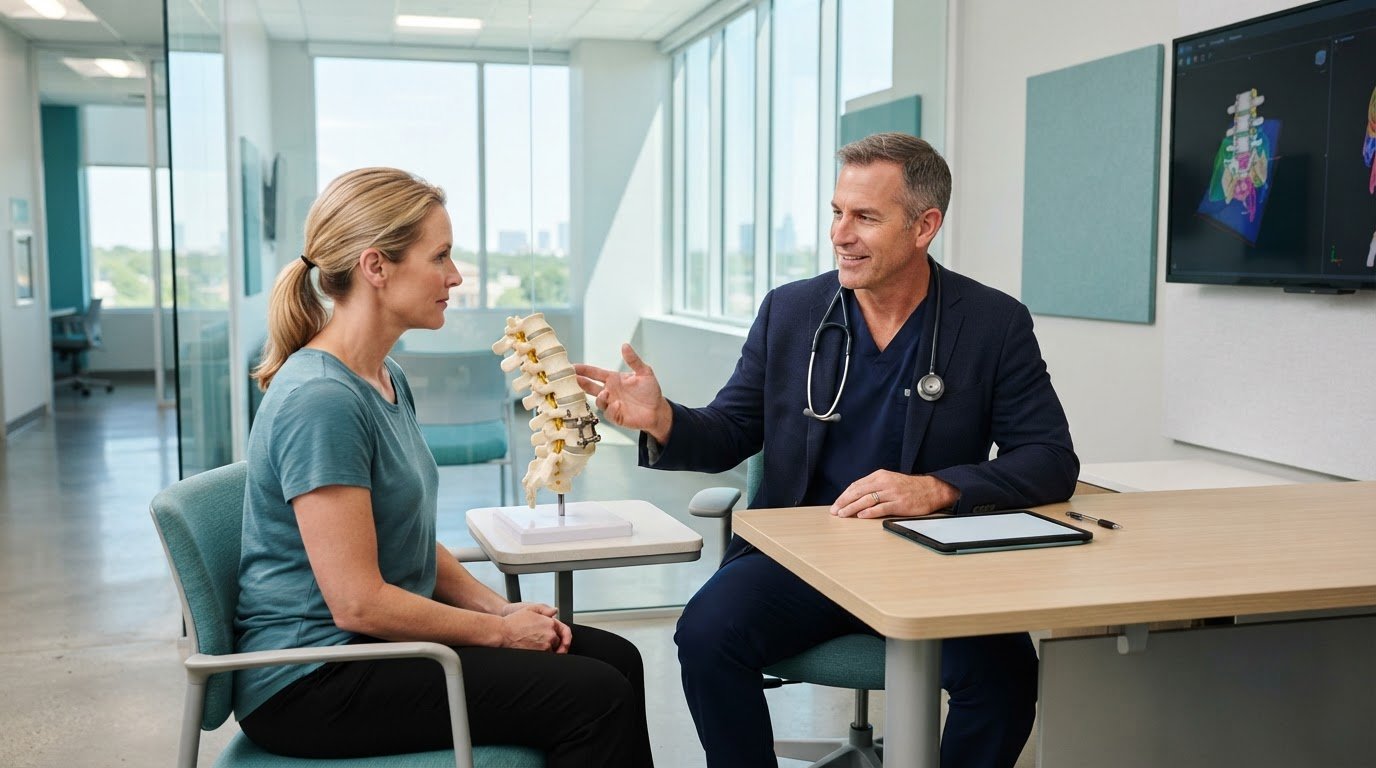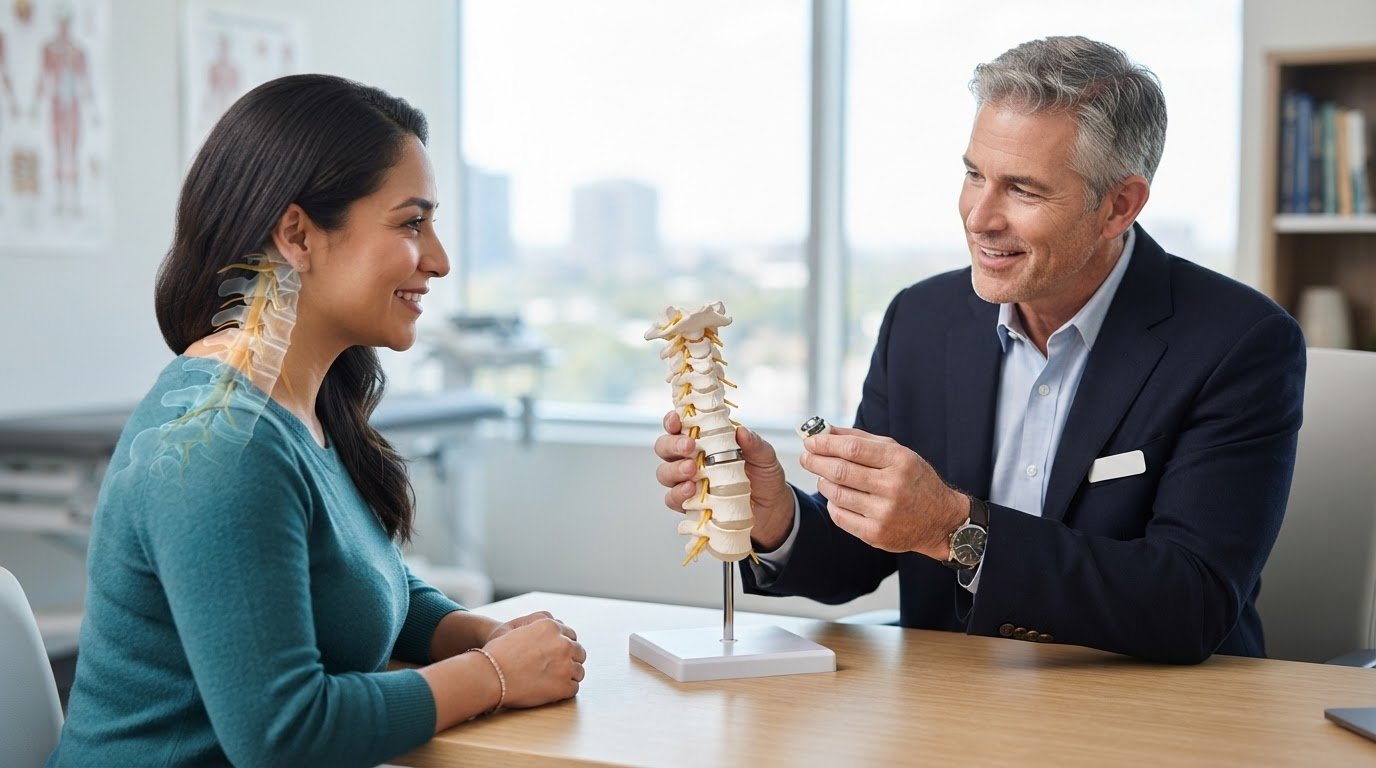
At Minimally Invasive Neurosurgery of Texas (MINT), board-certified neurosurgeon Dr. Scott Kutz provides motion-preserving spine care across clinic locations in Lewisville and Plano, TX. He specializes in cervical disc replacement Plano TX patients trust to replace damaged spinal cushions with advanced prosthetic implants, relieving nerve compression while protecting full neck mobility. A damaged cervical disc doesn’t have to mean a lifetime of spinal stiffness or irreversible surgical fusion.
Living with radiating arm pain, hand numbness, and chronic neck stiffness exhausts your daily energy, and the prospect of losing your head rotation after traditional spinal fusion creates justifiable worry. You shouldn’t have to trade your natural range of motion just to eliminate persistent nerve pain. In this guide, you’ll discover how artificial disc replacement relieves painful cervical radiculopathy (nerve root compression causing shooting pain down the arm), preserves normal flexion and extension, and accelerates your return to work. We evaluate the latest FDA-approved artificial implants, compare motion preservation directly against spinal fusion, and walk you through every step of a quick outpatient recovery.
Key Takeaways
- Learn how cervical disc replacement Plano TX preserves your natural neck flexibility and shields adjacent spinal joints from excess stress.
- Compare artificial discs directly against anterior cervical discectomy and fusion (ACDF, a procedure that joins vertebrae together) to understand why motion preservation lowers long-term reoperation rates.
- Identify the primary symptoms of cervical radiculopathy (nerve root compression that triggers radiating arm pain and hand numbness) that qualify you for disc surgery.
- Follow the rapid outpatient recovery timeline to see how small natural neck crease incisions accelerate your return to normal physical activity.
- Discover how board-certified neurosurgeon Dr. Scott Kutz uses over twenty years of experience to deliver motion-preserving spine care at MINT clinics in Lewisville and Plano, TX.
What Is Cervical Disc Replacement in Plano TX?
Minimally Invasive Neurosurgery of Texas (MINT) provides advanced motion-preserving spine care across clinic locations in Lewisville and Plano, TX. Board-certified neurosurgeon Dr. Scott Kutz uses cervical disc replacement Plano TX procedures to treat damaged spinal cushions without fusing adjacent vertebrae together. During this procedure, the surgeon extracts a degenerated or herniated intervertebral disc (the fibrocartilaginous cushion between spinal bones) through a tiny anterior incision. Dr. Kutz then implants an artificial prosthetic device into the empty disc space. This modern intervention restores natural disc height and eliminates mechanical compression on exiting spinal nerves, helping patients return to active daily routines quickly.
Clinical science recognizes Total disc replacement as a revolutionary shift away from rigid fusion techniques. By preserving natural biomechanics, the procedure relieves debilitating symptoms while protecting normal spinal movement.
The Mechanics of Artificial Cervical Disc Implants
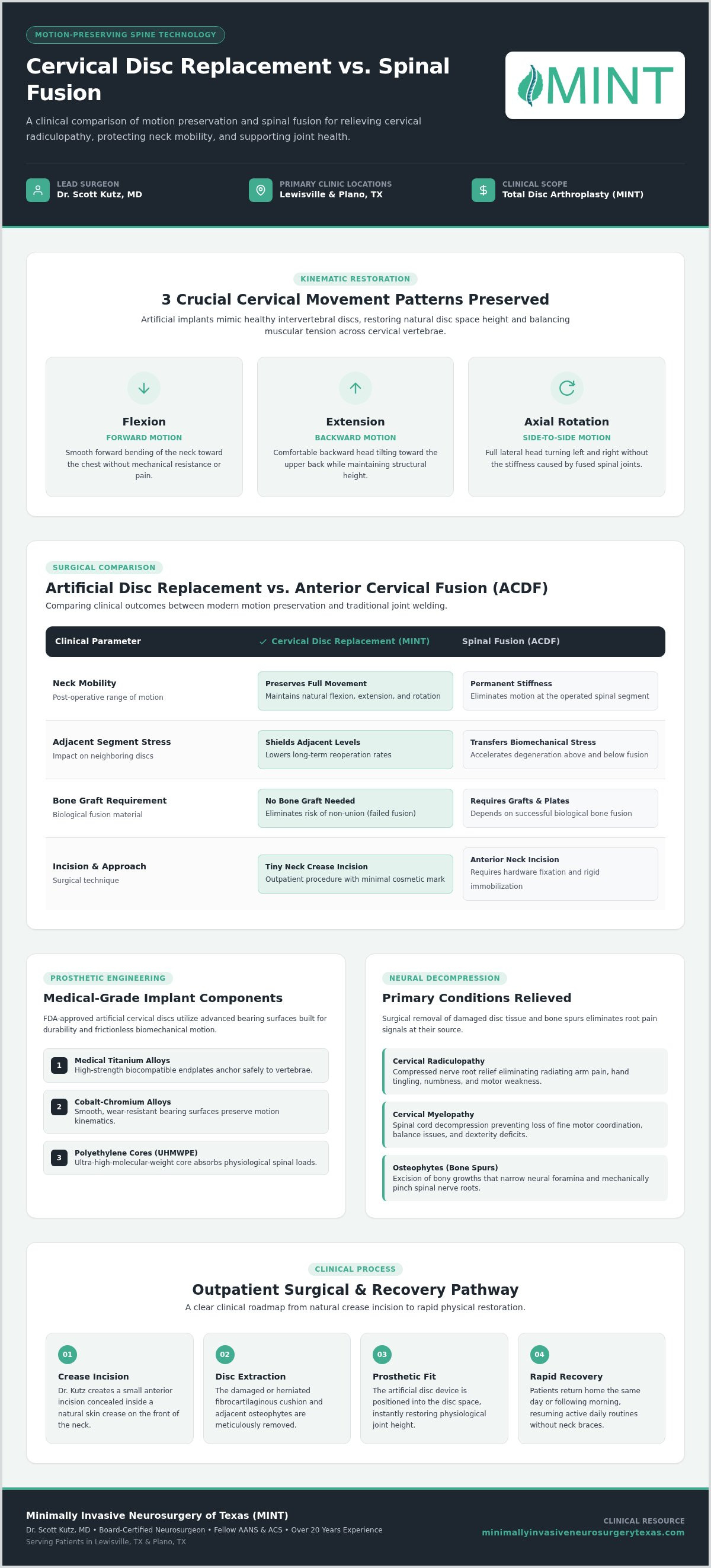
Artificial cervical discs mimic the complex kinematics of a healthy human disc. Manufacturers craft these devices using medical-grade materials, such as medical titanium alloys and medical-grade cobalt-chromium endplates paired with ultra-high-molecular-weight polyethylene cores. These advanced bearing surfaces allow the spine to maintain three crucial movement patterns:
- Flexion: Bending your neck forward smoothly toward your chest.
- Extension: Tilting your head backward comfortably toward your upper back.
- Axial Rotation: Turning your head from side to side without mechanical resistance.
By restoring physiological disc space height, the implant prevents spinal collapse and keeps natural muscular tension balanced across your cervical vertebrae.
Relieving Nerve Compression and Cervical Radiculopathy
Damaged spinal discs routinely trigger debilitating neural conditions. Patients commonly suffer from cervical radiculopathy, a clinical condition where compressed nerve roots cause shooting arm pain, numbness, and motor weakness. Left untreated, severe central herniations can progress to cervical myelopathy, a dangerous compression of the spinal cord that impairs balance, fine motor skills, and hand coordination.
Dr. Kutz meticulously removes osteophytes (abnormal bone spurs that narrow the spinal canal and neural foramina) alongside the damaged disc tissue. Decompressing these neural pathways eliminates pain signals at their source. To explore motion-preserving treatment options for your spine, visit our artificial disc replacement service page to learn how this advanced approach protects long-term joint health.
Cervical Disc Replacement vs Spinal Fusion: Which Option Protects Neck Mobility?
When conservative therapies fail to resolve chronic neck issues, surgical candidates face an important decision between two distinct surgical paths. Traditional Anterior Cervical Discectomy and Fusion (ACDF, an operation that welds two or more neck bones together using bone grafts and hardware) eliminates painful movement across damaged segments. However, this stabilization comes at the expense of permanent neck stiffness. In contrast, modern arthroplasty (surgical joint reconstruction) using advanced artificial devices preserves physiological motion. Choosing cervical disc replacement Plano TX specialists offer allows patients to maintain full head movement while relieving persistent nerve distress.
| Clinical Feature | Cervical Disc Replacement (MINT) | Spinal Fusion (ACDF) |
|---|---|---|
| Neck Mobility | Preserves natural flexion, extension, and rotation | Permanently eliminates motion at the surgical site |
| Adjacent Segment Stress | Distributes kinetic forces evenly across the spine | Transfers heavy mechanical stress to neighboring discs |
| Post-Operative Recovery | Rapid outpatient discharge; collar rarely required | Extended bone healing timeline; rigid bracing often needed |
Preserving Range of Motion and Natural Spinal Biomechanics
Spinal fusion turns dynamic vertebrae into an immobile bone block. That rigidity alters everyday activities like checking your blind spots while driving on North Texas highways or looking down at digital devices. Clinical reviews from Cervical Disk Replacement Surgery show that motion-preserving prosthetics let active residents across Plano, Frisco, and Dallas maintain natural biomechanics so they can return to golf, swimming, and gym routines without structural hindrance.
Preventing Adjacent Segment Disease After Spine Surgery
Adjacent segment disease (accelerated degeneration of discs directly above or below a treated level) represents the greatest long-term threat of traditional fusion. A fused spinal segment cannot absorb normal movement forces. Instead, it transfers violent mechanical torque straight onto nearby flexible joints. Artificial disc replacement absorbs these daily shocks cleanly. A 10-year follow-up study confirmed that only 9% of cervical disc replacement patients required reoperation, compared to 32% of patients who underwent spinal fusion.
Protecting your spine starts with choosing motion preservation over irreversible fusion. To evaluate your surgical candidacy, review our comprehensive artificial disc replacement program to protect your long-term neck function.
Who Is an Ideal Candidate for Cervical Artificial Disc Surgery?
Are you an ideal candidate for cervical disc replacement Plano TX surgeons perform? You qualify for motion-preserving artificial disc surgery if you suffer from persistent arm pain, hand tingling, or sensory numbness that stems from cervical nerve impingement. Candidates must first complete at least six weeks of documented conservative therapy without adequate symptom relief. These failed conservative measures typically include physical therapy, targeted anti-inflammatory medications, and cervical epidural steroid injections (cortisone injections into the spinal space to reduce nerve inflammation).
Conversely, certain structural conditions disqualify patients from disc arthroplasty:
- Severe Osteoporosis: Weak bone density prevents safe mechanical anchoring of the artificial disc endplates.
- Advanced Facet Arthrosis: Degeneration of the stabilizing rear joints of the vertebrae causes persistent pain that disc replacement cannot correct.
- Spinal Instability: Abnormal vertebral slipping requires rigid stabilization rather than motion preservation.
- Active Spinal Infections: Bacterial presence prohibits foreign body implantation until infection completely clears.
Diagnosing Herniated Discs and Degenerative Disc Disease
Pinpointing the precise anatomic pain source requires specialized diagnostic imaging. Magnetic resonance imaging (MRI, a scan utilizing radio waves and magnetic fields to generate soft-tissue pictures) reveals nerve root impingement and disc herniations. Computed tomography (CT scans, advanced cross-sectional X-ray imaging) evaluates bone architecture and map osteophyte formations. When clinical presentations show complex sensory loss, Dr. Scott Kutz orders electromyography (EMG, diagnostic testing measuring muscle electrical response to nerve stimulation) to isolate the damaged cervical root level.
Single-Level vs Two-Level Cervical Disc Disease
Most qualifying candidates present with single-level cervical pathology between the C3 and C7 spinal vertebrae. However, modern neurosurgical engineering also accommodates patients with multi-level degeneration. The FDA approves advanced prosthetic devices for two contiguous diseased levels, expanding treatment eligibility for active North Texas residents across Lewisville, Plano, and McKinney.
Every spine displays unique anatomical nuances. Dr. Scott Kutz conducts exhaustive radiological evaluations at Minimally Invasive Neurosurgery of Texas to confirm whether motion preservation suits your clinical profile. Learn more about our specialized methodologies by exploring our minimally invasive spine techniques to understand how modern precision preserves surrounding musculature.
What to Expect During the Procedure and Recovery Timeline
Undergoing spine surgery feels intimidating until you understand each structured milestone. Dr. Scott Kutz uses refined outpatient workflows so patients understand exactly what occurs before, during, and after surgery. The clinical process for cervical disc replacement Plano TX patients involves four systematic phases:
- Pre-Operative Preparation: The surgical team administers general anesthesia and positions you comfortably on your back to provide direct anterior access.
- Microscopic Decompression: The surgeon creates a tiny incision in a natural neck crease, moves soft structures aside, and extracts the damaged disc and bone spurs.
- Prosthetic Implantation: Under high-resolution fluoroscopy (continuous, real-time X-ray imaging guidance), Dr. Kutz secures the artificial disc between the vertebrae to restore anatomical height.
- Rapid Post-Operative Recovery: The clinical team transfers you to a specialized recovery area, checks neurological responses, and initiates light walking protocols within hours.
Most patients return home the very same day, although some observe a brief overnight stay for optimal comfort. You can resume desk work and non-strenuous professional tasks within two weeks.
The Minimally Invasive Surgical Approach
Traditional open operations require muscle cutting that creates lingering soreness. In contrast, modern disc arthroplasty navigates natural tissue planes between the trachea and carotid sheath. This muscle-sparing method causes minimal operative blood loss and avoids postoperative trauma. Total operative time generally spans only one to two hours per treated spinal level, helping you wake up with minimal grogginess.
Post-Operative Healing and Activity Milestones
Your body begins healing immediately. Clinical teams encourage gentle walking down the hallway within two to three hours post-surgery to promote blood flow and prevent complications. You may resume driving within one to two weeks, provided you no longer take prescription pain relievers and can turn your head safely. At six weeks, patients graduate to low-impact cardiovascular exercise, swimming, and recreational sports. As neurosurgical data consistently shows, most cervical disc replacement patients resume normal daily routines within six weeks.
If you live in Plano, Lewisville, or surrounding North Texas communities and want an efficient path back to pain-free living, schedule your consultation with MINT today.
Why Choose Dr. Scott Kutz at Minimally Invasive Neurosurgery of Texas?
Your cervical spine protects delicate neural pathways that control everyday arm, hand, and diaphragm movement. When you choose an artificial disc surgeon, you need refined surgical precision. Minimally Invasive Neurosurgery of Texas (MINT) pairs modern medical innovation with compassionate, individualized patient advocacy. Under the direction of Dr. Scott Kutz, MINT delivers specialized cervical disc replacement Plano TX residents rely on for lasting symptom relief and mobility preservation.
Dr. Scott Kutz brings over twenty years of dedicated neurosurgical experience treating complex degenerative disorders of the cervical and lumbar spine. Rather than herding patients through an impersonal hospital bureaucracy, MINT functions as a boutique surgical practice. Our clinical philosophy focuses on protecting your natural biomechanics while ensuring an efficient, safe return to normal physical activity.
Board-Certified Neurosurgical Precision
Dr. Scott Kutz holds board certification through the American Board of Neurological Surgery and completed specialized fellowship training in functional neurosurgery at Rush University Medical Center. He maintains active memberships in premier medical organizations, including the American Association of Neurological Surgeons (AANS), the Congress of Neurological Surgeons (CNS), and the North American Spine Society (NASS). Operating within fractions of a millimeter around the spinal cord requires rigorous neurosurgical training. Dr. Kutz utilizes sophisticated preoperative digital planning and intraoperative visualization to position implants with absolute accuracy. To explore his clinical background and surgical credentials in greater detail, visit our about us page.
Convenient Access Across Plano, Lewisville, and North Texas
Convenient geographic access simplifies your surgical pathway and post-operative evaluations. MINT operates its primary clinic headquarters in Lewisville, TX, and maintains a fully equipped satellite facility in Plano, TX. This regional hub allows seamless appointment coordination for patients traveling from Frisco, Allen, McKinney, Southlake, and the wider Dallas-Fort Worth metropolitan area.
We believe in honest, open medical communication. Dr. Kutz never pressures patients into unneeded surgical procedures. If conservative options still offer a path to recovery, our team guides you toward those therapies first. When conservative interventions fail, motion preservation offers a safe alternative to fusion. Call our clinic directly at (972) 244-3491 to schedule your comprehensive cervical spine consultation and take the first step toward lasting pain relief.
Restore Your Neck Mobility and Reclaim Your Active Life
Persistent neck pain and radiating arm weakness shouldn’t dictate your daily schedule. Modern motion-preserving spine surgery removes chronic nerve compression while safeguarding your spine’s natural flexibility. Board-certified neurosurgeon Dr. Scott C. Kutz brings over 20 years of specialized spine care experience to every procedure. As a Fellow of the American Association of Neurological Surgeons and an active member of the North American Spine Society, he delivers high surgical precision without resorting to unnecessary fusion.
Through advanced facilities in Lewisville and Plano, Minimally Invasive Neurosurgery of Texas provides compassionate, motion-preserving care for residents across Collin and Denton counties. Choosing cervical disc replacement Plano TX specialists provide ensures a faster recovery so you can resume your active lifestyle with confidence. Don’t let chronic spinal pain hold you back. Schedule your cervical disc replacement consultation with Dr. Scott Kutz at MINT today and take the first step toward lasting comfort.
Frequently Asked Questions
How long does a cervical disc replacement implant last?
Modern artificial cervical discs withstand decades of physiological wear. Engineers design medical-grade titanium and polyethylene devices to resist mechanical fatigue over millions of motion cycles. Clinical follow-up studies extending past 10 years show excellent structural durability without mechanical breakdown or device failure. While lifetime longevity depends on your physical activity and overall bone health, these resilient prosthetics provide dependable, lifelong motion preservation for most adult patients.
Is cervical disc replacement better than spinal fusion for neck pain?
Cervical disc replacement provides superior motion preservation compared to fusion for qualified candidates. Unlike anterior cervical discectomy and fusion (ACDF, an operation that welds vertebrae together), artificial discs maintain your neck’s natural bending and turning abilities. By absorbing kinetic forces, cervical disc replacement Plano TX patients receive shields adjacent discs from excessive wear, substantially lowering the risk of adjacent segment disease and subsequent surgeries over time.
How much time will I need to take off work after cervical disc surgery?
Most patients return to light desk jobs within one to two weeks following surgery. Because minimally invasive techniques spare crucial neck muscles, patients recover faster than traditional fusion candidates. If your profession demands heavy lifting, commercial driving, or strenuous physical labor, Dr. Kutz advises taking four to six weeks away from the job. This timeframe allows the prosthetic implant to anchor securely into the surrounding vertebral bone.
Will I need to wear a rigid neck collar after disc replacement surgery?
Patients rarely need a rigid neck collar after artificial disc surgery. Because the procedure preserves natural motion and stabilizes immediately upon insertion, early neck movement aids recovery. Dr. Kutz often provides a soft cervical collar (a padded support band) strictly for temporary comfort during car rides or sleep during the initial forty-eight hours. You will begin gentle, active range-of-motion head turns almost immediately after waking up.
Can people with osteoporosis undergo cervical disc replacement?
Severe osteoporosis generally disqualifies patients from receiving an artificial disc. Disc implants require dense, healthy bone to achieve secure biological osseointegration (the structural bonding between living bone and titanium endplates). Weakened bone increases the risk of implant subsidence, a complication where the prosthetic device sinks into the adjacent vertebra. Dr. Kutz evaluates bone mineral density through preoperative scans and recommends alternative stabilizing techniques if osteoporosis compromises bone strength.
What makes a neurosurgeon the preferred specialist for cervical spine surgery?
Board-certified neurosurgeons undergo intensive, multi-year surgical training dedicated entirely to the central nervous system, brain, and spinal column. Operating within fractions of a millimeter around delicate nerve roots and the spinal cord requires exceptional microsurgical skill. When seeking cervical disc replacement Plano TX solutions, consulting a fellowship-trained specialist like Dr. Scott Kutz guarantees meticulous neural decompression and reduces the risk of long-term neurologic deficits.
How do I schedule a cervical spine consultation at MINT in Plano or Lewisville?
You can schedule a comprehensive evaluation by calling the MINT team directly at (972) 244-3491. Our friendly staff arranges appointments at both our primary Lewisville headquarters and our Plano satellite clinic. Alternatively, submit an appointment request through our official website contact portal. Please bring your existing MRI discs, CT scans, and past medical records so Dr. Kutz can review your spinal anatomy thoroughly during your visit.