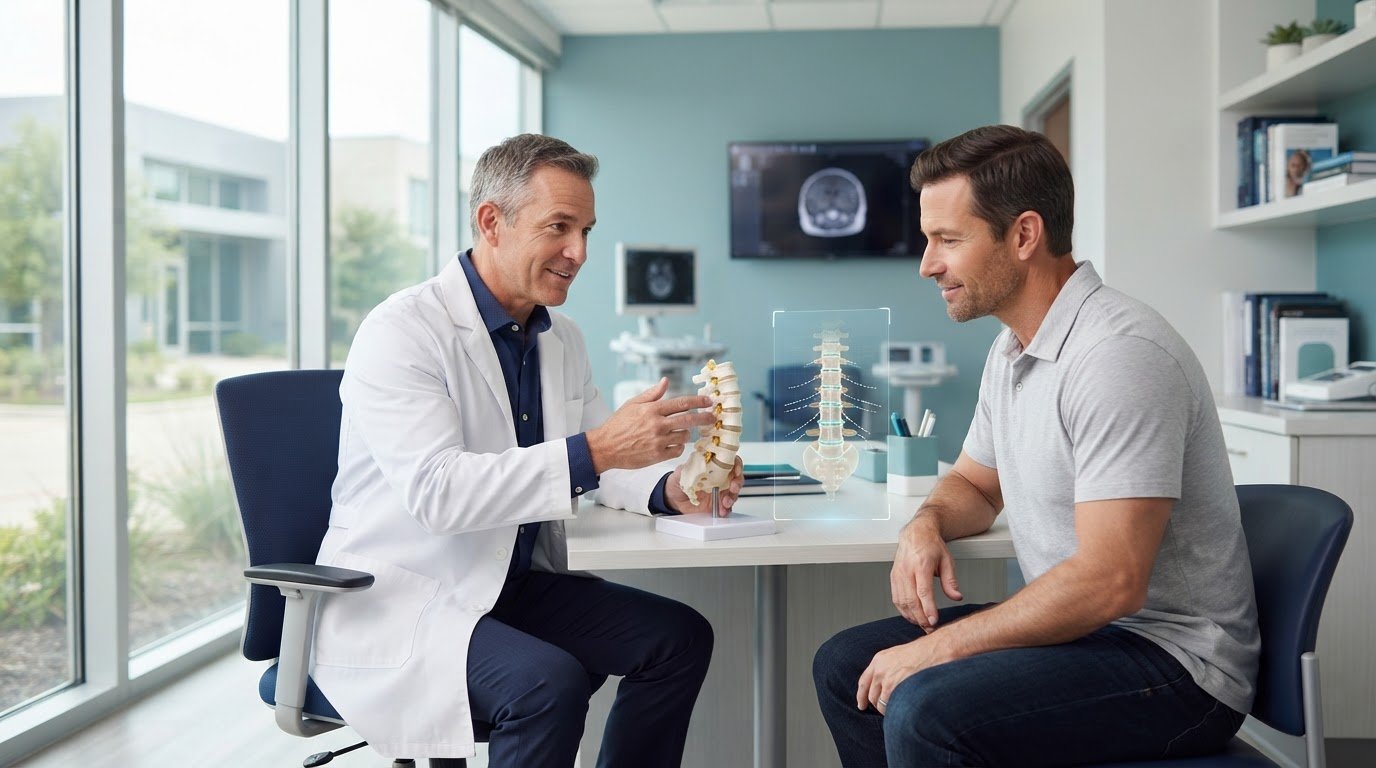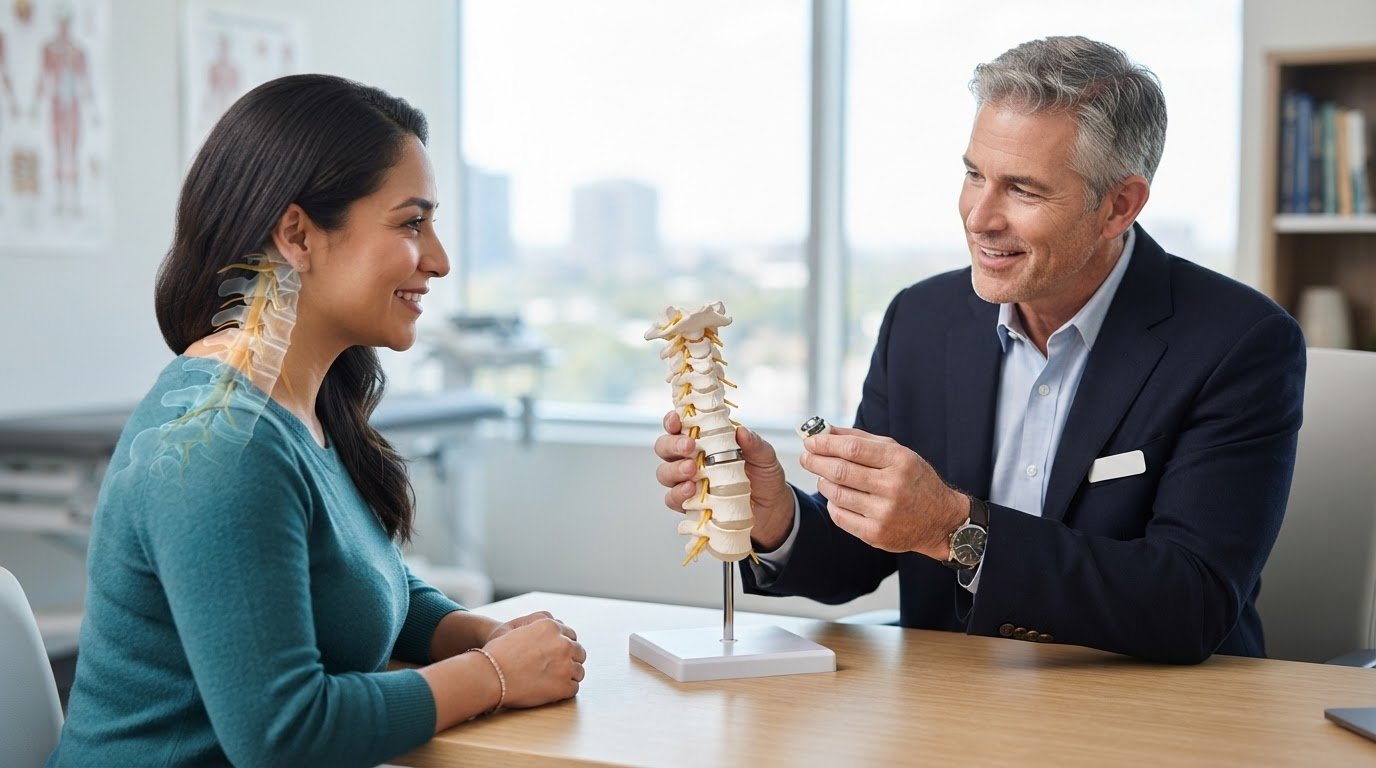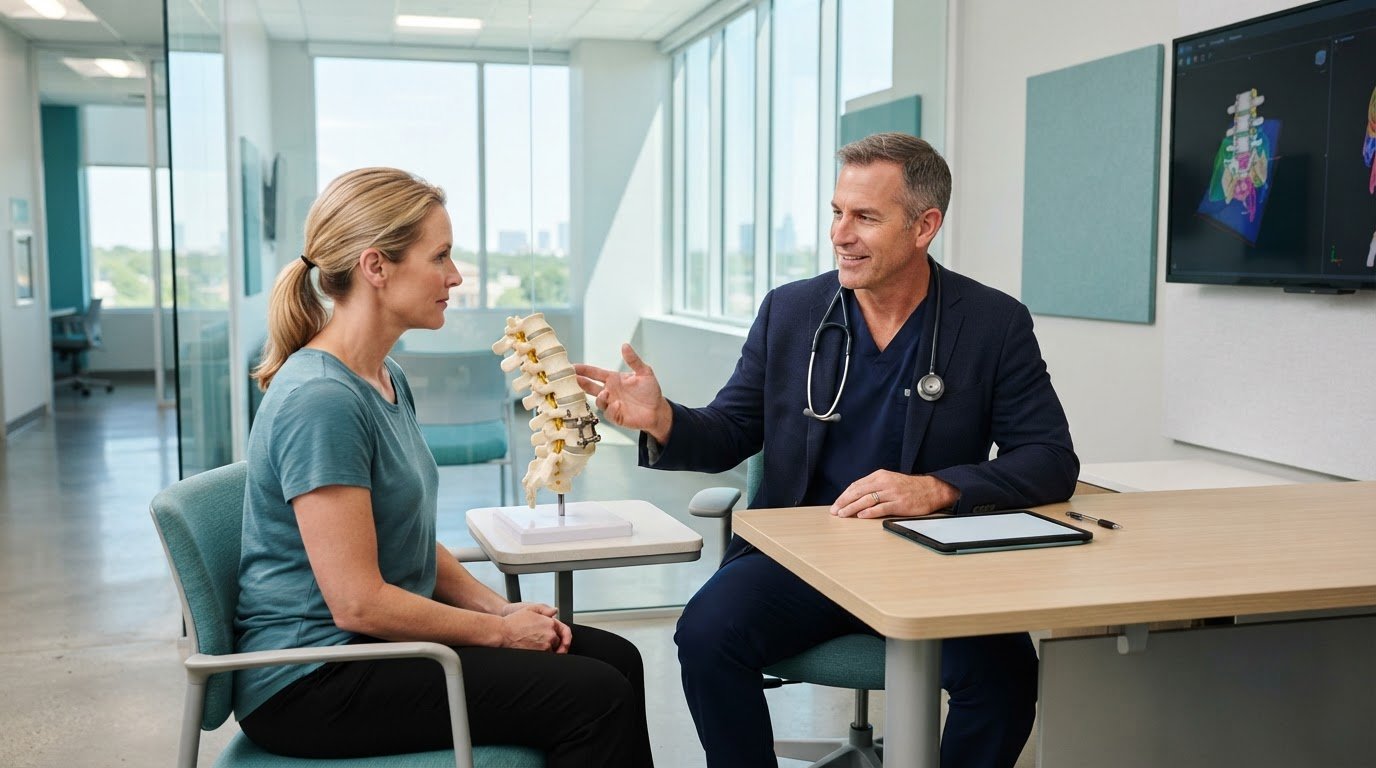
Minimally Invasive Neurosurgery of Texas (MINT), founded by board-certified neurosurgeon Dr. Scott C. Kutz, MD, provides advanced spine surgery from modern clinics in Lewisville and Plano, TX. Patients struggling with severe mechanical instability can find advanced care through lumbar fusion surgery Lewisville TX specialists offer to restore spine strength.
What if stabilizing your spine did not require cutting through healthy back muscles? If debilitating lower back and leg pain controls your schedule, you likely fear the extensive tissue damage and long hospital stays tied to traditional open operations. You deserve a solution that ends persistent nerve compression without sidelining you for months on end. Discover how minimally invasive lumbar fusion surgery in Lewisville, TX restores spine stability with less pain and faster recovery. This guide examines how muscle-sparing corridors work, what to expect during a transforaminal lumbar interbody fusion (TLIF), and how Dr. Kutz helps patients return to desk work in just four to six weeks.
Key Takeaways
- Explore how advanced lumbar fusion surgery Lewisville TX neurosurgeons perform creates spinal stability by joining damaged vertebrae without cutting through major muscle groups.
- Discover the critical differences between traditional open surgery and modern tubular access portals that significantly lower blood loss and infection risks.
- Learn how surgical navigation and augmented reality tools give your neurosurgeon real-time visual precision during hardware placement.
- Follow clear rehabilitation benchmarks from your first steps within 48 hours to complete bone solidifying over the following months.
- Understand the advantages of selecting a fellowship-trained neurosurgeon who provides boutique, patient-focused care at a dedicated local spine clinic.
Understanding Lumbar Fusion Surgery in Lewisville TX
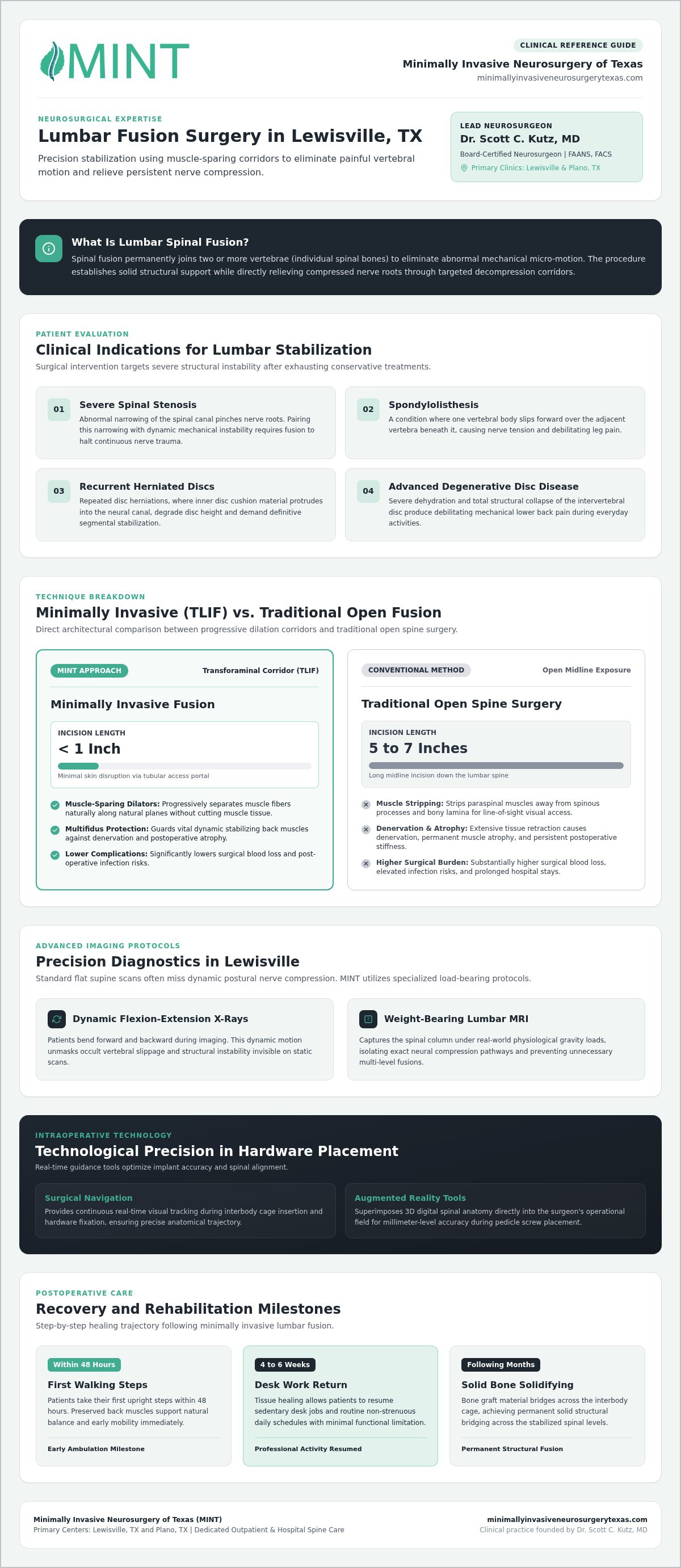
Minimally Invasive Neurosurgery of Texas (MINT) provides comprehensive surgical evaluations and motion-preserving options from modern facilities in Lewisville and Plano, TX. Under the leadership of board-certified neurosurgeon Dr. Scott C. Kutz, MD, our team prioritizes conservative care before recommending any surgical procedure. When structural instability compromises your spine, specialized lumbar fusion surgery Lewisville TX neurosurgeons provide delivers lasting stability. Spinal fusion surgery permanently connects two or more vertebrae, which are individual spinal bones, to eliminate painful micro-motion and relieve nerve compression.
Dr. Kutz evaluates every patient with a conservative mindset. We exhaust non-operative therapies first, including activity modification and targeted pain management. When lower back pain persists alongside neurological deficits, surgical intervention targets the underlying structural breakdown. In select cases where nerve decompression is possible without fusing the bone, Dr. Kutz might recommend alternatives like endoscopic spine surgery to relieve pressure without hardware. However, clear mechanical instability requires robust stabilization.
Clinical Indications for Lumbar Stabilization
Spinal instability develops when degenerative changes disrupt the spine’s natural alignment. Common clinical conditions treated with fusion include:
- Severe Spinal Stenosis: Stenosis, an abnormal narrowing of the spinal canal, pinches nerve roots. When this narrowing pairs with dynamic instability, fusion prevents further nerve trauma.
- Spondylolisthesis: This condition occurs when one vertebral body slips forward over the vertebra below it, stretching nerves and causing severe leg pain.
- Recurrent Herniated Discs: Repeated disc herniations, where inner disc cushion material protrudes into the nerve corridor, can degrade spinal height and require definitive stabilization.
- Advanced Degenerative Disc Disease: Complete dehydration and collapse of the intervertebral disc can produce debilitating mechanical back pain during daily activities.
The Role of Precision Diagnostics in Lewisville
Precise diagnosis prevents unnecessary operations. At our Lewisville headquarters, we identify the exact structural source of symptoms using specialized imaging protocols. Standard supine scans, where a patient lies flat, can miss postural nerve compression. We utilize dynamic flexion-extension X-rays and weight-bearing lumbar magnetic resonance imaging (MRI) to capture the spine under realistic physical loads.
Dynamic X-rays require patients to bend forward and backward, exposing hidden slippage between vertebral segments. By mapping these specific neural compression pathways, Dr. Kutz avoids multi-level procedures when a targeted single-level fusion solves the underlying problem. Patients throughout Lewisville, Plano, and neighboring communities like Flower Mound gain clarity through this measured diagnostic process, ensuring surgical intervention occurs only when medically necessary.
Minimally Invasive vs Traditional Open Lumbar Fusion
Traditional open back surgery requires a long midline incision, often extending five to seven inches down the spine. Surgeons must strip the paraspinal muscles away from the bony spinous processes and lamina to gain direct line-of-sight visual access. This extensive retraction frequently causes denervation, a loss of nerve supply to muscle tissue, which leads to permanent multifidus muscle atrophy and chronic postoperative stiffness. When patients evaluate options for lumbar fusion surgery Lewisville TX specialists provide, understanding the structural differences between these two surgical approaches helps set realistic expectations for recovery.
Minimally invasive spinal fusion bypasses that surgical trauma through muscle-splitting corridors. Instead of peeling tissue from bone, Dr. Scott Kutz uses progressive tubular dilators that separate individual muscle fibers naturally along their physiological planes. A transforaminal lumbar interbody fusion (TLIF) performed through this specialized corridor allows direct decompression of pinched neural structures and exact placement of an interbody fusion cage through an incision measuring less than one inch.
The Muscle-Sparing Tubular Retractor Method
Preserving the multifidus muscle group protects essential spinal biomechanics. The multifidus provides dynamic segment-by-segment stability to the lumbar column during bending, lifting, and walking. By maintaining these crucial muscular attachments, patients encounter far less incisional trauma and minimal wound pain during the first week after surgery. If you want to study the instruments behind these approaches, explore our overview of minimally invasive spine techniques.
Comparing Clinical Metrics and Hospital Stays
The physiological contrast between traditional open exposure and tubular access produces measurable clinical benefits:
- Intraoperative Blood Loss: Traditional open fusion regularly incurs blood loss ranging from 400 to 800 milliliters. Minimally invasive TLIF procedures limit blood loss to under 100 milliliters.
- Hospital Length of Stay: Open surgery usually mandates a three to five-day hospital admission. Minimally invasive patients often leave the outpatient surgical suite the same day or spend just 24 hours under observation.
- Surgical Site Infection: Smaller operative portals shield deep tissues from ambient exposure, which cuts surgical site infection rates compared to wide open incisions.
- Reoperation Metrics: Minimally invasive interbody techniques demonstrate lower five-year reoperation rates than extensive open reconstructions.
Preserving healthy paraspinal tissues sets the stage for an uncomplicated rehabilitation process. If mechanical instability limits your mobility, schedule a consultation with Dr. Kutz to determine if tubular decompression and fusion fit your specific clinical profile.
Advanced Surgical Technologies Transforming Spinal Fusion
Modern engineering eliminates the guesswork once associated with spinal instrumentation. Traditional back surgery relied heavily on standard intraoperative X-rays, exposing both patient and surgical staff to repeated radiation bursts while offering only two-dimensional views. Today, patients seeking lumbar fusion surgery Lewisville TX specialists provide benefit from digital navigation suites that transform operative accuracy into a predictable science.
Dr. Scott Kutz uses computerized image guidance to map pedicle screw paths before making a single incision. Pedicle screws are medical-grade titanium fasteners inserted into the dense bone pillars of a vertebra to anchor stabilizing rods. Misplaced hardware can impinge on adjacent nerve roots or fail to achieve solid biomechanical purchase. Modern surgical navigation brings screw placement accuracy near 100%, protecting neurological structures and preventing hardware loosening.
Robotic Guidance with Globus ExcelsiusGPS
The Globus Excelsius platform unites preoperative computed tomography (CT) scans with a rigid robotic arm. The system registers patient anatomy in real time, compensating instantly for subtle body shifts on the operative table. Dr. Kutz aligns instrumentation along pre-planned trajectories with sub-millimeter precision. This rigid physical guide ensures exact implant positioning while keeping surgical incisions exceptionally small.
Augmented Reality Surgical Navigation
Augmented reality (AR) represents another leap forward for complex spinal cases. Using Augmedics AR technology, the surgeon wears a specialized headset that projects a three-dimensional rendering of the patient’s internal bony anatomy directly onto the operative field. Instead of looking away at remote monitors across the room, Dr. Kutz maintains direct visual focus on the patient throughout every critical placement maneuver.
Biologic Innovation and Motion Preservation
Stable hardware requires rapid biological healing to create a permanent bony union. At MINT, we integrate advanced biologic materials that accelerate bone growth:
- Demineralized Bone Matrix (DBM): Specially prepared donor bone that provides osteoinductive proteins, stimulating local cells to build new bone bridges.
- Synthetic Ceramic Scaffolds: Porous mineral matrices engineered to mimic natural cancellous bone architecture, encouraging cellular migration across the fusion disc space.
- Adjacent-Segment Protection: Precise digital planning ensures instrumentation secures only the unstable vertebrae. This measured approach preserves natural movement at adjacent levels, decreasing long-term mechanical stress across the remaining spine.
These advanced tools combine clinical expertise with state-of-the-art navigation, giving North Texas patients exceptional safety throughout every stage of surgery.
Recovery Timeline and Rehabilitation Milestones
How quickly can you walk after minimally invasive lumbar stabilization? Patients often stand and take their first steps within two to four hours following surgery. Because modern tubular instrumentation spares the stabilizing lumbar muscles, initial postoperative soreness remains manageable. Clear guidelines ensure that patients receiving lumbar fusion surgery Lewisville TX specialists perform navigate their recovery with absolute confidence.
The first forty-eight hours focus on gentle mobility and proper wound care. Dr. Scott Kutz encourages frequent, short walks around the recovery area to promote circulation and prevent deep vein thrombosis, a serious condition where blood clots form in deep veins. Most patients return home either the day of surgery or after a brief 24-hour observation period.
Weeks 1 to 4: Early Healing and Safe Mobility
During the initial month, protecting the surgical site takes priority over strenuous activity. Patients must observe the “BLT” protocol strictly by avoiding bending at the waist, lifting objects over ten pounds, and twisting the torso.
- Pain Medication Weaning: Most patients discontinue prescription oral narcotics within seven to fourteen days, shifting comfortably toward over-the-counter acetaminophen.
- Daily Walking Regimen: We encourage gradual distance increases, targeting five to ten-minute walking sessions three to four times each day on flat surfaces.
- Incision Monitoring: Keep the small surgical site clean and dry. The skin edges typically seal fully within ten to twelve days.
- Driving and Work: Patients cleared of narcotic use often resume driving at two to three weeks. Those with sedentary office roles regularly return to desk work between weeks four and six.
Months 2 to 6: Structural Bone Maturation
True bone fusion requires biological time. While surgical implants provide instantaneous mechanical stability, solid bone bridging between vertebrae develops over months. At the twelve-week mark, digital X-rays confirm early bony bridging, also known as osteointegration, across the interbody cage.
Patients gradually introduce low-impact exercises, including recumbent cycling and light swimming, to rebuild paraspinal endurance without straining healing bone. Full solid fusion and clearance for demanding physical labor or contact sports usually occur between six and twelve months. Bone remodeling continues to solidify for up to eighteen months post-procedure.
Are you ready to reclaim an active lifestyle free from debilitating lower back pain? Contact our surgical team today to schedule your comprehensive spine evaluation in Lewisville or Plano.
Choosing Dr. Scott Kutz and MINT in Lewisville
Large hospital networks often shuffle spine patients between rotating clinical staff, resident trainees, and fragmented departments. Minimally Invasive Neurosurgery of Texas (MINT) rejects that corporate model. We operate as a specialized boutique spine practice where patients work directly with their neurosurgeon through every consultation, surgical procedure, and post-operative follow-up. When evaluating lumbar fusion surgery Lewisville TX practices provide, direct access to your primary surgeon creates accountability and peace of mind.
Dr. Scott C. Kutz, MD, brings over 20 years of dedicated spine surgery experience to North Texas. He opened our state-of-the-art Lewisville headquarters in January 2026 to deliver targeted, muscle-preserving interventions in an intimate clinical environment. Patients receive personalized attention from staff members who understand their diagnostic journey and recovery goals.
Neurosurgical Training and Board Certification
Rigorous specialty training forms the foundation of safe spine surgery. Dr. Kutz earned his medical degree from the University of Illinois at Chicago before completing his comprehensive neurosurgical residency at the Louisiana State University Medical Center in Shreveport. He subsequently completed a specialized fellowship in stereotactic and functional neurosurgery at Rush University Medical Center in Chicago.
Dr. Kutz is a board-certified neurosurgeon and an active Fellow of both the American Association of Neurological Surgeons (FAANS) and the American College of Surgeons (FACS). These credentials reflect peer-evaluated clinical mastery, strict adherence to national surgical safety standards, and continuous ethical accountability. Review his background and clinical philosophy in depth on the MINT about us page.
Convenient Local Care in Lewisville and Plano
MINT provides advanced spinal solutions across two primary locations in Lewisville and Plano, TX. Our Lewisville headquarters offers straightforward access for residents traveling from nearby communities:
- Flower Mound and Highland Village: Minutes away via FM 1171 and FM 407.
- Carrollton and Coppell: Convenient access via Interstate 35E North.
- Denton and Southlake: Direct regional connectivity avoiding congested downtown medical centers.
Our clinical team regularly evaluates complex cases, including failed back surgeries performed at high-volume regional hospitals. We review your dynamic imaging records in detail to confirm whether non-fusion decompressive techniques or targeted stabilizations offer the best path forward. To see how our measured neurosurgical protocols help North Texas neighbors regain their active lifestyles, explore real recovery stories on the MINT patient testimonials page.
Restore Your Spine Stability and Reclaim Daily Life
Living with chronic structural back pain limits your independence and drains your energy. Advanced lumbar fusion surgery Lewisville TX neurosurgeons provide offers a clear path toward durable relief. By utilizing muscle-sparing tubular retractor corridors, computer-assisted navigation, and state-of-the-art biological bone matrices, Minimally Invasive Neurosurgery of Texas stabilizes your lumbar spine while protecting healthy paraspinal tissues.
Dr. Scott C. Kutz, MD, brings more than 20 years of spine surgery experience to every clinical evaluation. As a board-certified neurosurgeon and Fellow of both the American Association of Neurological Surgeons and the American College of Surgeons, Dr. Kutz couples patient-centered care with advanced outpatient technologies. You don’t have to navigate persistent sciatica or degenerative spondylolisthesis alone in an impersonal hospital network. Take the first step toward lasting back relief today. Schedule your consultation with Dr. Scott Kutz at our Lewisville headquarters or Plano clinic to discover your treatment options.
Frequently Asked Questions
How painful is minimally invasive lumbar fusion surgery compared to open surgery?
Minimally invasive lumbar fusion causes substantially less postoperative pain than conventional open surgery. Rather than cutting through and stripping the paraspinal muscles away from the spine, specialized tubular dilators gently spread muscle fibers apart. This muscle-sparing technique reduces local tissue trauma, limits surgical site inflammation, and minimizes dependence on strong oral narcotic medications during the first two weeks of recovery.
How long do I need to stay in the facility after lumbar fusion?
Most patients spend between 24 and 48 hours in the surgical facility before heading home, while selected single-level cases qualify for same-day outpatient discharge. Traditional open lumbar operations usually require three to five days of inpatient hospitalization. The reduced blood loss and preserved muscle structure of minimally invasive corridors allow patients to begin walking safely within hours of waking from anesthesia.
When can I safely return to driving after lumbar fusion surgery?
Patients can typically drive again two to three weeks following surgery. You must meet two strict clinical criteria first: you must discontinue all prescription narcotic pain medications, and your leg reaction time and foot strength must return to normal levels. Dr. Scott Kutz reviews your physical mobility at your initial post-operative follow-up before clearing you to operate a motor vehicle.
What is the success rate of minimally invasive lumbar fusion?
Minimally invasive lumbar interbody fusion yields patient satisfaction rates between 80% and 92% across clinical studies. Published surgical registries confirm that 80% to 95% of appropriately selected patients achieve significant improvement in debilitating back and leg pain. When seeking lumbar fusion surgery Lewisville TX specialists perform, exact anatomical decompression and rigid screw fixation ensure predictable, long-term spinal stability.
Does Minimally Invasive Neurosurgery of Texas offer conservative care first?
Yes, Dr. Kutz always prioritizes conservative management before recommending any spinal operation. MINT operates as a specialized neurosurgical surgical practice, focusing strictly on advanced spine surgery. While MINT does not offer in-house physical therapy or chiropractic adjustments, Dr. Kutz collaborates with outside specialists to evaluate non-surgical therapies thoroughly. Surgery serves only as a definitive solution when conservative protocols fail to resolve mechanical instability.
How does Dr. Scott Kutz determine if I need fusion instead of disc replacement?
Dr. Kutz evaluates motion-preserving options like artificial disc replacement first, but underlying structural instability dictates when fusion is necessary. Conditions such as high-grade spondylolisthesis, facet joint arthrosis (degenerative arthritis of the stabilizing spinal joints), or extensive spinal deformities cannot support an artificial disc safely. In those situations, joining the vertebrae permanently via targeted fusion creates the reliable stability needed to protect your spinal nerves.
Are robotic spine surgery systems safer than manual surgical techniques?
Robotic guidance systems significantly increase implant accuracy and reduce operative complication risks. Platforms like the Globus ExcelsiusGPS combine preoperative three-dimensional CT imaging with rigid robotic arm trajectories, positioning pedicle screws within sub-millimeter precision margins. This automated physical guidance protects adjacent nerve roots from unintended hardware contact while reducing radiation exposure for both the surgical team and the patient.