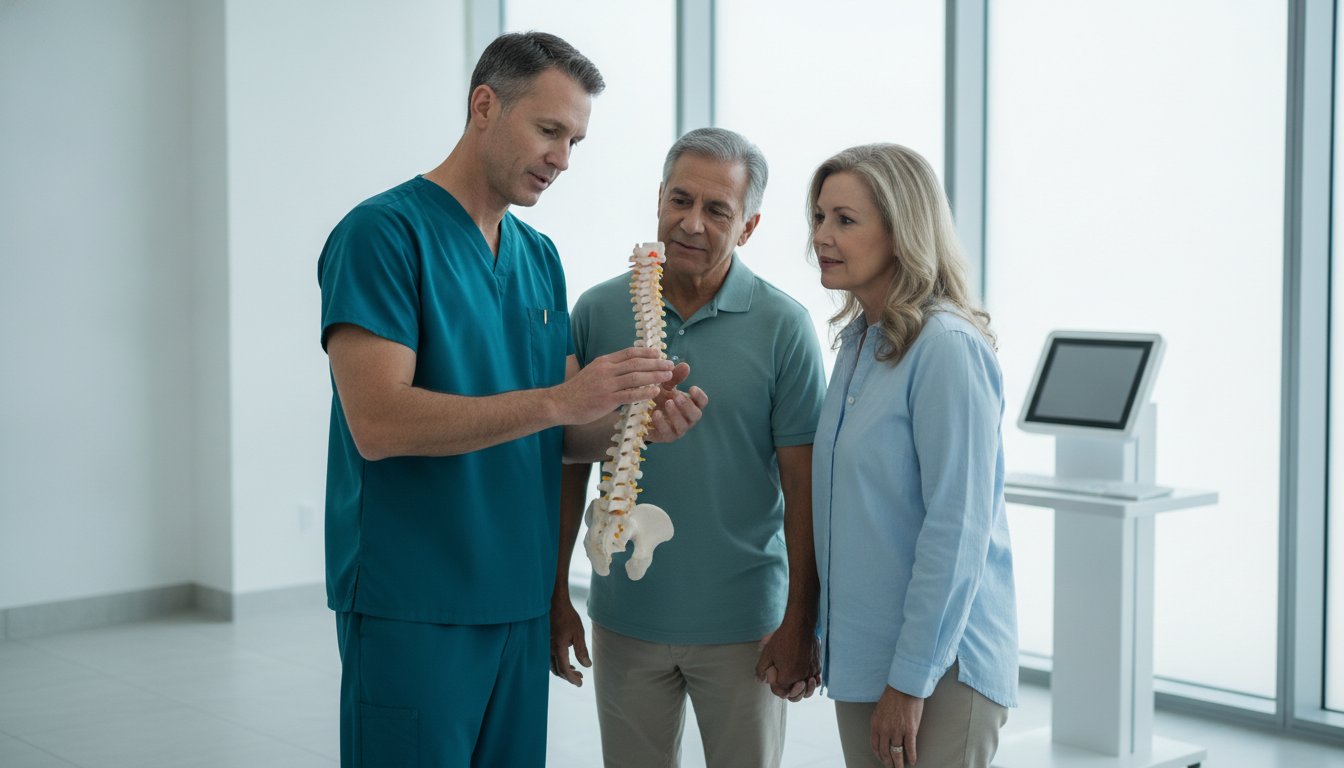
Minimally Invasive Neurosurgery of Texas (MINT), led by Dr. Scott Kutz, provides advanced spinal care at its state-of-the-art facilities in Lewisville and Plano, TX. Dr. Kutz is a board-certified neurosurgeon and a Fellow of the AANS and ACS who focuses on restoring mobility through specialized surgical techniques. What if you could stop simply managing your back pain and actually start reversing its impact on your life?
You likely feel that every step or reach is a gamble when chronic radiating pain, which is discomfort that travels from the spine into the arms or legs, dictates your daily schedule. Many patients fear that traditional surgery requires a long recovery or leads to a permanent loss of flexibility. Finding a highly skilled degenerative disc disease doctor Plano TX patients can rely on is the first step toward reclaiming your independence and returning to the gym or office.
Dr. Kutz uses precision neurosurgery to address the root cause of your suffering while protecting your spine’s natural movement. You’ll learn how motion-preserving technologies like artificial disc replacement, which is the surgical substitution of a worn disc with a functional implant, offer a faster path back to your favorite activities. We will also explore how the latest endoscopic spine surgery, a procedure using tiny cameras and instruments, minimizes tissue damage to ensure you recover with less pain and smaller incisions.
Key Takeaways
- Learn how Dr. Scott Kutz, a board-certified neurosurgeon at MINT, uses specialized techniques in our state-of-the-art Lewisville and Plano facilities to restore patient mobility.
- Discover why choosing a specialized degenerative disc disease doctor Plano TX patients trust ensures greater surgical precision when treating delicate nerve structures near the spine.
- Explore how advanced tools like Globus Excelsius robotics, which are computer-assisted surgical systems, allow for smaller incisions and significantly less tissue disruption during spine surgery.
- Understand the diagnostic journey at our Plano satellite office, where high-resolution imaging like MRI, or magnetic resonance imaging, helps create a personalized treatment plan for your condition.
- Gain insights into the recovery process, where minimally invasive methods lead to faster return-to-work timelines and a reduced need for heavy narcotics, which are strong pain-relieving medications.
Understanding Degenerative Disc Disease and Your Treatment Options
Minimally Invasive Neurosurgery of Texas (MINT) provides specialized care for complex spinal conditions under the leadership of Dr. Scott Kutz. Dr. Kutz is a board-certified neurosurgeon who treats patients at the MINT headquarters in Lewisville and a satellite office in Plano. As a dedicated degenerative disc disease doctor Plano TX patients rely on, he focuses on restoring mobility through minimally invasive spine surgery, which uses smaller incisions to reduce muscle damage. Degenerative Disc Disease, or DDD, refers to the gradual breakdown of spinal discs over time. These discs serve as shock absorbers between the vertebrae, which are the bones that form the spine. Understanding Degenerative Disc Disease helps patients identify when normal aging transitions into a condition that requires surgical expertise.
The Anatomy of a Failing Spinal Disc
A healthy spinal disc consists of two primary components. The nucleus pulposus is the soft, gel-like inner core that provides cushioning and flexibility. The annulus fibrosus is the tough, fibrous outer layer that protects the inner core and connects the vertebrae. As you age, these discs undergo dehydration, which is the loss of fluid within the disc structure. This fluid loss leads to a reduction in disc height and makes the outer ring more prone to micro-tears. When a disc loses its height or structural integrity, it can no longer support the spine effectively. This often results in radiculopathy, which is the clinical term for pain or numbness that a compressed nerve root creates within the spinal canal.
Common Symptoms Residents of Plano Experience
Patients often seek a consultation with Dr. Kutz when persistent pain limits their daily activities or prevents them from working. Common symptoms of DDD include localized back or neck pain that worsens during activities like sitting, twisting, or bending. You may also experience radiating pain, which is discomfort that travels from the source in the spine down into the legs or arms. Some patients report muscle weakness or a loss of coordination in their hands or feet. These signs suggest that the deteriorating disc is impacting your nervous system and requires professional attention. Dr. Kutz provides thorough evaluations at the MINT satellite office in Plano to help patients understand their diagnosis and explore evidence-based treatment options like artificial disc replacement.
Why Choose a Board-Certified Neurosurgeon in Plano for DDD
Dr. Scott Kutz, a board-certified neurosurgeon and Fellow of the AANS and ACS, brings over 20 years of clinical experience to MINT. Choosing a qualified degenerative disc disease doctor Plano TX residents can trust requires looking at specific surgical training. Unlike traditional orthopedic surgeons who primarily manage bone and joint health, neurosurgeons undergo rigorous training specifically focused on the brain, spinal cord, and delicate nerve roots. Dr. Kutz completed a prestigious fellowship in functional neurosurgery at Rush University Medical Center. Functional neurosurgery is a specialized field that focuses on restoring or improving neurological function through surgical intervention. This background allows him to prioritize patient mobility and long-term quality of life with absolute precision.
Dr. Kutz maintains a clinical focus on motion-preserving surgical approaches. This means he aims to keep the spine moving naturally rather than fusing bones together whenever possible. His training allows him to identify the exact source of nerve pain with a level of detail that general surgeons might miss. This specialized expertise is why many patients choose a neurosurgeon as their primary specialist for complex spinal issues. He actively advocates for treatments that minimize recovery time while maximizing the patient’s ability to return to a high-performance lifestyle.
The Neurosurgeon Advantage for Nerve Compression
Specialized knowledge of the spinal cord and nerve roots remains vital when treating DDD. The condition often causes discs to bulge or collapse, which puts pressure on the surrounding nerves. Neurosurgeons use advanced microscopy, which involves high-powered surgical microscopes, to visualize these neural pathways during surgery. This level of magnification ensures the surgeon protects the nerves while removing damaged disc material. Dr. Kutz applies his 20 years of experience to navigate these complex structures with minimal disruption to healthy tissue. Patients can find in-depth clinical information on DDD to understand how these structural changes impact their health over time.
Patient-First Communication at MINT
MINT operates on a philosophy of evidence-based care and comprehensive patient education. Dr. Kutz believes that an informed patient achieves better outcomes. During the diagnostic process at our Plano and Lewisville offices, we take the time to explain every finding on your imaging. We don’t just treat a scan; we treat the person. You can learn more about our commitment to excellence on the MINT about us page. Our team ensures you understand your options before moving forward with any procedure. If you are ready to discuss your symptoms and explore motion-preserving treatments, schedule a consultation with our team today.
Minimally Invasive Procedures for Degenerative Disc Disease
Minimally Invasive Neurosurgery of Texas (MINT) utilizes the most advanced surgical technologies to treat patients at our Plano and Lewisville facilities. As a specialized degenerative disc disease doctor Plano TX residents trust, Dr. Scott Kutz prioritizes minimally invasive spine surgery to address structural disc failures. These procedures involve smaller incisions, which significantly reduce tissue disruption and muscle trauma. Traditional open surgery often requires large openings that damage healthy muscle, but MINT’s approach preserves these critical structures. This preservation leads to less post-operative pain and a much faster recovery timeline for the patient. A key clinical benefit of these modern techniques includes a drastic reduction in blood loss during the procedure, which improves overall surgical safety and patient stability.
Dr. Kutz incorporates Globus Excelsius robotics into his surgical planning and execution. This robotic guidance system provides a high level of precision, allowing the surgeon to map the patient’s anatomy in three dimensions before the first incision. By following this digital roadmap, Dr. Kutz places implants with exact accuracy. This high-tech hallmark ensures that the surgical intervention targets only the problematic area while sparing the surrounding nerves and ligaments. It transforms complex spinal procedures into targeted, efficient interventions.
Artificial Disc Replacement: A Motion-Preserving Alternative
Artificial disc replacement, or ADR, offers a modern solution for patients who want to maintain their spinal flexibility. In this procedure, Dr. Kutz removes the damaged disc and replaces it with a functional, medical-grade implant. Unlike traditional spinal fusion, which joins two vertebrae together and permanently limits movement, ADR mimics the natural function of a healthy disc. This motion-preserving approach reduces the mechanical stress on adjacent segments of the spine. For those exploring specific options for the upper spine, MINT provides a comprehensive guide to neck disk replacement in Plano. According to the National Institutes of Health on Degenerative Disc Disease, maintaining proper biomechanics is essential for long-term spinal health and preventing further degeneration.
Endoscopic Spine Surgery for Precision Results
Endoscopic spine surgery represents the absolute forefront of surgical innovation. Dr. Kutz uses an endoscope, which is a tiny tube equipped with a high-definition camera and light source, to see inside the spinal canal through a puncture no larger than a postage stamp. This direct visualization allows him to identify and remove bone spurs, which are overgrown bone projections, or herniated material that presses against sensitive nerves. Because the surgeon does not need to strip muscles away from the bone, patients often experience a rapid return to normal activity. These precision results distinguish MINT as a specialized center for those seeking an expert degenerative disc disease doctor Plano TX provides.

The Diagnostic Journey and Personalized Care at MINT
Your path to recovery begins at our Plano satellite office or our primary headquarters in Lewisville. Dr. Scott Kutz, the lead neurosurgeon at Minimally Invasive Neurosurgery of Texas (MINT), conducts a thorough initial consultation to understand the history of your pain. As a specialized degenerative disc disease doctor Plano TX patients rely on, he prioritizes a clear and accurate diagnosis before discussing any surgical intervention. We utilize high-resolution imaging to visualize the internal structures of your spine. This typically includes an MRI, which is magnetic resonance imaging that captures detailed views of soft tissues like discs and nerves, or a CT scan, which is computed tomography that provides a clear look at the vertebrae, or spinal bones.
Dr. Kutz explores conservative treatment options as the first line of defense against Degenerative Disc Disease. Many patients find relief through lifestyle adjustments, specialized stretching, or targeted injections. It is important to note that MINT focuses exclusively on neurosurgical care and medical diagnosis. We do not offer chiropractic services or in-house physical therapy. If your pain persists after exhausting non-operative paths, we transition our focus to how minimally invasive spine surgery can restore your quality of life. Our goal is to move you from a state of chronic discomfort to a state of informed confidence regarding your health.
Evaluating Your Surgical Candidacy
Dr. Kutz follows a strict protocol to determine if you are a candidate for surgery. He generally recommends surgical intervention only after six to eight weeks of persistent pain that does not respond to conservative care. During your evaluation, he identifies the specific vertebrae numbers, such as L4 or L5 in the lower back, where the degeneration occurs. This precision ensures that any future procedure targets the exact source of your symptoms. We ask that all patients bring their previous imaging results and reports to their first visit. This allows our team to review your clinical history and provide an immediate, expert second opinion on your condition.
Personalized Treatment Mapping
Precision-based surgical planning creates a clear roadmap for your recovery. Dr. Kutz uses your diagnostic data to design a strategy that preserves as much healthy tissue as possible. His certification from the American Board of Neurological Surgery serves as a foundation of trust for our patients. This credential signifies that he has met the highest standards of neurosurgical knowledge and clinical skill. You can learn more about his background and our patient-first philosophy on our about us page. Whether you visit us in Plano or Lewisville, you receive care that integrates advanced technology with a personal, boutique-center feel. If you are ready to begin your diagnostic journey, contact our office to schedule your consultation.
Recovery and Long-Term Outcomes in North Texas
Minimally Invasive Neurosurgery of Texas (MINT) prioritizes your return to normal activity through streamlined recovery protocols designed for the modern patient. As a specialized degenerative disc disease doctor Plano TX residents trust, Dr. Scott Kutz ensures that every patient receives a customized post-operative plan. Our 2026 Lewisville headquarters serves as the primary site for advanced follow-up care, offering a state-of-the-art environment for monitoring your progress. Because Dr. Kutz uses smaller incisions, patients typically experience significantly less post-operative discomfort. This precision-based approach drastically reduces the need for heavy narcotics, which are strong pain-relieving medications that can often slow down the initial recovery process. Dr. Kutz, a board-certified neurosurgeon and Fellow of the AANS and ACS, notes that long-term spinal health depends on preserving as much natural movement as possible while stabilizing the affected segments.
What to Expect in the First 48 Hours
Most minimally invasive procedures at MINT allow for same-day discharge, which means you leave the surgical center on the day of your procedure to recover in the comfort of your home. During the first 48 hours, our team focuses on effective pain management and wound care. You will receive specific instructions on how to keep the small incision site clean and dry to prevent infection. We advise patients to avoid restricted movements, such as heavy lifting or excessive twisting, during this initial window. Walking remains the best exercise during the first two days to promote circulation and prevent stiffness. This early mobility helps jumpstart the healing process and reduces the risk of complications.
Returning to an Active Lifestyle in Plano
North Texas athletes and active professionals often worry about how spine surgery will impact their performance. Dr. Kutz utilizes motion-preserving techniques like artificial disc replacement to help patients return to exercise and sports gradually. These methods are vital because they help prevent adjacent segment disease. This is a condition where the spinal levels above or below a surgical site undergo accelerated wear due to increased stress. By maintaining natural flexibility, we protect the rest of your spine from future damage. You can view patient testimonials to see how others in Plano and Lewisville have successfully reclaimed their active lifestyles. Most patients return to light office work within a week and resume more vigorous exercise after a few months of guided progress. If you are ready to start your journey toward a pain-free life, contact MINT today to discuss your options.
Take the Next Step Toward Lasting Spinal Relief
Minimally Invasive Neurosurgery of Texas (MINT) provides a clear path forward for those struggling with chronic back and neck pain. Dr. Scott Kutz, a board-certified neurosurgeon and Fellow of the AANS, applies over 20 years of clinical experience to every case. By prioritizing motion-preserving techniques like artificial disc replacement, he helps patients avoid the limitations of traditional fusion. Our state-of-the-art Lewisville headquarters, which opened in 2026, serves as a center for surgical excellence alongside our convenient Plano satellite office.
Choosing the right degenerative disc disease doctor Plano TX residents trust ensures you receive a diagnosis rooted in neurosurgical precision. You don’t have to accept a life of restricted movement or persistent discomfort. Dr. Kutz and his team focus on restoring your function so you can return to the activities you love with confidence. Our evidence-based approach ensures that you understand every step of your recovery journey and feel empowered throughout the process.
Schedule your consultation with Dr. Scott Kutz today to explore a personalized treatment plan tailored to your needs. We look forward to helping you achieve a rapid return to work and exercise.
Frequently Asked Questions
How do I know if I need a degenerative disc disease doctor in Plano TX?
You should consult a degenerative disc disease doctor Plano TX if you experience localized back pain or numbness that persists for more than six weeks. Symptoms often include radiculopathy, which is pain that travels from the spine into the limbs. If conservative care like rest or medication fails to provide relief, a specialized evaluation is necessary. Dr. Scott Kutz uses high-resolution imaging to determine if your disc wear requires a minimally invasive intervention to restore your daily mobility.
What is the difference between a neurosurgeon and an orthopedic spine surgeon for DDD?
Neurosurgeons like Dr. Kutz focus specifically on the delicate structures of the spinal cord and nerve roots. While orthopedic surgeons treat the general musculoskeletal system, a neurosurgeon undergoes years of training dedicated to neural pathways. Dr. Kutz completed a fellowship in functional neurosurgery at Rush University Medical Center, which provides him with the expertise to navigate complex spinal disorders. This specialized knowledge ensures high levels of precision during procedures that involve decompression, which is the relief of pressure on nerves.
Is artificial disc replacement better than spinal fusion for degenerative discs?
Artificial disc replacement often provides a superior alternative to spinal fusion because it preserves natural spinal motion. Fusion joins two vertebrae together, which permanently restricts flexibility and can lead to adjacent segment disease. This is a condition where the discs above and below the fusion site wear out faster due to increased stress. Dr. Kutz prioritizes motion-preserving approaches to maintain your long-term spinal health and ensure you can return to an active lifestyle without permanent restrictions.
How long is the recovery time for minimally invasive spine surgery at MINT?
Most patients return to light office work within one week after a minimally invasive procedure at MINT. Because these techniques utilize smaller incisions, they cause significantly less tissue disruption than traditional open surgery. You can often expect same-day discharge from our surgical center. While light walking begins immediately, you should wait a few months before resuming vigorous exercise or sports. This gradual timeline allows the surgical site to heal completely while protecting your long-term mobility.
Does Dr. Scott Kutz treat patients from Dallas and Fort Worth?
Dr. Scott Kutz treats patients from across the Dallas-Fort Worth Metroplex and surrounding North Texas communities. Our Lewisville headquarters and Plano satellite office are conveniently located to serve residents from McKinney, Southlake, and Allen. With more than 20 years of experience, Dr. Kutz provides specialized care for individuals seeking alternatives to traditional back surgery. We welcome patients from throughout the region who are looking for expert diagnosis and advanced, motion-preserving treatment options for their spinal conditions.
What happens if I leave degenerative disc disease untreated?
Leaving the condition untreated can lead to progressive nerve damage and a permanent loss of function. Over time, the breakdown of discs can cause severe radiculopathy, which is chronic pain caused by pinched nerve roots. You might also experience muscle weakness or a loss of coordination in your hands and feet. Early intervention from an expert neurosurgeon helps prevent these long-term complications. Seeking a professional evaluation ensures you receive a personalized plan to manage pain and stabilize your spine.
Can endoscopic spine surgery fix my chronic back pain?
Endoscopic spine surgery is highly effective for treating chronic pain caused by structural issues like herniated discs or bone spurs. Dr. Kutz uses an endoscope, which is a thin tube with a high-definition camera, to visualize the spinal canal with extreme clarity. This allows him to remove the specific material pressing on your nerves without damaging the surrounding healthy muscle. Patients often find that this precise approach provides immediate relief from radiating pain while requiring only a tiny incision.
Is the Lewisville office of MINT currently accepting new patients in 2026?
The Lewisville headquarters of MINT is currently accepting new patients in 2026. This state-of-the-art facility serves as our primary office for advanced follow-up care and specialized neurosurgical procedures. We also continue to see patients at our satellite office in Plano to ensure accessibility for the local community. You can schedule an initial consultation to discuss your diagnosis and explore evidence-based treatment options. Our team prioritizes patient-first communication to help you understand your path back to normal activity.