
Minimally Invasive Neurosurgery of Texas provides minimally invasive spine care in Lewisville and Plano, Texas. Led by Dr. Scott Kutz, a board-certified neurosurgeon and Fellow of the AANS and ACS, the practice evaluates spinal conditions and discusses appropriate treatment options. Minimally invasive spine surgery uses targeted techniques that limit disruption to surrounding tissue.
Neck pain that travels into an arm can involve an irritated or compressed nerve in the cervical spine, the part of the spine in your neck. A Lewisville neurosurgeon for neck and arm pain can evaluate whether a spinal condition may explain your symptoms. This article covers possible causes, how clinicians assess them, and when surgery may enter the treatment discussion.
A herniated disc occurs when soft material inside a spinal disc pushes through its outer layer, potentially causing pain, numbness, or weakness. A careful evaluation helps connect symptoms with possible causes and clarify next steps. You’ll learn what a neurosurgeon considers and how treatment options may support a return to normal activity.
Key Takeaways
- Neck pain that travels into an arm can warrant evaluation for a cervical spine cause, especially when numbness or weakness persists.
- Learn how herniated discs and spinal stenosis can affect nerves and contribute to symptoms.
- Understand how an evaluation may use a neurological exam and imaging to connect symptoms with a possible diagnosis.
- See why clinicians may consider nonsurgical options before surgery when they suit the condition and the patient.
- Explore how minimally invasive spine procedures may fit into a treatment plan for selected spinal conditions.
Definition
Minimally Invasive Neurosurgery of Texas (MINT) is a spine care practice serving patients in Lewisville and Plano, Texas. The practice focuses on minimally invasive neurosurgery, which uses surgical techniques that limit disruption to surrounding tissue while addressing spinal conditions. Its lead surgeon, Dr. Scott Kutz, is a board-certified neurosurgeon and Fellow of the AANS and ACS. A neurosurgeon diagnoses and treats conditions involving the nervous system, including the spine and its connected nerves. For people seeking a Lewisville neurosurgeon for neck and arm pain, specialized spine care can help assess whether a spinal problem may explain symptoms and which treatment options fit.
Minimally invasive spine surgery describes procedures that use less disruptive approaches than traditional open surgery. The surgeon selects an approach according to the spinal condition, its location, and the treatment goal. For example, a procedure may address a disc or create more space around a nerve under pressure. Pressure on a nerve can contribute to pain, numbness, or weakness. These techniques aim to reduce the impact of surgery, but the right approach depends on the person’s diagnosis and needs. The practice’s minimally invasive spine techniques include options for treating spinal conditions through specialized surgical methods.
The practice also offers artificial disc replacement and endoscopic spine surgery. Artificial disc replacement removes a damaged spinal disc and replaces it with an artificial one. Endoscopic spine surgery uses an endoscope, a small camera that helps the surgeon view the treatment area. These distinct procedures do not suit every source of pain. A neurosurgeon considers the diagnosis and the patient’s needs when determining whether surgery may be appropriate. This focused approach connects neurological expertise with spine care, helping patients understand the condition that the surgeon treats and each option’s purpose. The goal is to support treatment decisions with a clear view of the problem and available surgical approaches.
Minimally invasive spine surgery
Minimally invasive approaches treat selected spinal problems through smaller incisions and targeted access. The procedure depends on the diagnosis, such as a herniated disc or spinal stenosis.
Minimally Invasive Spine Procedures
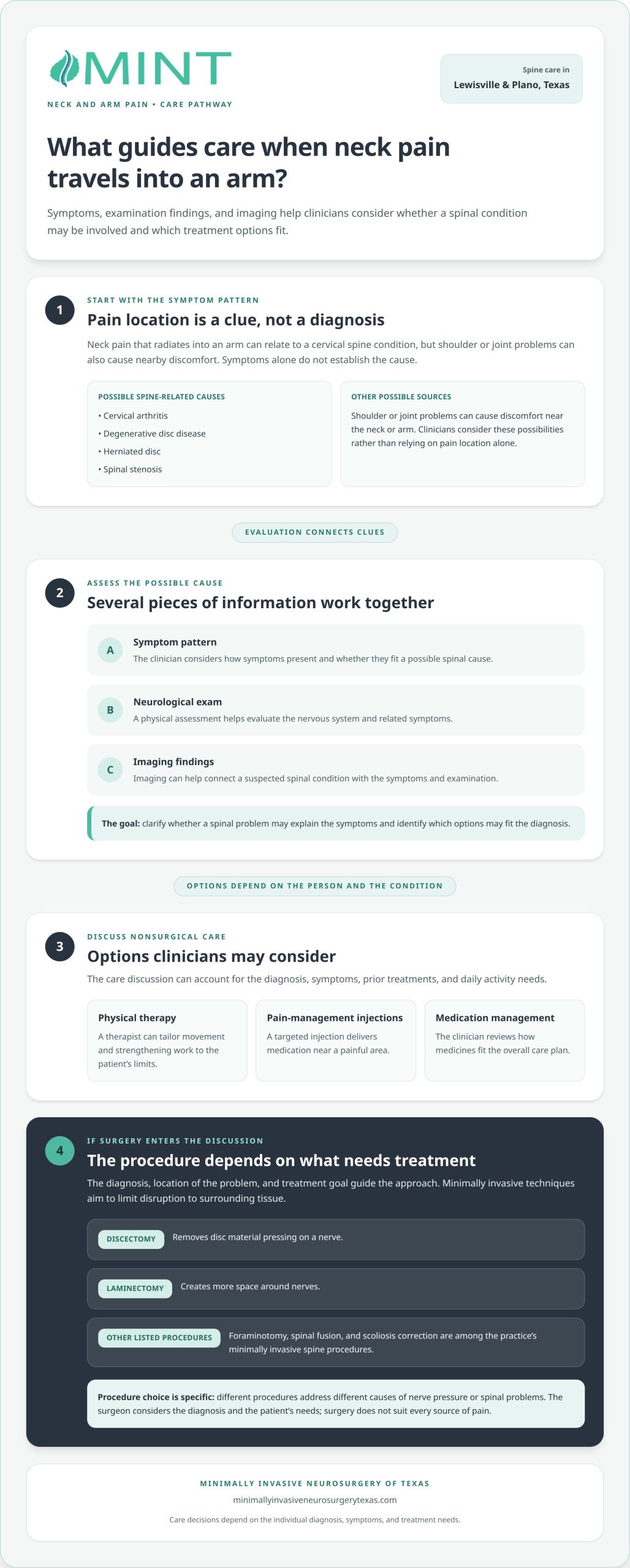
A surgeon may use a discectomy to remove disc material pressing on a nerve, or a laminectomy to create space around nerves. These procedures address different causes of compression, so the diagnosis guides the choice. A minimally invasive approach aims to limit disruption to nearby tissue while treating the spinal problem.
Orthopedic surgeons and sports medicine physicians also evaluate pain affecting movement, joints, and soft tissue. Joint replacement and revision surgery address damaged or previously replaced joints, not spinal nerves. Identifying whether symptoms come from the spine, a joint, or another structure helps direct care toward the relevant problem.
Outpatient Neck Surgery
Outpatient neck surgery means a patient goes home after the procedure rather than staying overnight. The care team considers the planned operation, the patient’s health, and recovery needs when assessing this setting. For example, a cervical discectomy removes disc material from the neck to relieve pressure on a nerve.
The procedure’s purpose matters. Neck and back surgery may address different problems in the spine. The surgeon explains the planned steps, expected monitoring, and discharge criteria so the patient understands how the care plan fits the specific operation.
Cervical Surgery Risks and Recovery
Cervical spine surgery carries risks that depend on the procedure and the patient’s health. Before surgery, the surgeon explains relevant risks, how the operation addresses the diagnosed condition, and what signs need follow-up. Patients can use that discussion to understand the trade-offs between a proposed procedure and other options.
Recovery from neurosurgery varies with the procedure and the individual patient. Outcomes also depend on the cause of symptoms and the treatment goal, such as easing nerve pressure. The care team outlines recovery steps and follow-up needs for the specific operation rather than applying one timeline to every neck surgery.
The clinic lists discectomy, laminectomy, foraminectomy, spinal fusion, and scoliosis correction among its minimally invasive spine procedures. The diagnosis guides which procedure the surgeon considers, while the planned operation and care plan remain specific to the spinal problem and the patient. The surgeon can explain how the selected approach relates to the diagnosed condition.
Spinal conditions treated and nonsurgical options
Neck pain that radiates into an arm can relate to cervical arthritis, degenerative disc disease, a herniated disc, or spinal stenosis. Other sources, including shoulder or joint problems, can cause nearby discomfort. Pain location alone does not establish the cause, so clinicians consider symptom patterns alongside examination and imaging findings.
Nonsurgical care may include physical therapy, pain-management injections, or medication management. A physical therapist can tailor movement and strengthening work to a patient’s limits. A targeted injection delivers medication near a painful area, while medication management reviews how medicines fit the overall care plan. The clinician considers the diagnosis, symptoms, prior treatments, and daily activity needs when weighing these options.
Orthopedic conditions require a different treatment focus from spinal disorders. For example, shoulder joint pain may prompt an orthopedic evaluation, while neck pain paired with arm tingling may lead clinicians to assess both the cervical spine and shoulder. This distinction matters because joint replacement or revision surgery addresses joint problems, not every source of neck or arm pain. Clinical findings help direct care toward the appropriate specialty and next step.
What conditions can cause neck pain radiating into the arm? Cervical arthritis, degenerative disc disease, herniated discs, and spinal stenosis can contribute. Shoulder or other orthopedic problems may also cause pain in nearby areas, so an evaluation considers more than pain location.
What should patients know about reviews and credentials of Lewisville neurosurgeons? Reviews describe individual experiences, while credentials indicate a clinician’s training and qualifications. Dr. Michael Turner has spine fellowship training and more than 15 years of experience. Patients can use these details as context while focusing the clinical discussion on their own symptoms and diagnosis.
Early diagnosis of persistent pain, numbness, or weakness
Persistent neck pain, arm numbness, or weakness deserves a focused neurological evaluation. The clinician reviews when symptoms began, where they travel, and which activities aggravate them. A physical examination can assess strength, sensation, and movement, helping identify patterns that may point toward a nerve or spinal problem. For example, pain extending from the neck into one arm gives the clinician useful context, but symptoms alone do not establish a diagnosis.
Imaging can help clarify what the examination suggests. An MRI creates detailed images of spinal discs and nearby nerves, while a CT scan shows spinal structures in cross-section. X-rays show bone alignment and other structural details. The clinician chooses imaging based on symptoms and examination, then compares the results with the patient’s reported pain, numbness, or weakness. A scan finding matters most when it matches the clinical picture.
Diagnosis connects these findings rather than relying on one test alone. A herniated disc, for instance, may appear on imaging, but the clinician also considers whether its location fits the patient’s arm symptoms. The discussion can address how symptoms affect sleep, work, or ordinary movement. That context helps shape a care plan around the patient’s priorities, suspected cause, and evaluation findings.
Rehabilitation can support recovery by helping patients rebuild strength, restore range of motion, and resume daily activities more safely and effectively. A physical therapy plan may focus on movement limits or weakness that the evaluation identified. Follow-up visits let the care team review symptom changes and adjust the plan. If pain persists, numbness spreads, or weakness changes, those details help guide the next clinical assessment and treatment decision.
The clinic advises people with persistent pain, numbness, weakness, or other neurological symptoms to seek an evaluation from a qualified neurosurgeon. An appointment gives the clinician a fuller account of how symptoms affect daily life, including where they occur, which activities affect them, and whether they have changed. Patients can describe the effect on sleep, work, and ordinary movement, keeping the discussion tied to their priorities. These details add context to the examination and help the clinician consider the overall pattern rather than relying on any single symptom or finding.
The clinic describes neurological evaluation as including exams and imaging such as MRI, CT, and X-rays. The examination and imaging provide information that the clinician can consider together: reported symptoms offer context, while the evaluation helps assess possible nerve or spinal problems. Patients may find it useful to share what they have noticed and ask how the findings relate to their symptoms. A clear discussion can also explain why the clinician chose a particular imaging approach and how its results fit the clinical picture. The goal is to make the assessment responsive to the person’s symptoms and concerns, while giving the care team information to guide decisions about the plan and follow-up. If symptoms change, sharing those changes at follow-up can help the clinician reassess the picture.
Neurological care in Lewisville, Texas
Dr. Michael Turner is a spine fellowship-trained neurosurgeon with more than 15 years of experience. Medical City Lewisville is located at 500 W Main St, Lewisville, TX 75057; its location alone does not identify which surgeons operate there.
Neurosurgeons Serving Lewisville
A spine fellowship gives a neurosurgeon focused training in spinal conditions and procedures. Dr. Kutz’s fellowship training and experience are relevant when considering care for neck and arm symptoms. Patients can discuss how a suspected cervical spine problem relates to their symptoms, examination findings, and treatment goals. These details help frame a clinical conversation around the individual condition.
Neurological care also considers whether symptoms may reflect degenerative changes. Degenerative disc disease involves gradual deterioration of the discs between vertebrae. A clinician can assess whether these changes align with a patient’s pain, numbness, or weakness rather than treating an imaging result alone.
Cervical Surgery and Nerve Compression Expertise
Cervical spine surgery addresses conditions in the neck, while nerve compression means pressure on a nerve that may cause pain, numbness, or weakness. A specialist evaluates the symptom pattern and examination findings before discussing whether surgery fits the diagnosis. For example, arm symptoms may prompt assessment of the cervical spine and the nerves connected to it.
Patients can ask how a proposed treatment relates to the suspected source of symptoms, such as a herniated disc or spinal stenosis. A herniated disc occurs when inner disc material pushes through its outer layer. Spinal stenosis narrows the spinal canal. These conditions can affect nerves differently, so the diagnosis guides the discussion.
For Lewisville-area care, the hospital’s address helps patients identify its location, but location alone does not establish a surgeon’s hospital affiliation. The care plan should make clear whether the recommendation involves continued nonsurgical treatment or a cervical procedure. For degenerative changes, clinicians weigh symptoms and examination findings alongside imaging. This connection helps patients understand the purpose of treatment and the specific problem it targets.
Which neurosurgeons in or near Lewisville, Texas treat neck and arm pain?
Dr. Michael Turner is a spine fellowship-trained neurosurgeon with more than 15 years of experience. His spine training is relevant for evaluating neck and arm symptoms that may involve cervical discs, spinal narrowing, or nerve compression. A Lewisville neurosurgeon for neck and arm pain can connect the symptom pattern with examination findings and imaging, helping clarify whether the source lies in the cervical spine or elsewhere.
Credentials provide useful context, but the diagnosis and treatment plan should address the patient’s specific symptoms. For example, pain that travels from the neck into an arm may prompt a clinician to assess strength, sensation, and movement. Those findings help guide the next diagnostic step. A spine surgery fellowship indicates focused training in spinal care, while board certification is a separate professional credential.
Patients can also consider how a neurosurgeon explains the findings and available options. A clear discussion should identify the suspected source, such as a herniated disc, and explain how it may relate to arm pain or numbness. When choosing a Lewisville neurosurgeon for neck and arm pain, patients should understand why a proposed treatment fits the diagnosis and what goal it addresses.
Reviews offer another perspective, but they describe individual experiences rather than establish a diagnosis or predict another patient’s result. A useful review may discuss communication, the appointment experience, or recovery support. Pair that perspective with clinical credentials and the clinician’s explanation of cervical conditions. For instance, a patient considering surgery should understand the condition being treated and the intended goal of the procedure.
Location matters for planning care. Medical City Lewisville stands at 500 W Main St, Lewisville, TX 75057. Patients can distinguish a hospital’s location from a surgeon’s specific hospital affiliation, which requires accurate provider information. A practical evaluation sequence includes reviewing symptoms, examining neurological function, interpreting relevant imaging, and discussing treatment choices. Those steps help connect local access with care tailored to the underlying spinal problem.
Minimally Invasive Neurosurgery of Texas
Minimally Invasive Neurosurgery of Texas is a next step for people whose neck and arm symptoms need a focused spinal evaluation. The practice serves Lewisville and Plano, Texas, and centers care on minimally invasive neurosurgery and spine surgery. Dr. Scott Kutz, a board-certified neurosurgeon and Fellow of the AANS and ACS, brings neurological expertise to spinal conditions. An evaluation can connect reported symptoms with examination findings and imaging, then clarify which treatment options fit the diagnosis.
That process matters because arm pain, tingling, or weakness can have different causes. A clinician reviews the symptom pattern, examines strength and sensation, and considers imaging such as MRI, CT, or X-rays. MRI shows soft tissues, including discs and nerves; CT provides cross-sectional images of structures; X-rays show bones and alignment. The findings help determine whether a spinal condition explains the symptoms and whether surgery belongs in the care discussion.
The practice offers minimally invasive spine surgery, which uses targeted surgical approaches, and endoscopic spine surgery, which uses a small camera during treatment. It also offers artificial disc replacement, a procedure that replaces a disc that has sustained damage with an artificial one. These options address different spinal problems, so the diagnosis and treatment goal guide consideration. A procedure name alone cannot determine which approach suits a patient.
For example, a patient with persistent arm symptoms and a cervical disc problem that may explain them may need an evaluation that connects symptoms to the area related to them. If surgery becomes a consideration, the discussion can explain the planned treatment, alternatives, and relevant recovery considerations. If a nonsurgical approach fits better, surgery may not be the appropriate next step. The focus remains on understanding the condition and choosing care that addresses it.
To discuss a spinal evaluation, contact Minimally Invasive Neurosurgery of Texas.
Frequently Asked Questions
What nonsurgical treatments are available for neck and arm pain before seeing a neurosurgeon?
A primary care clinician can discuss symptom management and whether a specialist evaluation makes sense. Options may include medication management, physical therapy, or pain-management injections, depending on the suspected cause and patient history. You don’t need to assume that every nonsurgical option must fail before requesting an evaluation. Bring a list of treatments already tried and note whether each changed your pain, movement, or sleep.
When should neck and arm pain be evaluated urgently or in an emergency?
Seek emergency care for neck or arm pain with chest pressure, shortness of breath, fainting, or sudden severe weakness. Rapidly worsening weakness, new difficulty walking, or loss of bladder or bowel control also calls for urgent assessment. These symptoms can signal a problem that needs prompt attention. If symptoms feel life-threatening, call emergency services rather than waiting for a routine specialist appointment.
What tests might a neurosurgeon order for neck and arm pain, such as MRI or EMG?
A neurosurgeon may use MRI to examine discs and nerves, or order electromyography (EMG), a test that measures electrical activity in muscles. EMG can help assess whether symptoms involve nerve irritation and can add information when imaging doesn’t explain the examination. The specialist chooses tests based on your symptoms and clinical findings. Bring prior imaging reports and test results, if available, to inform the review.
How does a Lewisville neurosurgeon arrange an evaluation after a referral or appointment request for neck and arm pain?
To request an appointment, use the practice’s “Book Now” option or call 972-244-3491. A referral may help summarize your history, but the appointment request process should clarify what records the practice needs. Have your symptom timeline and relevant imaging reports ready to discuss. Submitting a New Patient Form does not establish a doctor-patient relationship, so it does not replace an evaluation or medical advice.