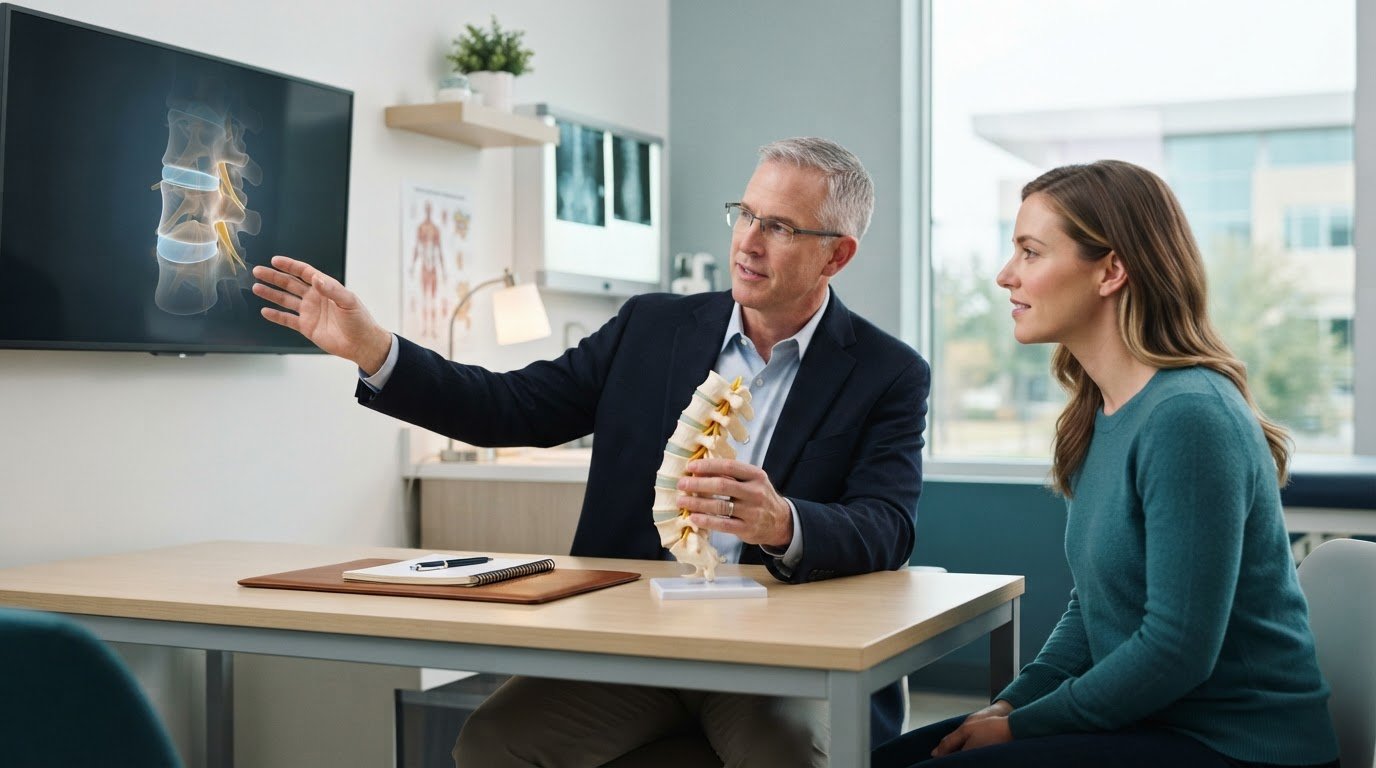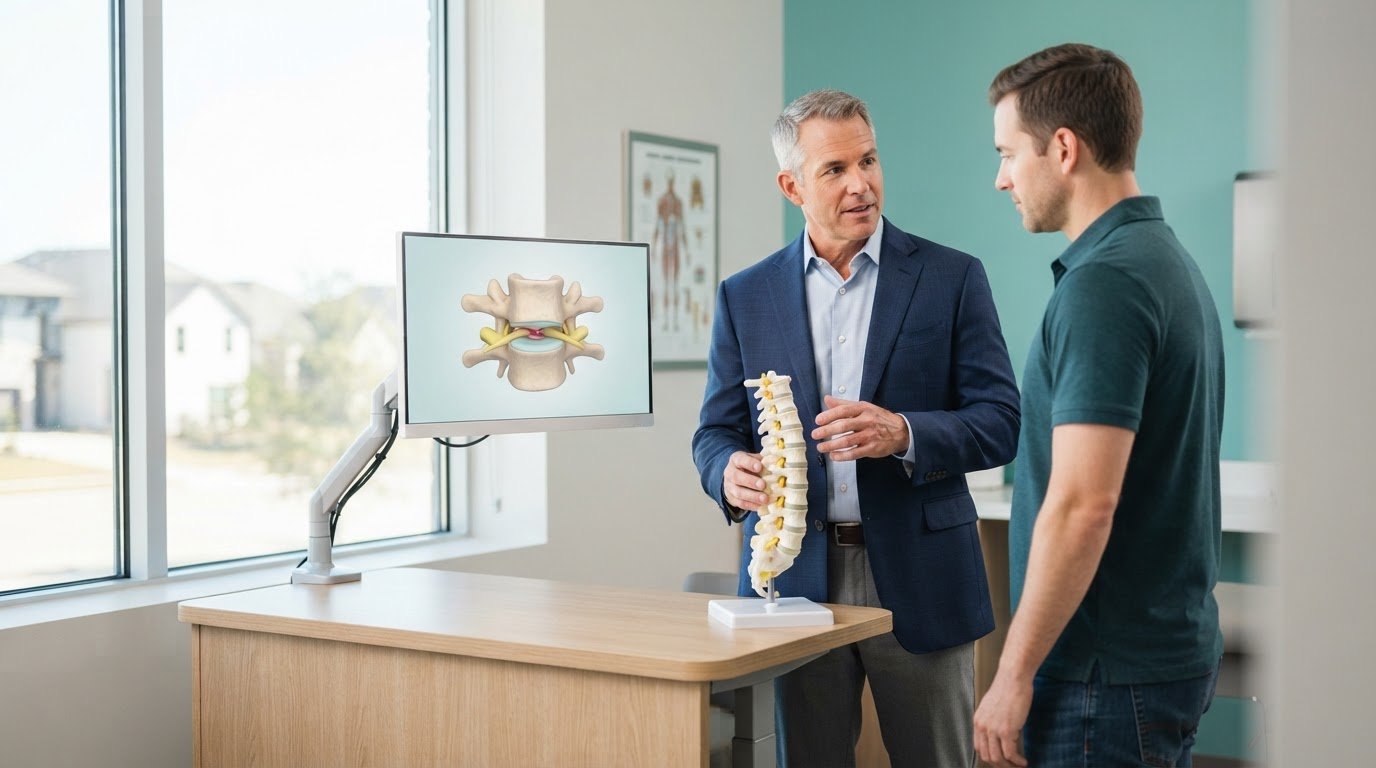
Minimally Invasive Neurosurgery of Texas (MINT), led by Dr. Scott Kutz, provides specialized spine treatment in Lewisville, TX, and Plano, TX.
Does a shifted vertebra automatically mean you need spine surgery? Not necessarily. Spondylolisthesis, a condition in which one vertebra slips in relation to another, can affect people differently. If you’re considering spondylolisthesis treatment Lewisville TX, imaging is only one part of understanding your diagnosis.
A diagnosis can raise questions about pain, movement, and symptoms such as numbness or weakness. Dr. Kutz considers how your symptoms relate to the vertebra’s position and whether the spine remains stable. Treatment may involve nonsurgical care or, when appropriate, minimally invasive spine surgery. This article explains common types of spondylolisthesis, what clinicians assess, and how symptoms, stability, and personal goals shape options in Lewisville and Plano.
Key Takeaways
- Understand what a vertebra slipping means and why imaging findings need to be considered alongside symptoms.
- Learn how a focused evaluation connects your symptoms, examination findings, and imaging before treatment options come up.
- A spondylolisthesis diagnosis does not automatically mean surgery; treatment discussions can include nonsurgical care and surgical options.
- Compare treatment paths by considering spinal stability, how symptoms affect daily life, and your personal goals.
- Explore what to discuss about spondylolisthesis treatment Lewisville TX with a spine specialist serving Lewisville and Plano.
What Does Spondylolisthesis Mean for Patients in Lewisville and Plano?
Minimally Invasive Neurosurgery of Texas (MINT), led by board-certified neurosurgeon Dr. Scott C. Kutz, provides specialized spine treatment in Lewisville, TX, and Plano, TX. For people exploring spondylolisthesis treatment Lewisville TX, the first step involves understanding what the diagnosis means and how it relates to their symptoms.
What happens in the spine when a vertebra slips?
Spondylolisthesis describes a vertebra, one of the bones stacked to form the spine, slipping forward or backward in relation to the vertebra next to it. When the slip affects the lower back, clinicians call it lumbar spondylolisthesis. The Spondylolisthesis overview describes the condition’s types and grading; a grade describes the degree of vertebral slippage.
Spinal stability means the bones and supporting structures keep the spine aligned as you move. A slip on an image does not, by itself, explain how stable your spine feels or whether the finding causes symptoms. Clinicians interpret imaging alongside your medical history and examination. They also consider whether the vertebra’s position affects nearby nerves, which carry signals between the brain and body.
Which symptoms may lead someone to seek an evaluation?
Symptoms vary. Some people notice lower-back pain, while others experience pain that travels into a leg. Numbness, an altered sensation such as tingling, or weakness can also occur if a nerve becomes irritated or compressed. Some people have no related symptoms. An imaging finding may not explain a person’s pain, so clinicians look at the whole picture rather than relying on a scan label alone.
In a focused spine evaluation, Dr. Kutz considers where symptoms occur, when they arise, and how they affect movement and daily activities. His more than 20 years of experience treating spinal disorders informs an individualized discussion of the diagnosis and possible next steps. MINT provides specialized spine care in Lewisville and Plano for patients seeking an explanation for back or leg symptoms. If surgery becomes part of the discussion, clinicians can explain how minimally invasive spine techniques may fit the clinical picture.
How Do Specialists Evaluate Spondylolisthesis Before Recommending Treatment?
Clinicians consider symptoms, examination findings, and imaging together before they discuss treatment. A scan can show a vertebra’s position, but it cannot explain on its own whether that finding causes pain or limits movement. A focused evaluation connects the image to your experience and helps clarify whether the spine appears stable or whether nerve irritation may contribute to symptoms.
Specialists typically assess the condition in this sequence:
- Review symptoms and history. The clinician asks where you feel pain or other changes, when they began, what affects them, and how they influence everyday movement.
- Examine movement and nerve function. The clinician checks mobility, strength, and sensation. A neurological examination means checks of nerve-related strength, sensation, and function.
- Review imaging. The clinician looks at pictures of the spine and nearby structures, then compares the findings with your symptoms and examination.
- Discuss treatment considerations. The specialist explains what the combined findings suggest and how your diagnosis and goals shape possible next steps.
What does a physical and neurological examination assess?
The physical examination helps the clinician understand how your back moves and whether particular movements affect your symptoms. During the neurological examination, the clinician checks areas such as leg strength and sensation. These findings can help identify whether a nerve, which carries signals between the brain and body, may contribute to pain, numbness, or weakness.
Dr. Scott Kutz’s treatment-planning approach considers symptoms alongside the diagnosis and the patient’s goals. This helps keep the discussion focused on how the condition affects daily life, not just on the wording of an imaging report. MedlinePlus also explains how specialists evaluate spondylolisthesis, including the role of symptoms and examination.
How do imaging findings contribute to a treatment plan?
An X-ray uses a small amount of radiation to create pictures that show bones and their alignment. It can help a clinician see the position of one vertebra relative to another. An MRI, or magnetic resonance imaging, uses a magnetic field and radio waves to create detailed pictures of soft tissues, including spinal discs and nerves. The clinician uses these images to look for findings that may help explain symptoms.
Imaging supports the assessment, but it does not replace a clinical examination. If a specialist considers surgery, the discussion may include spinal fusion, a procedure that joins bones in the spine to limit movement at a specific level. The reasons for considering fusion depend on the individual diagnosis and findings. Dr. Kutz can also explain how minimally invasive spine techniques may fit a treatment plan when surgery is appropriate. For people exploring spondylolisthesis treatment Lewisville TX, this step-by-step evaluation helps connect the diagnosis to the options under discussion.
Does Spondylolisthesis Always Require Surgery? Compare Treatment Paths
No. A spondylolisthesis diagnosis does not automatically mean you need an operation. Treatment depends on how symptoms affect you, what the examination and imaging show, whether earlier care helped, and what you hope to do. MedlinePlus’ Spondylolisthesis overview also describes treatment options, but a clinician can help connect general information to your individual findings.
Clinicians may discuss nonsurgical care or surgery, depending on the full picture. The comparison below explains the general purpose of each path, not a recommendation for any individual.
| Treatment path | What it may involve | What guides the discussion |
|---|---|---|
| Nonsurgical care | A clinician may consider symptom management, adjustments to activities, or physical therapy, which uses guided movement and exercises to support function. | The nature of symptoms, examination findings, and how the person responds to care. |
| Surgery | A spine surgeon evaluates whether an operation could address the condition. One possible procedure is spinal fusion, an operation that joins bones to stabilize a spinal segment. | Persistent symptoms, relevant spinal instability, imaging and examination findings, and the patient’s goals. |
When may nonsurgical care be considered?
A clinician may discuss nonsurgical approaches when the person’s symptoms and findings support managing the condition without an operation. The plan may include symptom management and activity adjustments. A clinician may also consider physical therapy, a type of care that uses guided movement to address function. The right approach depends on the person’s diagnosis and response; no single plan fits everyone.
When might a surgical discussion enter the conversation?
A surgical evaluation may make sense when symptoms persist despite nonsurgical care or when examination and imaging show instability that relates to the person’s symptoms. Instability means the spine does not maintain its alignment as expected during movement. A finding on an image alone does not determine the need for surgery. The specialist weighs the whole clinical picture and explains the potential role of procedures such as spinal fusion.
Dr. Scott Kutz considers the diagnosis, symptoms, and patient goals when discussing treatment options. If surgery becomes part of the conversation, minimally invasive spine techniques may be relevant when clinically appropriate. For patients comparing spondylolisthesis treatment Lewisville TX options, understanding why a clinician considers each path can make the discussion clearer without assuming that one operation suits everyone.

How Can Patients in Lewisville Compare Spondylolisthesis Treatment Options?
A useful treatment discussion should connect the diagnosis to what you feel and what you want to do. Use this checklist to keep the conversation focused:
- Clarify the diagnosis: Ask which spinal level shows the slip and how the clinician interprets its stability.
- Connect findings to symptoms: Discuss whether your back or leg symptoms match the examination and imaging.
- Understand each option: Ask what a proposed treatment aims to address, what alternatives exist, and what risks the clinician considers relevant.
- Share your goals: Explain which daily activities matter to you and what changes you hope care may support.
- Discuss the next step: Ask how the care team will assess your response and when the plan may need reassessment.
What should a clear treatment discussion explain?
A specialist should explain the diagnosis in plain language, including how symptoms and imaging findings relate to the recommendation. Ask what each option aims to improve, what risks apply to your situation, and what alternatives the clinician considers. You can also discuss how the plan relates to your priorities, such as walking comfortably, working, or returning to other daily activities. These questions help you understand the reasoning without assuming that one treatment fits every person.
How does minimally invasive surgery fit into the discussion?
Minimally invasive surgery uses smaller incisions and techniques designed to limit disruption to nearby muscles and other tissues. Traditional open surgery uses a larger incision to give the surgeon access to the treatment area. The right approach depends on the specific spinal problem, the procedure’s goals, and the clinician’s assessment. Minimally invasive does not mean risk-free or appropriate for every case, and it does not guarantee a particular result.
Procedure choice also depends on what the surgeon needs to address. Decompression, a procedure that creates more room for compressed nerves, focuses on relieving pressure. Spinal fusion joins bones to stabilize a spinal segment. A specialist considers whether nerve pressure, instability, or both relate to your symptoms before discussing which approach may fit. Learn more about minimally invasive spine surgery options.
For a personalized discussion of your diagnosis, symptoms, and goals, request a spine evaluation with Minimally Invasive Neurosurgery of Texas. Dr. Scott Kutz provides specialized spine care in Lewisville and Plano, TX, and considers minimally invasive options when clinically appropriate.
Where Can Patients Discuss Spondylolisthesis Treatment in Lewisville or Plano?
Patients in North Texas can discuss spondylolisthesis care at Minimally Invasive Neurosurgery of Texas (MINT), with locations in Lewisville, TX, and Plano, TX. Dr. Scott C. Kutz, MD, is a board-certified neurosurgeon and Fellow of the AANS and ACS, with more than 20 years of experience treating spinal disorders. A treatment discussion connects the diagnosis with symptoms, examination and imaging findings, and your goals. It doesn’t assume surgery is the right next step.
What can patients expect from a focused spine consultation?
A focused consultation gives you time to describe your symptoms, how they affect daily activities, and what questions you have about the diagnosis. Dr. Kutz can review relevant imaging, explain what the findings may mean, and discuss treatment options in clear language. If surgery comes up, the conversation can cover its purpose, relevant risks, and alternatives so you can understand the reasoning before making decisions.
Prepare by noting when symptoms began, where you feel them, what activities affect them, and any changes in movement, sensation, or strength. Bring available imaging and related reports. These details help the clinician consider your experience alongside test findings.
Learn more about Dr. Scott Kutz’s background and MINT’s approach to specialized spine care. The practice also explains its minimally invasive spine techniques.
What is a practical next step for Lewisville and Plano patients?
Gather your symptom notes, questions, and available imaging or reports before your appointment. You might ask how the findings relate to your symptoms, what each option aims to address, and how your goals shape the plan. You don’t need to choose a treatment before you understand the diagnosis and options.
Contact MINT to discuss your concerns with a spine specialist in Lewisville or Plano. Dr. Kutz can help you understand the findings and consider an individualized path forward without presuming a specific treatment.
Take the Next Step Toward a Clearer Spine Care Plan
A spondylolisthesis diagnosis doesn’t tell the whole story. Symptoms, examination findings, and imaging help clinicians understand whether the vertebral slip relates to your concerns. Surgery isn’t automatic. The right discussion weighs your diagnosis, response to prior care, and goals, including whether minimally invasive surgery makes sense when clinically appropriate.
If you’re exploring spondylolisthesis treatment Lewisville TX, Minimally Invasive Neurosurgery of Texas offers specialized spine care in Lewisville and Plano. Dr. Scott C. Kutz, a board-certified neurosurgeon with more than 20 years of experience treating spinal disorders, emphasizes personalized treatment planning. You can bring your symptom history, imaging, and questions to help guide a focused conversation about your options.
Contact MINT to discuss spondylolisthesis treatment in Lewisville or Plano and take a clear, informed next step. Understanding your options can help you move forward with greater confidence.
Frequently Asked Questions
What is spondylolisthesis?
Spondylolisthesis occurs when one vertebra, a bone in the spine, slips in relation to the vertebra below it. The slip may affect spinal stability, meaning how well the spine maintains alignment during movement, or nearby nerves that carry signals between the brain and body. A clinician considers imaging, symptoms, and examination findings together. The diagnosis alone doesn’t show whether the slip causes symptoms or which treatment may fit.
Does spondylolisthesis always require surgery?
No. A spondylolisthesis diagnosis doesn’t automatically mean you need surgery. Clinicians consider symptoms, examination findings, imaging, any previous care, and your goals before discussing options. Some people may consider nonsurgical approaches, while others may benefit from a surgical evaluation based on their individual findings. A specialist can explain how the diagnosis relates to your symptoms and why a particular treatment path may or may not make sense.
What symptoms can spondylolisthesis cause?
Spondylolisthesis can cause different symptoms, and some people have no related symptoms. Possible signs include lower-back pain, leg pain, numbness, or weakness. Numbness means reduced or altered feeling, while weakness means reduced muscle strength. These symptoms can have other causes, so they don’t confirm spondylolisthesis on their own. A clinician compares your symptom history with examination findings and imaging to understand whether the spinal finding may relate to what you feel.
How do doctors diagnose spondylolisthesis?
Clinicians review your symptoms and medical history, examine movement and nerve function, and consider imaging. An X-ray uses radiation to create pictures that show the alignment of spinal bones. An MRI, or magnetic resonance imaging, uses a magnetic field and radio waves to create detailed pictures of spinal structures, including nearby nerves. Clinicians interpret these findings together rather than relying on an image alone. The specific tests depend on your situation.
What is the difference between spondylolisthesis and spinal stenosis?
Spondylolisthesis describes one vertebra slipping in relation to another. Spinal stenosis means narrowing around the spinal canal, the passage that protects the spinal cord and nerves, or around nearby nerves. The conditions can occur together, but they describe different findings. A clinician reviews your symptoms, examination, and imaging to assess whether either condition may relate to your concerns and which treatment options merit discussion.
Can minimally invasive surgery treat spondylolisthesis?
A specialist may consider minimally invasive surgery for some spinal conditions, depending on the diagnosis and clinical findings. This approach uses techniques designed to limit incision size and disruption to nearby tissue. It doesn’t suit every case or guarantee a particular outcome. A spine specialist can explain the purpose of a proposed procedure, relevant alternatives, and how the findings support that discussion. The treatment plan should reflect your specific condition and goals.
Where can I discuss spondylolisthesis treatment near Lewisville, TX?
Minimally Invasive Neurosurgery of Texas provides specialized spine care in Lewisville and Plano, TX. Patients can discuss symptoms, diagnosis, imaging, and potential treatment paths with Dr. Scott C. Kutz, a board-certified neurosurgeon with more than 20 years of experience treating spinal disorders. If you’re exploring spondylolisthesis treatment Lewisville TX, a focused evaluation can help clarify how your findings relate to your symptoms and what next steps to consider.