Minimally Invasive Neurosurgery of Texas (MINT), led by board-certified neurosurgeon Dr. Scott Kutz, provides advanced spinal care and minimally invasive surgery at its primary headquarters in Lewisville and its satellite clinic in Plano, TX.
Research shows that spinal stenosis, a condition where the spinal canal narrows and compresses nerves, affects approximately 20 percent of people over the age of 60. You likely experience the sharp leg pain or heavy cramping known as neurogenic claudication whenever you try to walk or stand for long periods. The fear of permanent nerve damage or a traumatic hospital stay often prevents patients from seeking the help they need. Dr. Scott Kutz, a Fellow of the AANS and ACS, utilizes precision technology to perform lumbar stenosis surgery Lewisville TX with minimal disruption to your body. This article explores how these modern, muscle-sparing techniques allow you to avoid large incisions and return to your favorite activities faster than ever before. You’ll learn about the outpatient procedures and robotic navigation systems that ensure a safe, successful recovery.
Key Takeaways
- Learn how Dr. Scott Kutz uses muscle-sparing techniques to avoid large incisions and minimize tissue damage during spinal procedures.
- Discover how the Globus Excelsius robotic navigation system provides the high level of precision necessary for safe surgical outcomes.
- Understand the rapid recovery timeline that allows many patients to return home from our Lewisville headquarters on the same day.
- Explore your options for lumbar stenosis surgery Lewisville TX to resolve neurogenic claudication, which describes pain that occurs when walking, and regain your independence.
- Review the professional credentials of Dr. Scott Kutz, a board-certified neurosurgeon who provides specialized care in Lewisville and Plano.
Understanding Lumbar Spinal Stenosis and Surgical Indicators
Minimally Invasive Neurosurgery of Texas (MINT) and board-certified neurosurgeon Dr. Scott Kutz provide specialized care for spinal conditions, including lumbar stenosis surgery Lewisville TX, at their primary headquarters in Lewisville and their satellite office in Plano, TX.
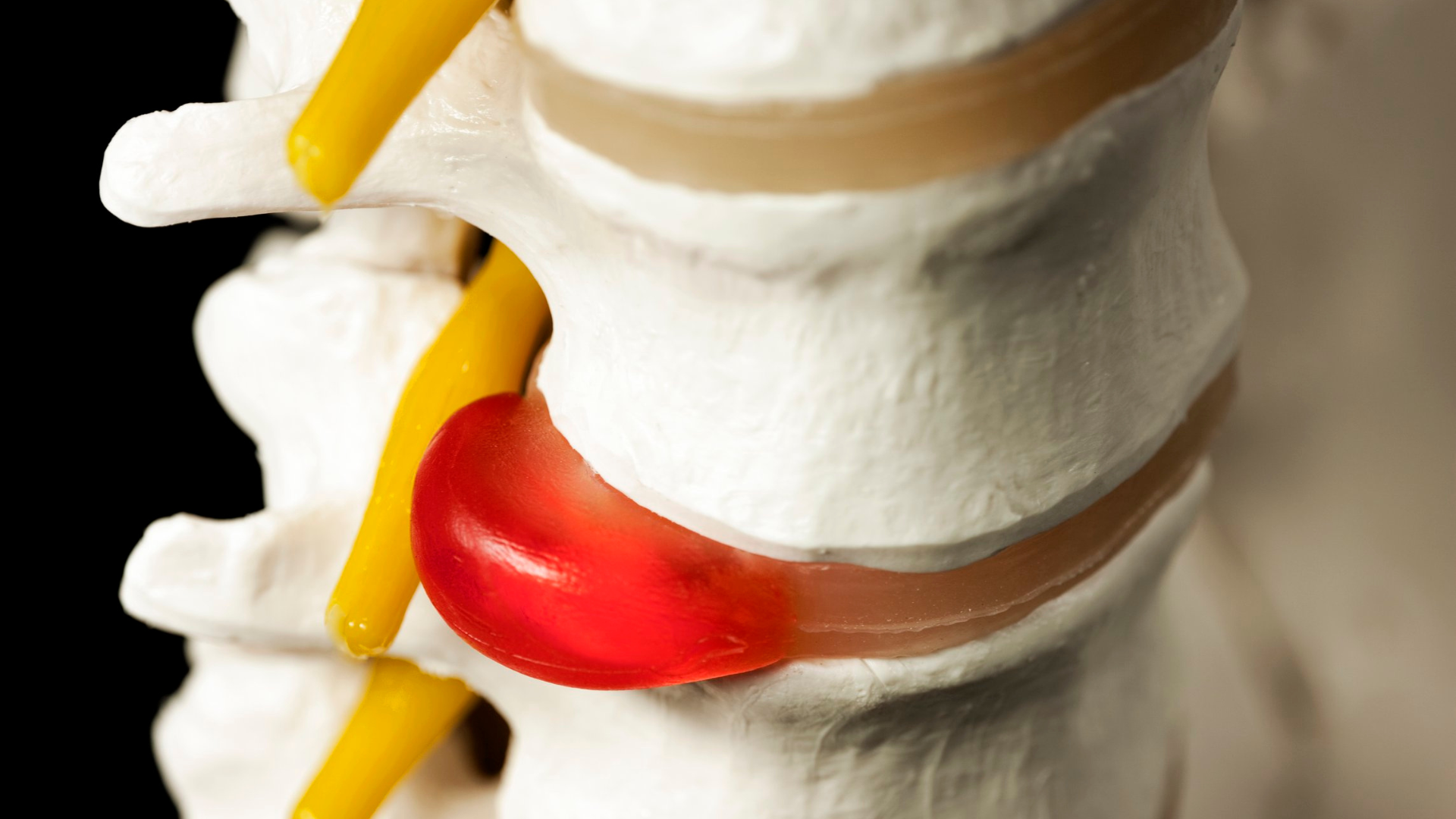
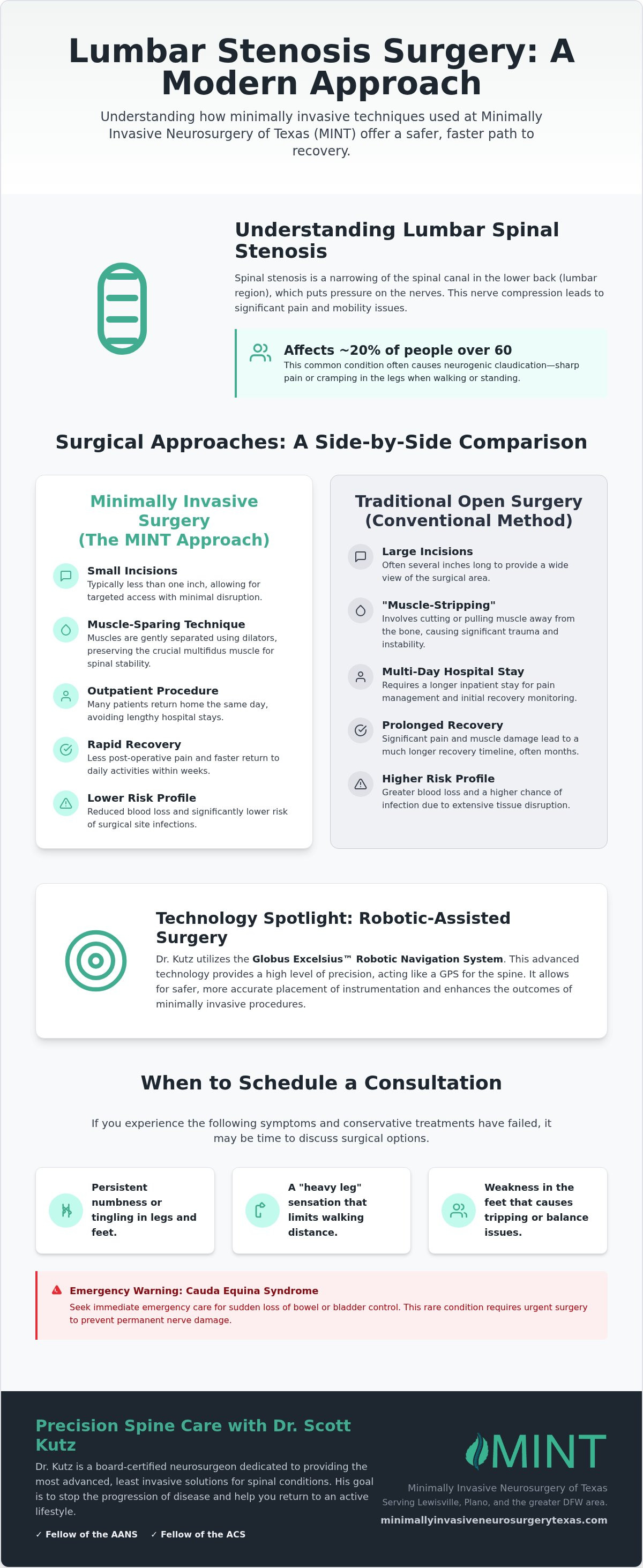
Lumbar spinal stenosis involves the narrowing of the spaces within your lower spine, also known as the lumbar region. This narrowing puts direct pressure on the nerves that travel through the spinal canal. This process, known as nerve compression, causes the debilitating symptoms that often lead patients to seek surgical intervention. When these spaces narrow, you may experience neurogenic claudication. This clinical term describes leg pain, tingling, or cramping that occurs specifically while walking or standing. Most patients find that sitting down or leaning forward provides temporary relief, as these positions slightly open the spinal canal. While conservative treatments like physical therapy or epidural steroid injections help many people, surgery becomes necessary when these options fail to restore your quality of life. Understanding Lumbar Spinal Stenosis helps you recognize when your condition requires a more direct intervention from a specialist like Dr. Scott Kutz.
Symptoms That Require a Surgical Consultation
You should monitor your symptoms closely to determine when you need a professional evaluation. Dr. Scott Kutz recommends scheduling a consultation if you notice the following:
- Persistent numbness or tingling in your legs and feet that does not resolve with rest.
- A “heavy leg” sensation that significantly limits the distance you can walk.
- Weakness in the feet that causes you to trip or struggle with balance.
You must seek immediate emergency care for cauda equina syndrome. This rare but serious condition occurs when extreme compression affects the bundle of nerve roots at the lower end of the spinal cord. Symptoms include a sudden loss of bowel or bladder control and require urgent decompression to prevent permanent damage.
The Risk of Delayed Treatment
Waiting too long for decompression can have lasting consequences. Chronic nerve compression often leads to permanent neurological deficits, such as a total loss of sensation or chronic, burning pain. Muscle weakness may also become permanent if the stenosis continues to compress the nerve for an extended period. During a consultation at our Lewisville headquarters, Dr. Kutz evaluates your nerve health using advanced diagnostic imaging. He determines if minimally invasive spine techniques can safely relieve the pressure on your nerves. His goal is to stop the progression of the disease and help you return to a more active lifestyle through precise, motion-preserving care.
Minimally Invasive Lumbar Stenosis Surgery vs. Traditional Open Procedures
Traditional spine surgery often involves extensive disruption to the body’s natural architecture. Surgeons perform “muscle stripping” during open procedures. This is the process of pulling muscle away from the bone to gain a clear view of the spinal canal. This trauma leads to significant post-operative pain and longer recovery times. Dr. Scott Kutz prioritizes lumbar stenosis surgery Lewisville TX techniques that preserve these delicate structures. At Minimally Invasive Neurosurgery of Texas (MINT), we utilize minimally invasive spine surgery (MISS) to achieve the same decompression goals with far less physical impact. This approach uses small incisions and specialized dilators to reach the spine. Dilators are tube-like instruments that gently separate muscle fibers rather than cutting them. This method significantly reduces blood loss and limits damage to the surrounding soft tissue.
The Benefits of Muscle-Sparing Techniques
Dr. Kutz focuses on preserving the multifidus muscle during every procedure. This muscle acts as the primary core stabilizer of the spine. When a surgeon strips this muscle during traditional surgery, the patient may lose long-term spinal stability. By using a muscle-sparing approach, we maintain the integrity of these supports. Patients also benefit from a lower risk of surgical site infections because the smaller wounds expose less tissue to the environment. An NIH review of surgical options for spinal stenosis highlights how these advanced techniques improve patient outcomes. Additionally, patients typically require fewer opioid medications for pain management after MISS. We focus on getting you back to your routine without the heavy burden of long-term narcotic use.
Comparing Scarring and Cosmetic Outcomes
The cosmetic difference between open surgery and MISS is striking. Open surgery typically leaves a three to five-inch scar on the lower back. In contrast, MISS incisions are often less than an inch long. This is roughly the size of a postage stamp. Smaller incisions heal much faster, allowing our patients in Plano and Lewisville to return to swimming or exercise sooner. Dr. Kutz combines his 20 years of experience with these high-tech methods to ensure your recovery is as smooth as possible. If you want to see if you qualify for these advanced procedures, you can schedule a consultation at our Lewisville headquarters.
Choosing Between Endoscopic Decompression and Robotic-Assisted Surgery
Minimally Invasive Neurosurgery of Texas (MINT), led by board-certified neurosurgeon Dr. Scott Kutz, provides advanced spinal care and lumbar stenosis surgery Lewisville TX at its primary headquarters in Lewisville and its satellite office in Plano.
Patients frequently ask which high-tech option best treats their specific condition. Dr. Scott Kutz, a Fellow of the AANS and ACS, utilizes two primary advanced methodologies to relieve nerve pressure. The choice between endoscopic techniques and robotic-assisted systems depends on your unique anatomy and the extent of the spinal narrowing. Both methods prioritize motion preservation and a rapid return to your daily activities. Dr. Kutz evaluates each patient to determine if a targeted decompression or a more comprehensive robotic-assisted approach will yield the best result.
Endoscopic Lumbar Laminotomy
Endoscopic spine surgery involves the use of an endoscope. This is a tiny camera that allows the surgeon to see the internal structures of the spine on a high-definition monitor. This direct visualization ensures that the surgeon removes only the tissue causing the obstruction. During an endoscopic spine surgery, Dr. Kutz performs a laminotomy. In this procedure, he removes a small portion of the lamina. The lamina is the bony arch on the back of the vertebra. Removing this bone creates immediate space for the compressed nerves. This ultra-minimally invasive approach targets the source of pain without weakening the overall structure of the spine. Because this procedure requires only a tiny incision, patients in Lewisville often benefit from an outpatient experience. This means you can often return home the same day to begin your recovery in comfort.
Robotic-Assisted Microsurgical Decompression
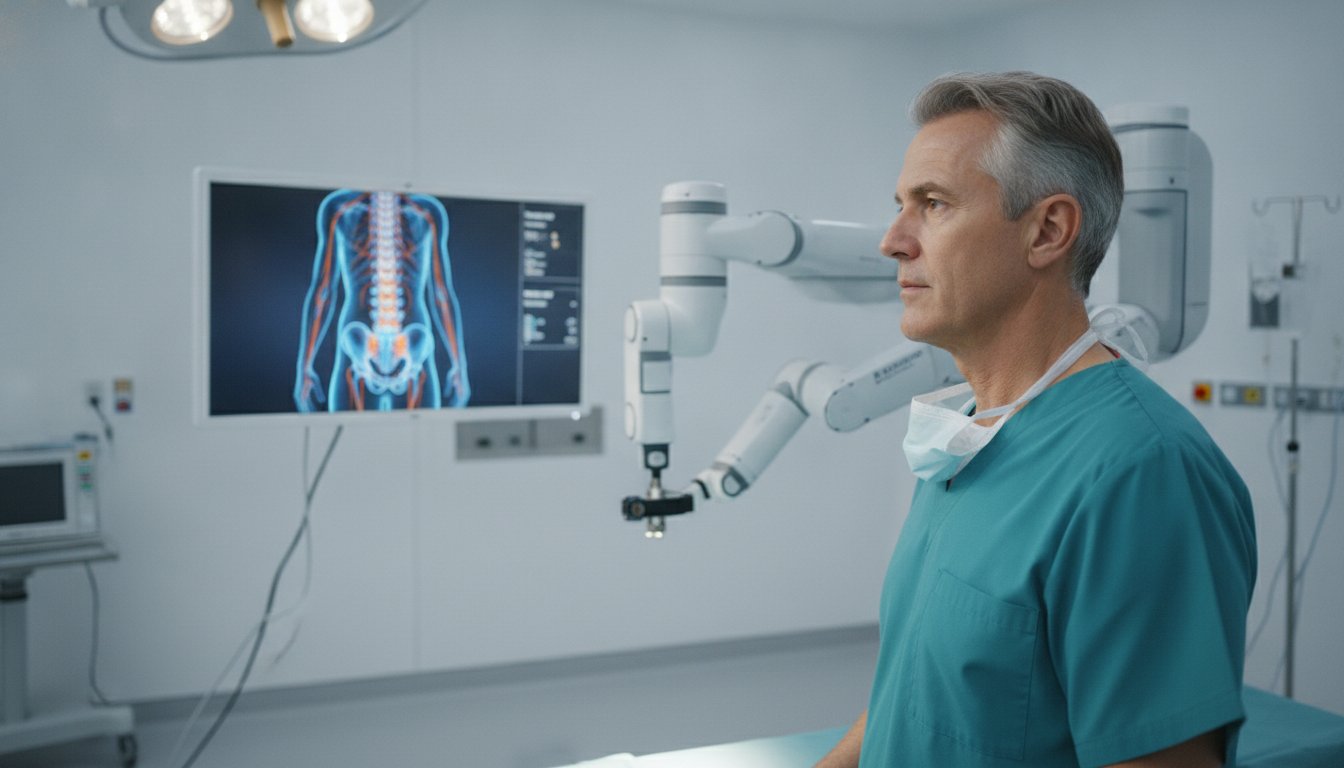
For cases requiring more extensive structural work, Dr. Kutz employs the Globus Excelsius robotic navigation system. This system allows the surgeon to map your spinal anatomy in a three-dimensional space before the procedure begins. This 3D mapping ensures that every movement is precise. The robotic arm provides real-time feedback and guides the surgeon with sub-millimeter accuracy. This technology is particularly useful for ensuring the perfect placement of implants if your condition requires stabilization. Dr. Kutz also uses Augmedics augmented reality (AR) tools. AR technology provides a “see-through” view of your spine, which functions like an internal GPS for the surgeon. This level of technological integration aligns with the standards discussed by Johns Hopkins on Minimally Invasive Spine Surgery. Patients from Plano and Dallas travel to MINT to access these advanced tools because they offer a higher margin of safety and more predictable clinical outcomes.
Your Recovery Timeline After Spine Surgery in Lewisville and Plano
Recovery from minimally invasive lumbar stenosis surgery Lewisville TX happens significantly faster than recovery from traditional open procedures. Because Dr. Scott Kutz uses muscle-sparing techniques, your body spends less energy repairing damaged tissue and more energy healing the spine. Most patients at our Lewisville headquarters go home on the same day or after just one night of observation. Walking begins within hours of the procedure. Early movement promotes circulation and accelerates the natural healing process. Dr. Kutz provides every patient at Minimally Invasive Neurosurgery of Texas with a personalized recovery plan. This plan utilizes minimally invasive spine techniques to ensure you meet your specific spinal health and lifestyle goals.
The First Week: Managing Initial Healing
Your first week focuses on protecting the surgical site while maintaining gentle mobility. Dr. Kutz advises patients to take short, frequent walks around their homes in Plano or Lewisville. You must follow the “no BLT” rule: no bending, lifting, or twisting. This restriction prevents strain on the healing ligaments and muscles. You should also keep the small incision site clean and dry. Since the incision is typically less than an inch long, wound care is straightforward. Patients often report that the sharp, radiating leg pain they felt before surgery disappears almost immediately after decompression, which is the surgical relief of nerve pressure. This relief provides the optimism needed to stay committed to the recovery process.
Weeks Two through Six: Returning to Activity
Many patients return to desk jobs within one to two weeks after their procedure. If your job requires physical labor, Dr. Kutz will adjust your timeline accordingly. During this phase, you will gradually increase your walking distance to build stamina and leg strength. Regular movement prevents the formation of excessive scar tissue around the nerves. You will attend follow-up appointments at our Lewisville or Plano offices. These visits allow Dr. Kutz to ensure the nerves are healing correctly and that you are meeting your recovery milestones. Clinical data shows that minimally invasive decompression has a success rate of approximately 90% for appropriately selected patients. This high success rate reflects our commitment to precision and patient-centered care.
If you feel ready to leave chronic leg pain behind and reclaim your mobility, contact MINT today to schedule your evaluation.
Precision Spine Care with Dr. Scott Kutz at MINT
Minimally Invasive Neurosurgery of Texas (MINT) provides a sophisticated blend of clinical authority and compassionate reassurance for patients facing complex spinal issues. Dr. Scott Kutz, a board-certified neurosurgeon, leads the practice with over 20 years of experience in the field. He holds prestigious fellowships in functional neurosurgery, which is a specialized field focused on restoring neurological function through surgical intervention. Dr. Kutz is also a Fellow of the AANS (American Association of Neurological Surgeons) and ACS (American College of Surgeons). He maintains active membership in the North American Spine Society to ensure he remains at the forefront of surgical innovation. This level of certified authority ensures that patients receive the most advanced care for lumbar stenosis surgery Lewisville TX. Our practice prioritizes evidence-based care and patient-first communication, positioning MINT as a source of optimism for those dealing with chronic physical conditions.
Why Choose a Neurosurgeon for Stenosis?
Selecting a neurosurgeon for spinal stenosis treatment provides a unique benefit because these specialists undergo extensive training focused on the delicate nerves of the spinal canal. Dr. Kutz manages complex spinal disorders with a strict focus on motion preservation. This philosophy prioritizes maintaining the natural movement of your spine over traditional fusion methods. His expertise covers both cervical spine conditions, which affect the neck, and lumbar spine conditions, which affect the lower back. This dual-layer expertise ensures a comprehensive diagnostic approach. By understanding the intricate relationship between the bone and the nervous system, Dr. Kutz provides the precision necessary for a successful recovery and a return to normal activity.
Schedule Your Consultation in Lewisville or Plano
We invite you to visit our primary headquarters in Lewisville or our satellite office in Plano, TX, for a complete evaluation. Our offices serve the entire Dallas-Fort Worth Metroplex, including neighboring areas like Flower Mound, Southlake, McKinney, and Allen. MINT accepts most major insurance plans and provides transparent communication regarding every aspect of your treatment. Our team uses Globus Excelsius robotic navigation and Augmedics AR technology to ensure surgical accuracy. You can read more about our lead surgeon on our about us page. Reclaiming your mobility and reducing chronic back pain starts with a single appointment. Take the first step toward a healthier life and discover why so many patients trust Dr. Kutz with their spinal health. Our results-oriented rhythm moves you from a state of concern to a state of informed confidence regarding your recovery journey.
Reclaim Your Active Lifestyle in Lewisville
Advanced technology and surgical expertise provide a clear path toward pain relief for patients suffering from spinal narrowing. Dr. Scott Kutz, a board-certified neurosurgeon, uses the Globus Excelsius robotic navigation system to ensure unmatched precision during every procedure. This high-tech approach allows for muscle-sparing techniques that preserve your spinal stability and minimize post-operative pain. You don’t have to accept a life limited by neurogenic claudication, which describes the leg pain and cramping caused by compressed nerves.
Whether you visit our primary headquarters in Lewisville or our satellite clinic in Plano, you receive specialized care tailored to your specific needs. Choosing lumbar stenosis surgery Lewisville TX at MINT means prioritizing a rapid return to your family, work, and daily activities. Our commitment to motion preservation ensures that you regain your mobility without the trauma of traditional open surgery. We invite you to take the first step toward a future free from chronic back pain. Schedule your consultation with Dr. Scott Kutz today and start your journey toward lasting recovery.
Frequently Asked Questions
Is lumbar stenosis surgery considered a major operation?
While traditional open surgery requires significant downtime and large incisions, Dr. Scott Kutz performs minimally invasive decompression as a less invasive alternative. This procedure involves smaller incisions and causes far less muscle disruption than older methods. Many patients view it as a sophisticated outpatient procedure rather than a major inpatient surgery. Dr. Kutz utilizes these advanced techniques at the MINT headquarters in Lewisville to ensure patient safety and clinical precision.
How long do I need to stay in the hospital after surgery in Lewisville?
Most patients return home on the same day as their procedure. Because minimally invasive lumbar stenosis surgery Lewisville TX causes minimal tissue damage, you don’t typically require a multi-day stay in a hospital. Some complex cases may involve one night of observation at a local facility to ensure your comfort and safety. Dr. Kutz prioritizes a rapid return to your home environment in Lewisville or Plano to facilitate faster healing.
Can spinal stenosis return after I have surgery?
Stenosis can potentially recur at different levels of the spine over time as the body ages. While the surgery successfully decompresses the specific area of narrowing, the natural aging process continues in other segments. Maintaining a healthy weight—which can be achieved through medical weight loss programs like Medi Slim—and performing core-strengthening exercises helps prevent future issues. Dr. Kutz focuses on motion preservation to reduce the stress on adjacent spinal segments and protect the long-term health of your entire spine in Plano.
Many patients do not require a spinal fusion to treat their stenosis. Dr. Kutz prefers motion-preserving techniques like a laminotomy, which is the removal of a small bone fragment to relieve nerve pressure. Fusion is only necessary if you have significant spinal instability or spondylolisthesis, a condition where one vertebra slips over another. During your consultation in Lewisville, we use advanced imaging to determine if a standalone decompression will provide the relief you need.
What is the success rate of minimally invasive decompression?
Clinical studies report a success rate of approximately 90% for appropriately selected patients undergoing minimally invasive decompression. This high rate of success reflects the precision of advanced tools like the Globus Excelsius robotic system. Patients typically experience immediate relief from leg pain and heavy cramping. Dr. Scott Kutz uses his 20 years of experience to ensure every patient in the Lewisville and Plano area achieves the best possible clinical outcome for their condition.
How soon can I drive after my spine surgery in Plano?
Most patients resume driving within one to two weeks after their operation. You must stop taking all narcotic pain medications before you get behind the wheel. You should also ensure you can comfortably perform a “slam brake” maneuver without experiencing sharp pain. Dr. Kutz evaluates your mobility during follow-up visits at our Plano or Lewisville offices. He will give you specific clearance based on your individual healing progress and physical strength.
Does insurance cover robotic-assisted spine surgery?
Most major insurance plans cover robotic-assisted procedures when they are medically necessary for your health. The robotic system is a high-tech tool that Dr. Kutz uses to perform the decompression, which is the surgical relief of nerve pressure. Our staff at the Lewisville office helps you navigate the prior authorization process required by many insurance providers. We provide transparent communication about your coverage to ensure you can focus entirely on your recovery and mobility.
What happens if I choose not to have surgery for my stenosis?
Untreated stenosis often leads to a progressive decline in your mobility and quality of life. Chronic nerve compression can cause permanent neurological deficits, such as muscle wasting or a total loss of sensation in your legs. You may find that your walking distance continues to decrease as the narrowing worsens. Dr. Scott Kutz recommends an early evaluation in Lewisville or Plano to prevent irreversible damage and explore both conservative and minimally invasive surgical options.