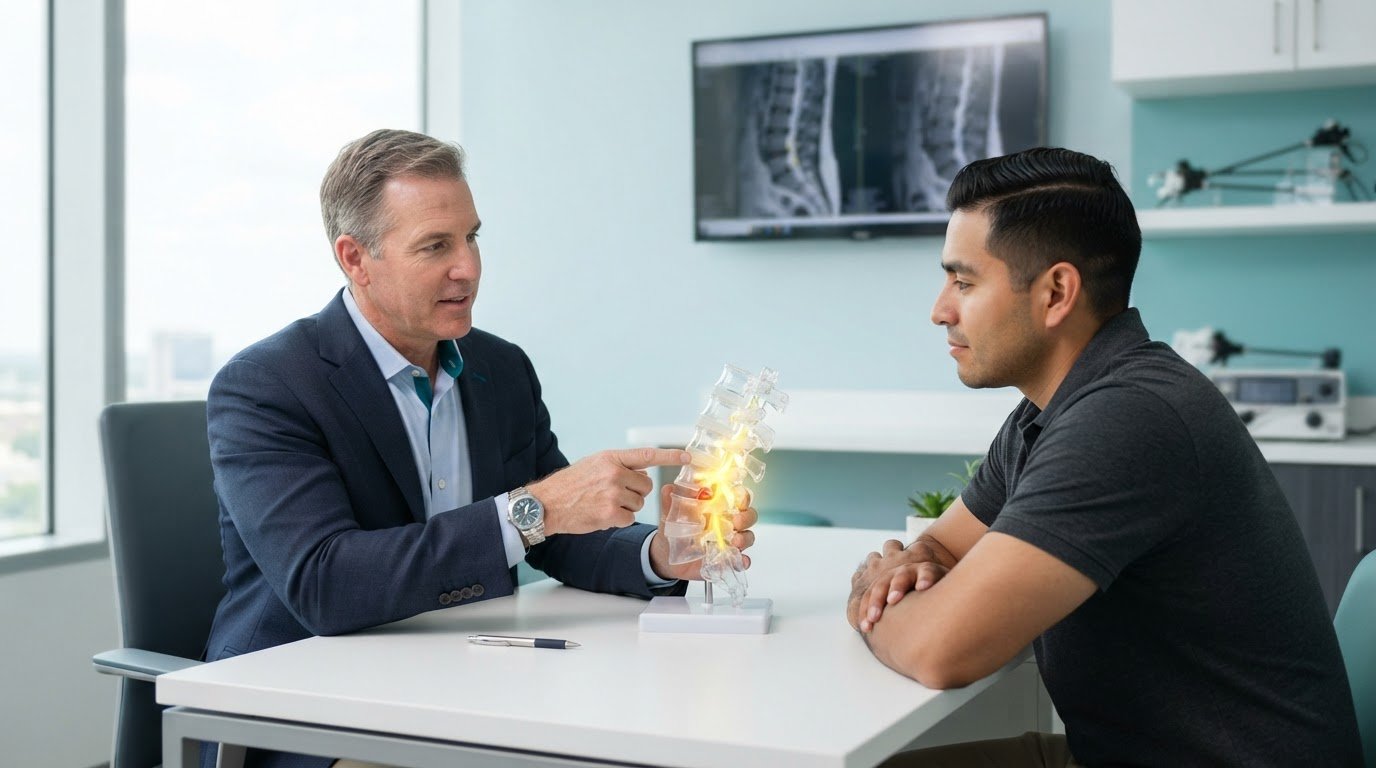
Minimally Invasive Neurosurgery of Texas provides minimally invasive spine surgery in Lewisville and Plano, TX. Dr. Scott Kutz, a board-certified neurosurgeon and Fellow of the AANS and ACS, leads the practice.
A pinched nerve occurs when nearby tissue presses on a nerve, causing pain, tingling, numbness, or weakness. Pinched nerve surgery in Plano, TX may be considered when nonsurgical treatment hasn’t helped or compression causes significant weakness. The right treatment depends on what is pressing on the nerve and how it affects symptoms and movement.
This article explains common causes and assessment, then explores treatment options, including endoscopic spine procedures and surgery for spinal stenosis, a narrowing around spinal nerves.
Key Takeaways
- Recognize how nerve pressure can cause pain, tingling, numbness, or weakness in areas connected to the affected nerve.
- Learn how clinicians assess symptoms and identify the source of compression to guide a tailored treatment plan.
- Understand why ongoing nerve compression deserves attention and which changes in strength or movement matter.
- See how minimally invasive procedures may address spinal nerve pressure while limiting the impact of surgery.
- Find out when conservative care may be appropriate and what factors can make surgery a consideration.
What is a pinched nerve?
A pinched nerve occurs when nearby bone, cartilage, tendon, or muscle presses on a nerve. This pressure can disrupt nerve signals, causing pain, numbness, tingling, or weakness. For example, a compressed nerve in the lower back may cause symptoms in the buttock, leg, or foot, rather than only near the spine.
Several conditions can cause this pressure. A herniated disc, where soft material inside a spinal disc pushes outward, can press on a nerve root, the part of a nerve that branches from the spinal cord. Arthritis may create bone spurs that narrow the space around nerves. Degenerative disc changes, muscle spasm, inflammation, injury, and repetitive strain can also contribute.
Pinched nerves commonly affect the neck and lower back. Compression in the neck can cause pain or tingling in the shoulder, arm, or hand. Compression in the lumbar spine, the lower part of the back, can send symptoms into the buttock, leg, or foot. Pain can range from mild to severe, and symptoms may worsen during or after sleep. Weakness or tingling can affect the area served by the nerve.
Sciatica describes pain along the sciatic nerve, which travels from the lower back through the buttock and down the leg. A herniated disc or other lower-back pressure can irritate its nerve roots. Acute sciatica often lasts a few weeks and may improve with conservative care. Chronic sciatica lasts more than three months. Burning pain, tingling, numbness, or weakness along one leg can help distinguish this pattern from pain limited to the back.
In Plano, patients considering surgery for spinal nerve compression may consult a neurosurgeon or orthopedic spine surgeon. Dr. Scott Kutz is a board-certified neurosurgeon who treats spinal conditions. The appropriate hospital or surgical setting depends on the diagnosis and procedure, not symptoms alone.
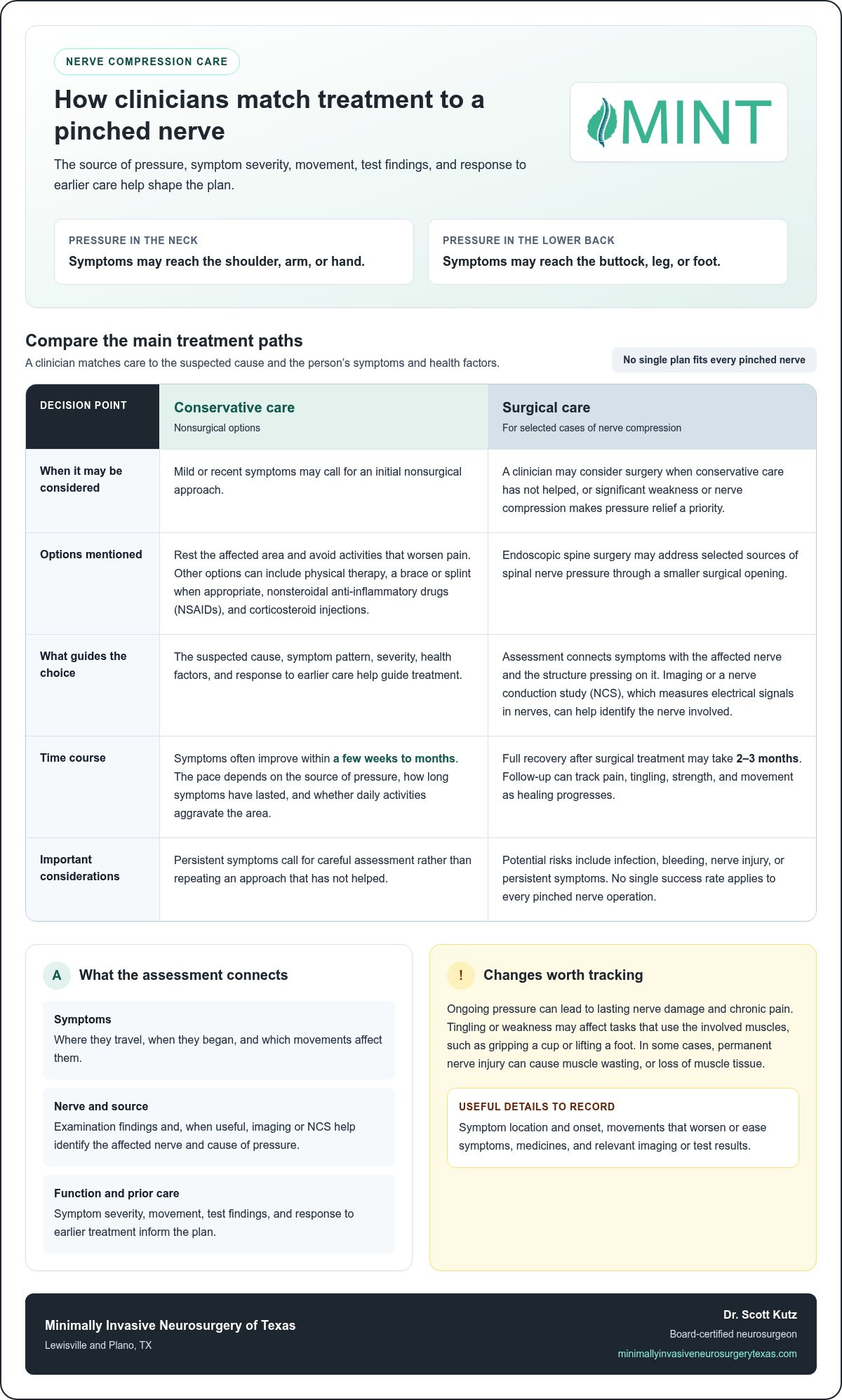
Surgery can relieve pressure, but it also carries potential risks, including infection, bleeding, nerve injury, or persistent symptoms. No single success rate applies to every pinched nerve operation. The cause of compression, procedure, nerve condition, and patient’s health all affect potential benefits and risks. Endoscopic spine surgery may address selected sources of nerve pressure through a smaller surgical opening.
Assessment and tailored treatment plans
A useful assessment connects your symptoms with the nerve and structure causing pressure. The treatment plan then considers symptom severity, test findings, movement, and your response to earlier care.
Conservative and Nonsurgical Options
For mild or recent symptoms, rest the affected area and avoid activities that worsen the pain. Physical therapy can help strengthen or relax muscles and teach movements that ease pressure. A brace or splint may support the area as it heals when appropriate for the source and location of compression.
Other options include nonsteroidal anti-inflammatory drugs (NSAIDs), which reduce pain and inflammation, and corticosteroid injections, which can calm inflammation near a nerve. In addition to medical interventions, patients looking into underlying systemic inflammation and lifestyle triggers often consult practices like Rooted Functional Medicine to target root causes of chronic discomfort. A clinician matches treatment to the suspected cause, symptom pattern, and your health factors. For example, wrist-related tingling may call for a different approach than symptoms linked to a spinal nerve.
Treatment Duration and Candidacy
Conservative treatment often improves symptoms within a few weeks to months. The pace depends on the source of pressure, how long symptoms have lasted, and whether daily activities continue to aggravate the area. Persistent symptoms call for careful assessment rather than repeating an approach that hasn’t helped.
A clinician may use diagnostic imaging or a nerve conduction study (NCS), which measures electrical signals in nerves, to identify the affected nerve. The findings help match treatment to the cause. Surgery may be considered when conservative care fails, or when significant weakness or nerve compression makes relieving pressure a priority.
Recovery planning also depends on the treatment. Full recovery after surgical treatment may take 2-3 months. During follow-up, the care team can assess changes in pain, tingling, strength, and movement, then guide activity as healing progresses. Track which tasks worsen symptoms and which ease them; those details give the clinician practical evidence for adjusting care.
Before an appointment, note where symptoms travel, when they began, and which movements affect them. Bring a list of medicines and relevant imaging or test results. These steps help connect your experience with examination findings and support a focused discussion about conservative care, injections, or surgery. To discuss persistent nerve symptoms and possible next steps, share your spine concerns.
At the Plano clinic, non-surgical nerve care includes nerve blocks, medications, and physical therapy; spinal stenosis options include physical therapy, injections, or surgery. Imaging or NCS can identify the nerve involved.
Potential effects of untreated nerve compression
Nerve compression can occur anywhere in the body, but it often involves the spinal column, the bones and discs surrounding the spinal cord. A compressed nerve carries signals less effectively between the brain and the affected area. This disruption can cause pain, numbness, tingling, or weakness beyond the point of pressure. For example, pressure near a spinal nerve root can affect muscles farther along the arm or leg.
Ongoing pressure can cause lasting nerve damage and chronic pain. The longer a nerve remains compressed, the more important it is to track changes in strength, sensation, and movement. Tingling may develop into difficulty with a task that uses the affected muscles, such as gripping a cup or lifting a foot. In some cases, permanent nerve injury can also cause muscle wasting, or a loss of muscle tissue.
Degenerative disc changes can contribute to spinal nerve compression. Discs cushion the bones of the spine, and changes in those discs can reduce space around nearby nerves. Arthritis can also produce bone spurs that press on nerve roots. These conditions affect people differently. The location of the affected disc and the nerve under pressure help explain whether symptoms occur in the neck, back, arm, or leg.
Compression in the cervical spine, the neck region, can affect nerves that serve the shoulder, arm, or hand. Anterior cervical discectomy and fusion (ACDF) is used for certain compressed cervical nerves. Many patients having ACDF can go home the same day. A sore throat or difficulty swallowing can occur during the first few days, while nerve healing can take several weeks to months.
After ACDF, track changes in arm pain, hand sensation, and strength during recovery. A symptom log can help show whether symptoms are steadily improving or continuing. Follow the care team’s instructions for activity and follow-up, because the procedure addresses a specific source of pressure, not every possible cause of nerve pain. Discuss new or worsening weakness promptly with a medical professional.
For lumbar compression, pressure on nerves in the lower back can affect the buttock, leg, or foot. Note which movements change symptoms and whether weakness limits walking or daily tasks. This information helps connect the affected nerve with imaging findings and guides decisions about continued care. Persistent pressure can harm nerve function, so an assessment can clarify the condition and the options for addressing its cause.
Minimally invasive spine procedures
Minimally invasive spine procedures address a defined source of nerve pressure through a less invasive surgical approach. The surgeon matches the procedure to the physical cause, such as a herniated disc pressing on a nerve root. Symptoms guide the assessment, but imaging and examination help identify the structure a procedure would address.
A microdiscectomy treats nerve compression linked to a herniated disc. The procedure targets the disc material pressing on the nerve. Afterward, the care team guides the patient’s return to activity according to healing and symptoms. Most patients may return to light activity 2-3 weeks after microdiscectomy. Light activity doesn’t mean every physical task belongs in the recovery plan; follow the specific instructions for lifting, bending, and movement.
Endoscopic spine surgery uses an endoscope, a narrow instrument with a camera, to help the surgeon view the treatment area. It can address selected spinal conditions, but whether it fits depends on the diagnosis. Burning pain down the leg, for example, can signal nerve irritation, but the surgeon must identify the cause before choosing an operation.
Minimally invasive procedures aim to support a quicker return to activity while limiting the risk of blood loss or infection. Hospital stays may last 1-2 days, depending on the procedure and the patient’s needs. These details help set expectations, but they don’t replace a recovery plan tailored to the operation. The surgical team explains activity progression and follow-up care for the specific procedure.
Before surgery, record which activities trigger pain and any symptoms you notice, including numbness, weakness, or burning. Share any prior injury and explain how symptoms affect walking, sleep, or work. These details help connect daily limitations with examination and imaging findings, and give the surgeon a clearer understanding of your goals.
After surgery, track changes in pain, sensation, and strength rather than judging recovery by one difficult day. Report new or worsening symptoms to the care team, and follow its instructions before increasing activity. Returning to light movement is different from resuming strenuous physical tasks. The procedure, location of compression, and your healing shape that progression.
Minimally invasive surgery is not one operation for every pinched nerve. The decision depends on matching the suspected source of pressure with the procedure’s purpose. When a herniated disc causes compression, a microdiscectomy may address that target; another cause requires a different surgical plan. Understanding this connection can help you discuss the expected benefits, recovery steps, and limits of each option.
What causes a pinched nerve and when is surgery recommended?
A pinched nerve develops when tissue presses on a nerve and disrupts its signals. In the spine, a herniated disc can push against a nerve root. Arthritis can create bone spurs, while degenerative disc changes can reduce space around spinal nerves. Muscle spasm and inflammation can also contribute to pressure.
Other causes include traumatic or sports injuries, repetitive strain, and being overweight or obese. Carpal tunnel syndrome is a nonspinal example: swelling around the wrist can compress the median nerve, which runs through the wrist into the hand. Identifying the source matters because pressure at the wrist requires a different treatment approach than compression from a spinal disc.
Surgery may be considered when conservative treatment hasn’t relieved symptoms or when significant weakness or nerve compression makes relieving pressure important. The decision involves more than pain alone. A clinician considers the suspected cause, examination findings, imaging, changes in strength, and how symptoms affect daily movement. A herniated disc pressing on a nerve root, for example, presents a different surgical target from arthritis-related bone growth.
Imaging helps connect symptoms with the structure under pressure. A nerve conduction study can also measure how electrical signals travel through a nerve. Together, these findings help establish whether the suspected compression matches the affected nerve. If results point to a specific spinal cause, a surgeon can consider whether an operation can address it directly.
Spinal stenosis, a narrowing of space around spinal nerves, can also cause compression. Treatment options include physical therapy, injections, or surgery. The choice depends on the source and extent of narrowing, your symptoms, and whether nonsurgical care has helped. Surgery aims to relieve pressure, but it doesn’t treat every cause of pain or guarantee that all symptoms will disappear.
Ask how a proposed procedure addresses the specific compressed nerve, what findings support the recommendation, and what recovery involves. These questions connect the diagnosis to the purpose of surgery and help clarify whether continued nonsurgical care or a procedure better fits your condition. MINT offers minimally invasive spine surgery options for selected spinal conditions.
At the wrist, pressure on the median nerve may involve more than general swelling: a swollen tendon sheath, enlarged bone, or thickened ligament can contribute to carpal tunnel syndrome. In the spine, a herniated disc can press on nerve roots. Herniated or bulging discs, bone spurs from arthritis, degenerative disc changes, and muscle spasm or inflammation can all compress nerves. Identifying the suspected source is central to deciding how to relieve pressure.
For some pinched nerves, a physician may recommend a procedure to relieve pressure on the nerve or permanently cut the nerve. The appropriate goal depends on the cause being addressed.
Minimally Invasive Neurosurgery of Texas: Minimally Invasive Spine Surgery
Minimally Invasive Neurosurgery of Texas provides minimally invasive spine surgery for spinal conditions that may require an operation to relieve nerve pressure. If symptoms persist despite conservative treatment, or weakness accompanies nerve compression, a surgical assessment can clarify whether a procedure fits the cause. Dr. Scott Kutz, a board-certified neurosurgeon and Fellow of the AANS and ACS, treats patients in Plano and Lewisville, Texas.
Depending on the diagnosis, care may include Endoscopic Spine Surgery. The appropriate approach depends on the compressed nerve, the source of pressure, and the patient’s goals. A discussion of imaging, symptoms, and daily limitations can help patients understand the options and expected recovery considerations.
Contact Minimally Invasive Neurosurgery of Texas to discuss your spine concerns and possible next steps.
Take the Next Step Toward a Clearer Plan
Living with nerve pain can make it difficult to know whether to wait, continue nonsurgical care, or explore surgery. For a spine consultation, bring your questions and a clear account of how symptoms affect daily activities. The discussion can help connect your priorities with options for your condition.
For patients considering pinched nerve surgery in Plano, TX, the decision should focus on the source of nerve pressure, its effect on function, and the goals that matter most. Surgery may not suit every cause of nerve pain, but understanding the reasoning behind a treatment recommendation can help you make an informed choice.
Contact Minimally Invasive Neurosurgery of Texas to discuss your next step. With a clearer plan, you can move forward with greater confidence.
Frequently Asked Questions
What types of pinched nerve surgery are available for the neck or back?
Surgeons choose procedures according to the compressed nerve and the structure causing pressure. For certain neck conditions, anterior cervical discectomy and fusion (ACDF) removes disc material pressing on a nerve and joins the affected bones. For certain herniated discs in the lower back, a microdiscectomy removes material compressing a nerve. Endoscopic spine surgery uses a camera-equipped instrument to treat selected spinal conditions.
What is the cost of pinched nerve surgery in Plano, TX?
The cost depends on the procedure and details of the case, and the practice provides pricing after a quote request. The treatment plan, spinal condition, and scope of the procedure influence the estimate. A microdiscectomy and a cervical procedure involve different surgical plans, so one general figure would not describe every patient’s care.
Does insurance cover pinched nerve surgery, and what prior authorization is needed?
Insurance coverage and prior authorization requirements depend on your health plan and proposed procedure. The insurer determines what documentation it needs to review, which may include the diagnosis, imaging results, and recommended treatment. Ask your insurer about coverage criteria and authorization steps for the procedure. Keep the response and any reference details with your records as you plan care.
What tests are needed before pinched nerve surgery?
Pre-surgical testing depends on the suspected source of nerve pressure. A clinician may use diagnostic imaging to examine spinal structures, or a nerve conduction study (NCS) to measure electrical signals traveling through nerves. Imaging can help assess a suspected disc-related cause, while an NCS can help identify changes in nerve function. The clinician matches test findings with your symptoms before considering surgery.
How long is recovery after pinched nerve surgery, and when can I return to work?
Recovery and work timing depend on the procedure, healing, and the physical demands of your job. After microdiscectomy, most patients may return to light activity within 2-3 weeks, while full recovery after surgical treatment may take 2-3 months. Light activity doesn’t necessarily include lifting, repeated bending, or strenuous work. Follow the procedure-specific activity guidance as you plan a return to your duties.
What nonsurgical treatments should I try before pinched nerve surgery?
Options can include resting the affected area, avoiding movements that worsen symptoms, and physical therapy to improve muscle strength and movement. A clinician may also consider a brace or splint, nonsteroidal anti-inflammatory drugs (NSAIDs) for pain and inflammation, or corticosteroid injections to reduce inflammation. The right sequence depends on the cause and your health. Track which activities aggravate symptoms and share that pattern during assessment.
Which surgeons and hospitals in Plano, TX perform pinched nerve surgery?
Dr. Scott Kutz, a board-certified neurosurgeon, treats spinal conditions at Minimally Invasive Neurosurgery of Texas. Patients may consult a neurosurgeon or orthopedic spine surgeon; the surgical setting depends on the diagnosis and procedure.
How do I find a board-certified spine surgeon in Plano, TX?
Dr. Scott Kutz is a board-certified neurosurgeon who treats spinal conditions and leads Minimally Invasive Neurosurgery of Texas.