What if the solution to your chronic back pain didn’t require a major open surgery or a months-long recovery period? For many residents in Lewisville and Plano, the search for a qualified spine specialist often begins after months of persistent sciatica or radiating pain that hasn’t responded to conservative care. You’ve likely felt the frustration of failed treatments and the confusion of choosing between different types of surgical experts. It’s a heavy burden to carry when your quality of life is sidelined by physical limitations.
We understand that your primary goal is a return to normal activity without the risks associated with traditional, highly invasive methods. This article explores how a specialized neurosurgeon utilizes the latest robotic technologies and minimally invasive spine surgery to resolve complex conditions with precision. With success rates for pain relief reaching approximately 90 percent, you’ll learn why our boutique approach at Minimally Invasive Neurosurgery of Texas (MINT) prioritizes your recovery timeline. From our new Lewisville office at 1850 Lakepointe Drive to our Plano location, we provide the advanced imaging and specialized care necessary for long-term relief and a faster return to the life you deserve.
Key Takeaways
- Understand the critical distinctions between a general back doctor and a board-certified spine specialist who focuses exclusively on complex spinal anatomy.
- Recognize the “tipping point” where persistent sciatica or radiating pain requires a transition from conservative care to specialized surgical intervention.
- Contrast the benefits of modern minimally invasive techniques against traditional open surgery to ensure faster recovery times and less post-operative discomfort.
- Learn how to evaluate a surgeon’s qualifications by checking for specific fellowship training in spine-specific neurosurgery and their documented clinical success rates.
- Discover the advanced robotic technologies used at MINT to achieve a successful return to normal activity for patients in Lewisville and Plano.
Spine Specialist vs. General Back Doctor: Understanding the Difference
A spine specialist is more than a physician who treats back pain. They are board-certified professionals whose entire practice revolves around the complex architecture of the vertebral column and spinal cord. While many patients start their journey with a general practitioner or a chiropractor, resolving chronic conditions often requires a deeper level of specialization. Orthopedic surgery and neurosurgery are the two primary paths to becoming a spine expert, but the differences in training can impact your surgical outcome.
Dr. Scott Kutz is a specialized neurosurgeon. This distinction is vital for your long-term health. While a general orthopedist might treat hips, knees, and shoulders, a neurosurgical spine specialist focuses specifically on the nervous system’s interaction with the skeletal structure. This intense focus leads to superior results in advanced procedures like artificial disc replacement. Specialized care at a boutique center like MINT offers a personalized alternative to the often impersonal experience of a large hospital system. We prioritize a return to normal activity through tailored treatment plans rather than high-volume, one-size-fits-all protocols.
The Role of a Neurosurgeon in Spine Care
Neurosurgical training places an intense emphasis on the delicate handling of nerve roots and the spinal cord. This background ensures that every movement is governed by microscopic precision. It’s about protecting the “wiring” of your body while addressing the structural issues of the spine. Choosing a practitioner who specializes in minimally invasive neurosurgery means you benefit from technology designed to minimize tissue disruption. This approach is the modern gold standard for spine care, utilizing high-definition cameras and computer-guided imaging to ensure the highest levels of safety and efficacy.
When a Specialist is Required Over a Generalist
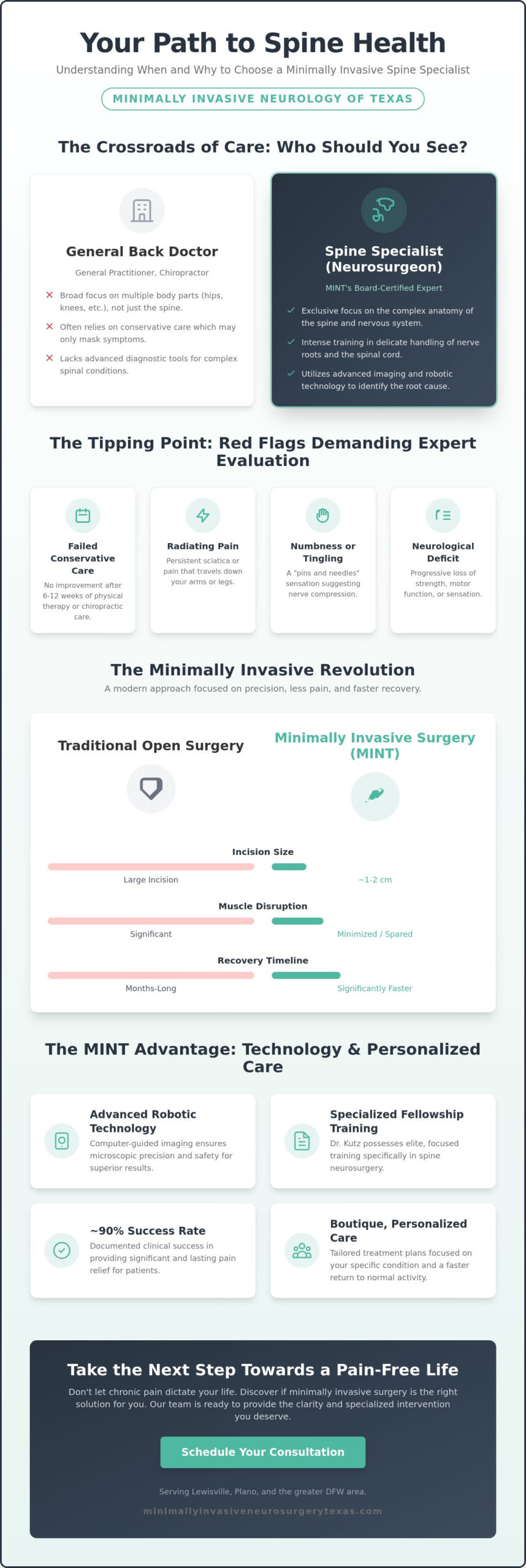
Knowing when to escalate your care is essential. Red flags include persistent sciatica, radiating limb pain, or a sudden loss of motor function. These symptoms suggest that a nerve is severely compromised. General practitioners often lack the advanced diagnostic tools to pinpoint conditions like neural foraminal stenosis or severe degenerative disc disease. A spine specialist uses advanced imaging to create a clear roadmap for recovery. If conservative treatments have failed to provide relief after six weeks, it’s time to seek an expert’s opinion. We provide the clarity and specialized intervention necessary to stop the progression of spinal damage.
When to See a Spine Specialist in Lewisville or Plano
Living with chronic back pain is exhausting. Many patients in Lewisville and Plano spend months cycling through physical therapy or chiropractic adjustments without lasting relief. While these methods are excellent first steps, there’s a clear tipping point where conservative management is no longer sufficient. Choosing a local spine specialist ensures you have a partner for the long-term journey of recovery. This proximity provides essential continuity of care from the initial diagnostic MRI through to post-operative follow-ups.
Symptoms That Demand Expert Evaluation
Certain physical signals indicate your spinal condition has progressed beyond simple muscle strain. Persistent numbness or a “pins and needles” sensation in your arms or legs suggests nerve compression that requires precise decompression. You might notice pain that sharpens with specific movements; this often points to mechanical instability within the vertebral segments. A progressive neurological deficit is a measurable loss of strength or sensation that worsens over time and serves as a critical trigger for an immediate specialist consultation.
The Failure of Conservative Management
Standard medical protocols typically suggest a 6 to 12 week window for conservative care. If you haven’t seen improvement within this timeframe, continuing the same path often leads to diminishing returns and unnecessary suffering. Many patients feel trapped in a cycle of “pain management” that merely masks symptoms with medication or temporary fixes. A spine specialist identifies the root cause of your condition by utilizing advanced imaging and specific questions to ask when selecting a surgeon. This shift moves you from a state of concern to a state of informed confidence.
The transition to specialized care involves a sophisticated diagnostic journey. It begins with a detailed review of your medical history and a physical exam. Unlike a generalist, a neurosurgical expert interprets high-resolution imaging through the lens of surgical precision. They identify subtle issues like neural foraminal stenosis that others might miss. This specialized planning is what allows for the high success rates associated with back surgery at MINT. We focus on delivering a clear diagnosis so you can make an educated decision about your health. Our goal is to provide the relief of suffering and a clear path toward a return to normal activity.
The Minimally Invasive Revolution: Precision Over Invasiveness
Traditional “open” back surgery once required long incisions that necessitated stripping muscle away from the bone. This trauma often led to significant blood loss and extended hospital stays. Today, a specialized spine specialist utilizes techniques that prioritize the preservation of healthy tissue. Minimally invasive methods achieve the same clinical goals as traditional surgery but through incisions often no larger than a postage stamp. It’s a fundamental shift from aggressive intervention to surgical precision.
By using tubular retractors, our surgical team creates a small tunnel to the spine. This avoids cutting through major muscle groups. The result is a dramatic reduction in post-operative pain and a decreased risk of infection. For those requiring structural stabilization, minimally invasive spinal fusion Texas provides a sophisticated solution that allows for a much faster return to normal activity. We don’t just treat the condition; we protect your anatomy.
Endoscopic Spine Surgery: The Gold Standard
The “keyhole” approach represents the pinnacle of modern neurosurgical precision. We use high-definition endoscopes to visualize the surgical field with incredible clarity. This technique is ideal for Plano residents who need to return to high-pressure careers and active hobbies without the burden of a six-month recovery. Unlike traditional laminectomies, endoscopic decompression focuses solely on the problematic tissue. This specificity preserves the structural integrity of the spine. Research indicates that endoscopic lumbar procedures boast a patient satisfaction rate of approximately 93.8 percent, reflecting the efficacy of this high-tech approach.
Motion Preservation and Artificial Disc Replacement
For many years, spinal fusion was the only answer for degenerative disc disease. While fusion is effective for stability, it permanently limits the range of motion in the treated segment. Artificial Disc Replacement (ADR) offers a revolutionary alternative by mimicking the natural biomechanics of a healthy disc. This motion preservation technique reduces the stress on adjacent spinal levels, potentially preventing future issues. It’s about maintaining your body’s natural flow.
Active patients often find that neck disk replacement is the superior choice for maintaining neck flexibility and athletic performance. The biomechanical advantages are clear. Preserving natural movement allows the spine to function as it was intended. By 2026, these advanced technologies have become the preferred standard for those who refuse to let chronic pain dictate their lifestyle. We utilize these proprietary systems to ensure your recovery is as efficient as the surgery itself.
Choosing the Right Specialist: A Checklist for Patients
Selecting the right spine specialist requires looking beyond a doctor’s years of experience or local reputation. You must verify board certification and specific fellowship training in neurosurgical spine care. These credentials ensure the practitioner has met rigorous national standards for safety and expertise. Don’t hesitate to ask about their clinical outcomes during your initial visit. A top-tier surgeon will be transparent about their infection rates and re-operation rates. These metrics provide an objective look at surgical safety and the likelihood of a successful long-term outcome. Transparency is a hallmark of professional excellence and builds the foundation of trust necessary for a surgical partnership.
Essential Questions to Ask During Your Consultation
A consultation is your opportunity to interview the surgeon. You are the manager of your healthcare journey, and your surgeon should be your most trusted advisor. Use these specific questions to gauge their expertise and their commitment to your recovery:
- “How many of these specific minimally invasive procedures have you performed in the last year?”
- “What is the expected recovery timeline for someone with my specific activity level and health history?”
- “Are there motion-preserving, non-fusion options like artificial disc replacement available for my condition?”
Evaluating Practice Technology and Innovation
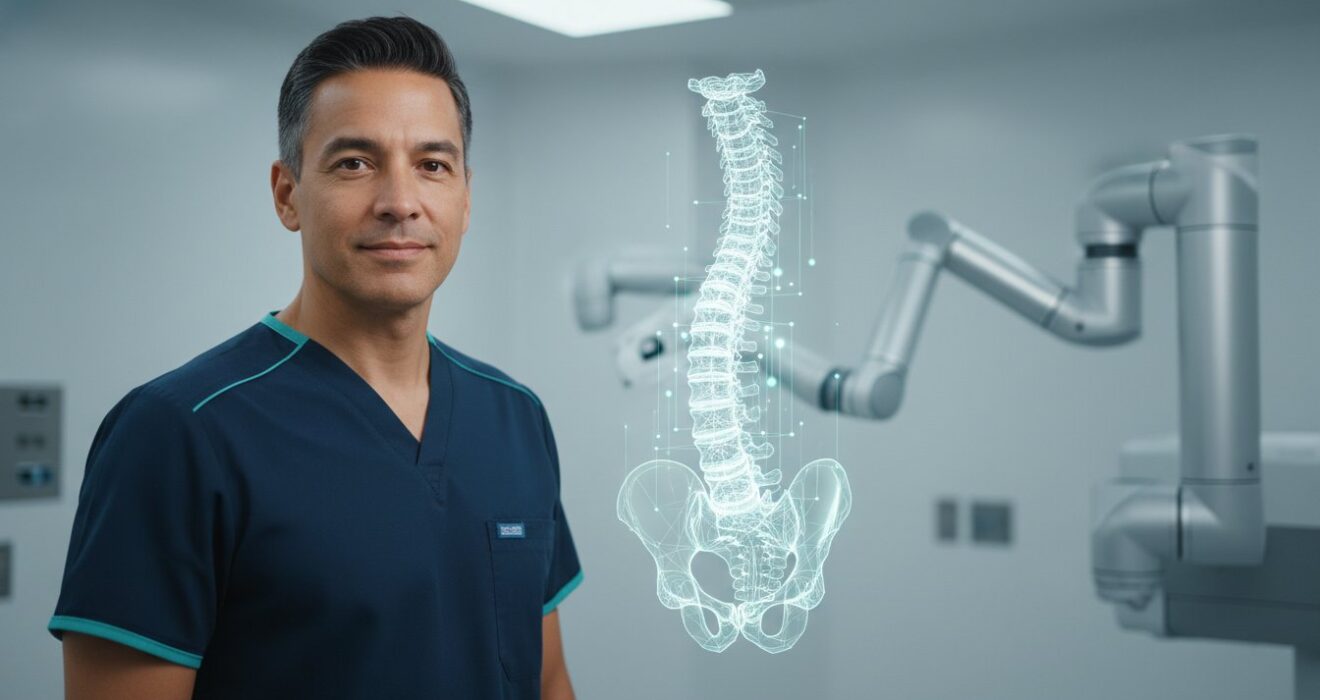
The tools a surgeon uses are a direct reflection of their commitment to precision. Robotic assistance systems, such as the Globus Excelsius, are markers of a practice operating at the absolute forefront of modern surgical innovation. This technology allows for sub-millimeter accuracy during the placement of hardware and the decompression of nerve roots. Additionally, the integration of Augmented Reality (AR) provides the surgeon with a high-definition, 3D map of your unique anatomy in real-time. These high-tech systems are not just for show. They significantly reduce the time a patient spends under anesthesia and minimize the overall physical impact of the procedure. This is essential for patients who fear long recovery times or have had failed conservative treatments in the past.
Your comfort level with the surgeon’s communication style is just as important as their technical skill. Look for a practice that balances clinical authority with compassionate reassurance. You should feel like a person, not a case number in a large hospital system. Our boutique approach ensures that your concerns are addressed with personal attention. If you’re ready to partner with a team that prioritizes both technical excellence and your personal quality of life, schedule a consultation for back surgery with our experts today. We are dedicated to your return to normal activity through the highest standard of care.
MINT: Leading Spine Care in Lewisville and Plano
Minimally Invasive Neurosurgery of Texas (MINT) provides a distinct alternative to the impersonal nature of large hospital systems. Dr. Scott Kutz, a board-certified neurosurgeon and dedicated spine specialist, leads a team focused exclusively on the complex health of the vertebral column. Since relocating our main office to 1850 Lakepointe Drive, Suite 500, in Lewisville on January 1, 2026, we’ve enhanced our ability to serve North Texas with world-class facilities. We combine high-stakes technical excellence with a warm, patient-centered emotional style. This boutique approach ensures that your health is always the top priority.
The High-Tech Healer Persona
Dr. Kutz operates as a high-tech healer, merging years of surgical mastery with the absolute forefront of modern innovation. Our practice utilizes proprietary technological systems, including robotic navigation and Augmented Reality (AR), to achieve sub-millimeter precision. These tools allow us to tackle the most challenging cases, such as failed back surgery syndrome, with a level of accuracy that was previously impossible. We prioritize the relief of suffering by using minimally invasive neurosurgery to protect your anatomy while resolving the root cause of your pain. This commitment to modern methodology is why we are a trusted destination for patients who have exhausted other options.
Your Path to Recovery Starts Here
The journey to a pain-free life begins with an efficient, results-oriented diagnostic process. Because we focus exclusively on spinal health, our expertise is deep and specialized. We don’t divide our attention between different orthopedic sub-specialties. This singular focus is what allows us to maintain a 90 percent success rate for many of our minimally invasive procedures. We understand the fear of long recovery times and the frustration of persistent sciatica. Our goal is to move you through a logical narrative of recovery and progress.
Scheduling your initial evaluation is the first step toward a successful return to normal activity. Our offices in Lewisville and Plano are designed to provide world-class care right in your community. You don’t have to travel far to access the latest endoscopic and robotic technologies. If you’re ready for a clear diagnosis and a faster return to the hobbies you love, contact MINT today. Discover how our specialized approach to back surgery can provide the long-term relief you’ve been seeking.
Reclaim Your Mobility and Quality of Life
Living with chronic spinal pain is a burden that no one should carry indefinitely. You now understand that a board-certified spine specialist offers a level of precision that generalists simply cannot match. By choosing a neurosurgeon like Dr. Scott Kutz, you’re opting for a high-tech healer who prioritizes your long-term health and a successful return to normal activity. Our practice utilizes the Globus Excelsius Robotic Navigation system to ensure surgical accuracy that was once thought impossible. Whether you require endoscopic spine surgery or a motion-preserving artificial disc replacement, we have the specialized expertise to resolve your condition with minimal impact on your body.
The path to lasting relief is built on trust and advanced innovation. We invite you to move from a state of concern to a state of informed confidence. Don’t let another day pass in discomfort when world-class care is available right here in Lewisville and Plano. Schedule Your Consultation with MINT Today and take the first step toward a future without physical limitations. Your recovery is our highest priority.
Frequently Asked Questions
What is the difference between an orthopedic spine surgeon and a neurosurgeon?
Neurosurgeons undergo specialized training that focuses on the delicate handling of the brain, spinal cord, and nerve roots. While both can become a spine specialist, a neurosurgeon’s expertise is rooted in the intricate nervous system. This background is particularly vital for complex decompressions and procedures where protecting the neural pathways is the primary concern.
When should I see a spine specialist for my back pain?
You should seek an expert evaluation if your pain persists for more than six weeks despite conservative care. Seek immediate attention if you experience neurological symptoms like radiating limb pain, numbness, or weakness. These signs suggest that the underlying condition requires specialized intervention to prevent permanent nerve damage and restore your quality of life.
Does a spine specialist always recommend surgery?
Surgery is rarely the first option unless a patient presents with a critical neurological emergency. A specialist first confirms your diagnosis through advanced imaging and a thorough review of your treatment history. Many patients find relief through non-surgical paths, and we only suggest a procedure when those methods fail to provide a return to normal activity.
How long is the recovery after minimally invasive spine surgery?
Recovery timelines depend on the specific procedure, but most patients return to light activities within two to four weeks. Minimally invasive techniques reduce tissue trauma, which significantly shortens the healing process compared to traditional open surgery. Many of our patients are back to their daily routines much faster than they originally anticipated.
What is the most advanced technology used by spine specialists today?
The current gold standard involves robotic navigation systems and high-definition endoscopic cameras. These tools provide sub-millimeter precision and real-time 3D visualization of your unique anatomy. This technology allows a spine specialist to use smaller incisions, which reduces time under anesthesia and leads to higher success rates for complex conditions.
Can a spine specialist help with failed back surgery from another doctor?
Yes, we specialize in treating “Failed Back Surgery Syndrome” by identifying the specific anatomical reasons for a previous procedure’s outcome. We use advanced diagnostic imaging to determine if there is adjacent segment disease or incomplete decompression. Our team then develops a targeted plan to resolve the pain and restore your mobility through specialized revision techniques.
Do I need a referral to see a spine specialist in Plano or Lewisville?
Referral requirements depend entirely on your specific insurance provider’s policies. While many PPO plans allow you to schedule a consultation directly, some HMO plans require a primary care physician’s referral first. We recommend checking your benefits or contacting our office so we can help you determine the necessary steps for your initial visit.
Is minimally invasive surgery safer than traditional open back surgery?
Minimally invasive procedures generally carry lower risks of infection and blood loss because they involve smaller incisions and less muscle disruption. Research shows a 90.4 percent success rate for certain endoscopic procedures in providing pain relief. While all surgery carries some risk, these modern techniques are designed to maximize safety and improve clinical outcomes.