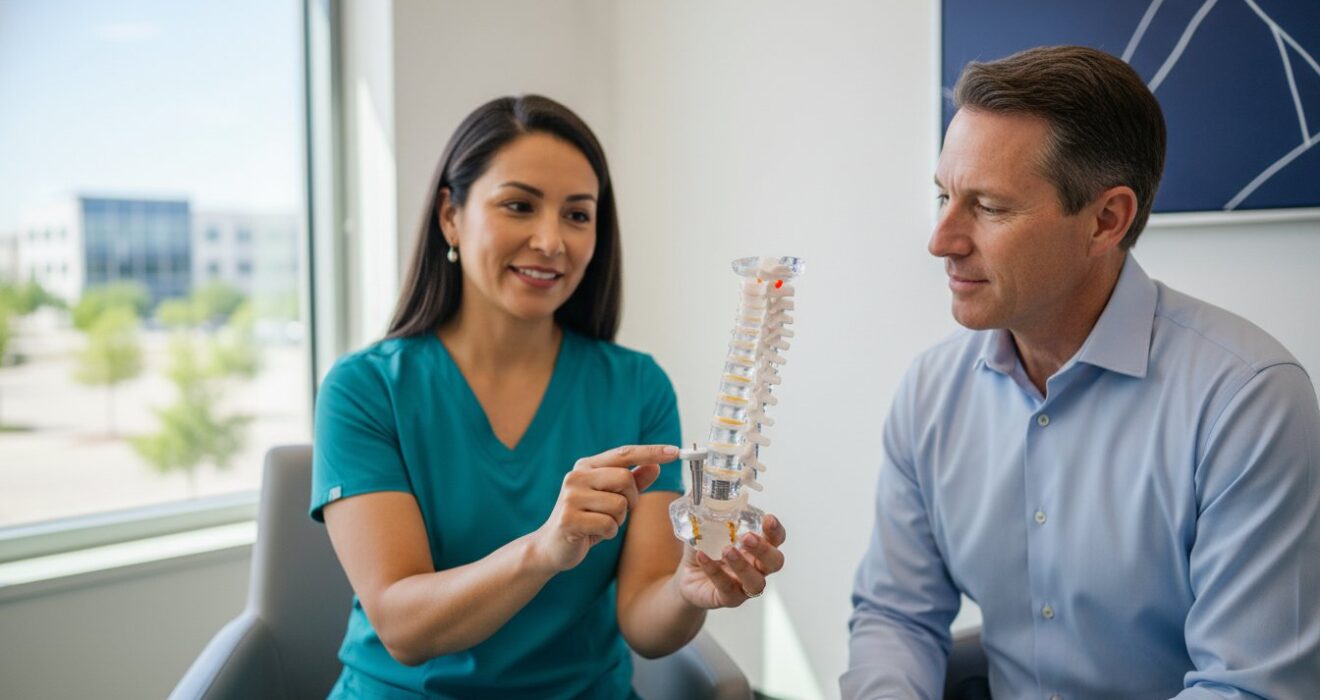
Did you know that the newest generation of motion-preserving spinal technology now boasts an 87.1% composite success rate for patients seeking relief from chronic pain? If you’re struggling with radiating arm pain or the fear that a traditional fusion might leave you with a permanently stiff neck, you’re not alone. It’s natural to feel anxious about long recovery times and lost mobility when considering surgery. You deserve a solution that restores your health without compromising your ability to move freely.
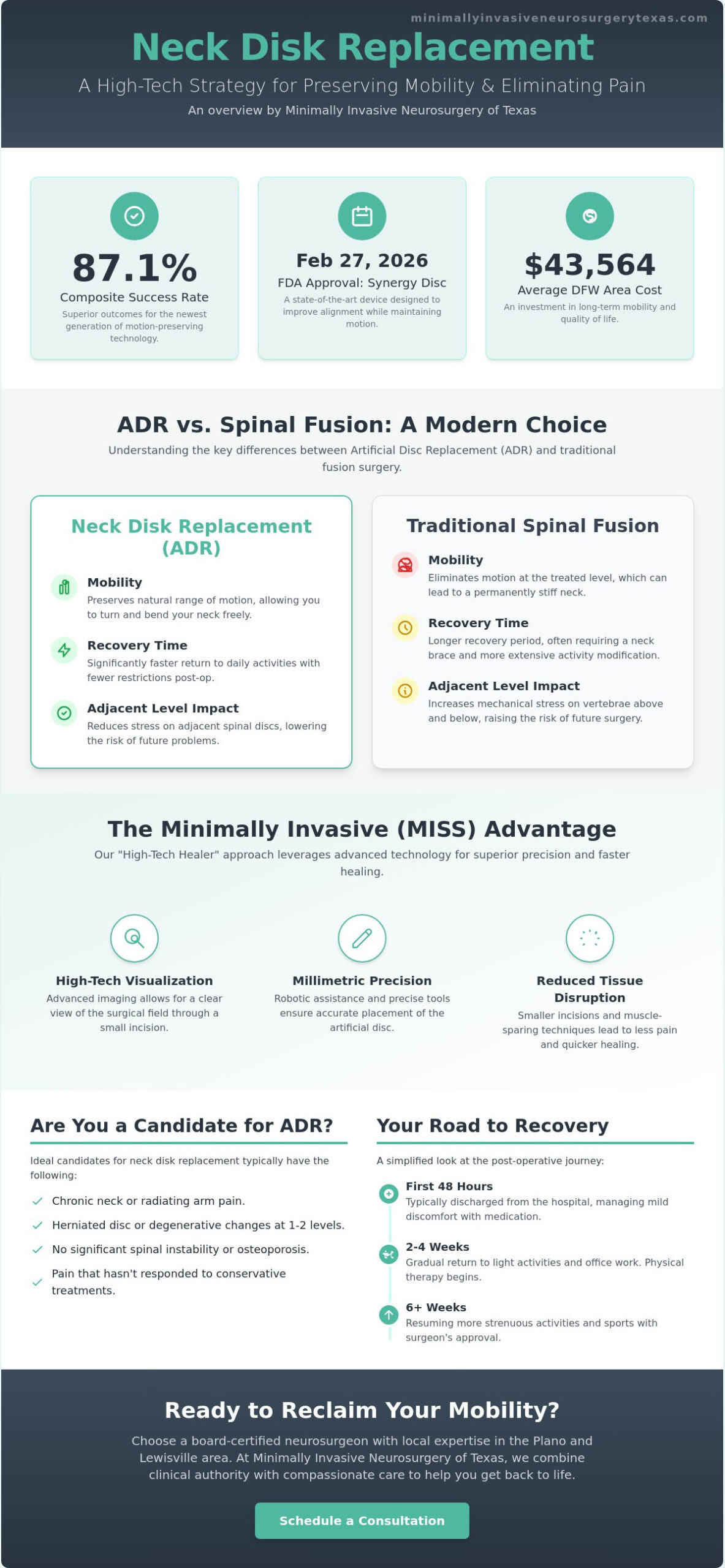
This comprehensive guide explores how neck disk replacement serves as a high-tech strategy to preserve your future mobility through minimally invasive precision. We’ll detail the February 27, 2026, FDA approval of the Synergy Disc, which is specifically designed to improve spinal alignment while maintaining motion. You’ll also find essential data on the $43,564 average cost for this procedure in the Dallas and Fort Worth area. We’ll preview how our specialized approach to Minimally Invasive Spine Surgery (MISS) helps you bypass the limitations of traditional open surgery. Discover how you can eliminate pain, maintain a full range of motion, and get back to life with the precision of modern neurosurgical innovation.
Key Takeaways
- Understand why neck disk replacement is the preferred motion-preserving alternative to traditional spinal fusion for maintaining your natural range of motion.
- Identify the specific clinical symptoms and diagnostic criteria that determine if you are a candidate for advanced cervical artificial disc replacement.
- Learn how Minimally Invasive Spine Surgery (MISS) techniques utilize high-tech visualization to ensure millimetric precision and significantly faster recovery times.
- Explore the typical post-operative roadmap, including what to expect during the first 48 hours and how to safely return to your favorite activities.
- Discover the essential credentials and local expertise required to choose the best board-certified neurosurgeon in the Plano and Lewisville area.
Understanding Neck Disk Replacement: A Modern Solution for Chronic Pain
The evolution of spinal care has reached a pivotal moment in 2026. For years, the medical community relied on spinal fusion to stabilize the neck, but this often came at the cost of the patient’s natural range of motion. Today, neck disk replacement represents a superior alternative that prioritizes the preservation of your neck’s natural biomechanics. This modern approach addresses the root cause of chronic pain, such as herniated discs or bone spurs, without the need for rigid stabilization that can limit your daily activities. By choosing a motion-preserving strategy, you’re investing in the long-term health of your entire spine rather than just addressing a single painful level.
What is Cervical Artificial Disc Replacement (ADR)?
Cervical artificial disc replacement involves the surgical removal of a diseased spinal disc and the insertion of a prosthetic device designed to mimic natural movement. This procedure is a cornerstone of Total disc replacement technology, which has seen rapid advancement with the FDA approval of the Synergy Disc on February 27, 2026. Cervical artificial disc replacement serves as a high-tech shock absorber that restores proper spacing between vertebrae to alleviate nerve compression. By clearing the path for your nerves, we can effectively eliminate the radiating pain, tingling, and weakness that often travel down the arms. Unlike older methods, this prosthetic is engineered to maintain the natural height and alignment of your spine with millimetric precision.
Why Motion Preservation Matters for Your Quality of Life
Choosing a motion-preserving solution is about more than just avoiding a “stiff neck” sensation. It is a strategic decision to protect the long-term health of your cervical vertebrae. When a segment of the neck is fused, the levels above and below must work harder to compensate for the lost mobility. This often leads to adjacent segment disease, where those neighboring discs wear out prematurely. By maintaining a full range of motion, ADR ensures that mechanical stress is distributed evenly across the spine. We encourage patients to review the details of their cervical spine anatomy to understand how these moving parts work in harmony to support your head and facilitate movement.
At Minimally Invasive Neurosurgery of Texas, we utilize MISS (Minimally Invasive Spine Surgery) techniques to perform neck disk replacement with world-class accuracy. This “High-Tech Healer” approach means smaller incisions, less disruption to your neck muscles, and a much faster timeline to get back to life. Recent clinical studies show that patients receiving these advanced discs achieve an 87.1% success rate, which is superior to traditional fusion outcomes. Our focus is on providing the clinical authority and compassionate reassurance you need to move toward a pain-free future with absolute confidence.
Candidacy: Is Neck Disk Replacement Right for You?
Deciding on a surgical path requires a clear understanding of your diagnostic profile. While neck disk replacement offers life-changing benefits, it isn’t the universal answer for every patient. The 2026 standards for candidate selection focus on identifying individuals who will benefit most from motion preservation. Ideal candidates typically present with a herniated disc or degenerative changes at one or two levels. This selection process is vital because the goal is to ensure the prosthetic device functions harmoniously with your existing bone structure.
ADR vs. Spinal Fusion: Comparing Your Options
The choice between artificial disc replacement (ADR) and spinal fusion often comes down to your long-term mobility goals. Traditional fusion eliminates movement at the affected segment to provide stability. In contrast, ADR maintains that movement, which significantly reduces the risk of adjacent segment disease. Research published in the Journal of Neurosurgery indicates that ADR provides higher quality-adjusted life years at a lower cost over 20 years compared to fusion. Patients often choose ADR because it allows for a faster return to daily activities with fewer restrictions. For patients who do require stabilization, understanding the advances in minimally invasive spinal fusion Texas specialists now offer can help you make a fully informed comparison between your surgical options. You can learn more about the technical nuances of Cervical Disk Replacement Surgery to see how these devices are integrated into the spine.
Identifying the Signs of Degenerative Disc Disease
Surgical intervention becomes a primary consideration when conservative therapies, such as six weeks of physical therapy or targeted injections, fail to resolve symptoms. You should look for specific red flags that indicate nerve or spinal cord compression:
- Persistent radiating pain that travels from the neck down into the shoulder or arm.
- Numbness or a “pins and needles” sensation in the fingers and hands.
- Muscle weakness that affects your grip strength or fine motor skills.
We use high-resolution MRI and CT scans to confirm these findings. These imaging tools allow us to visualize the exact millimetric space available for your nerves. If you’re experiencing these symptoms, it’s time to consult with a specialist to determine your eligibility for advanced motion-preserving care.
Contraindications do exist. Patients with severe osteoporosis, active spinal infections, or advanced facet joint degeneration may not be suitable for neck disk replacement. In these cases, the bone may not be strong enough to support the prosthetic device. A thorough multi-level assessment ensures we don’t overlook secondary issues that might compromise the surgical outcome. Published clinical studies from specialized surgical centers in the Plano area show a low 1.48% revision rate for these procedures, proving that careful candidate selection leads to exceptional long-term success. Our focus is to provide the clinical authority you need to move toward a future where you can truly get back to life.
The Minimally Invasive Advantage in Cervical Surgery
Traditional open-neck surgery often requires large incisions and significant muscle retraction, which leads to increased trauma and extended hospital stays. At Minimally Invasive Neurosurgery of Texas, we’ve moved beyond these outdated methods. Our “MINT” philosophy focuses on treating the individual patient rather than just an MRI image. We utilize neck disk replacement through Minimally Invasive Spine Surgery (MISS) to achieve outcomes that were once impossible. This approach is characterized by precision, safety, and a commitment to helping you get back to life as quickly as possible. By minimizing the surgical footprint, we protect the healthy tissue surrounding your spine.
Robotic Precision and AR in the Operating Room
The standard of care in 2026 demands more than just a steady hand. We employ world-class systems like Globus Excelsius and Augmedics to map your unique spinal anatomy in real-time. Augmented Reality (AR) allows our surgeons to visualize the internal structures of your neck through a digital overlay, providing a level of insight that traditional visualization cannot match. For a clinical perspective on these advancements, you can review this in-depth overview of cervical disc replacement. Robotic navigation ensures perfect prosthetic placement by guiding every movement with millimetric accuracy, eliminating the guesswork associated with older techniques. This technology is a hallmark of the High-Tech Healer, ensuring that your new disc is positioned for optimal motion preservation from day one.
Reducing Tissue Damage and Accelerating Healing
Traditional surgeries often involve cutting through or detaching vital neck muscles to reach the spine. Our specialized MISS techniques are muscle-sparing, meaning we gently dilate the tissue instead of tearing it. This results in significantly less blood loss and a lower risk of post-operative infection. Because we minimize the surgical footprint, many patients now undergo neck disk replacement as an outpatient procedure, staying in the facility for 23 hours or less before discharge. This shift toward minimally invasive neurosurgery has redefined the standard for spine care in the DFW metroplex. Smaller incisions don’t just look better; they heal faster. By preserving the integrity of your neck’s supporting structures, we facilitate a recovery process that focuses on strength and flexibility rather than long-term wound management.
Clinical studies on devices like the Synergy Disc, which received FDA approval on February 27, 2026, show an 87.1% composite success rate. This high rate of success is directly linked to the precision of modern MISS techniques. When the surgery is less invasive, the body’s natural healing response is more efficient. You aren’t just recovering from a procedure; you’re moving toward a future where your neck moves naturally and without pain. Our goal is to provide a seamless transition from diagnosis to recovery, ensuring that your health remains our top priority throughout your journey.
The Road to Recovery: Getting Back to Life in North Texas
Recovery following a neck disk replacement is designed to be as efficient as the surgery itself. Because we utilize muscle-sparing MISS techniques, your body doesn’t have to overcome the trauma of large incisions or detached ligaments. Most patients in our Plano and Lewisville facilities find they can return home within 23 hours of their procedure. This rapid transition is a direct result of our commitment to precision technology, which ensures that the surrounding soft tissues remain largely undisturbed during the implantation of your prosthetic disc. Our goal is to move you from a state of chronic pain to active recovery without the setbacks of traditional open surgery.
Immediate Post-Operative Expectations
In the first 24 to 48 hours, the focus is on early mobility. We encourage you to start walking shortly after the anesthesia wears off to promote circulation and prevent stiffness. You’ll likely experience some mild soreness at the incision site, but this is typically managed with standard medication rather than the heavy narcotics required for fusion patients. During this initial phase, we recommend a few simple restrictions to protect your progress:
- Avoid lifting objects heavier than 10 pounds for the first two weeks.
- Refrain from driving until you have full range of motion and are no longer taking pain medication.
- Keep the small incision site clean and dry according to our specific post-op instructions.
By the end of the first week, many patients in the DFW metroplex find they can return to light desk work and daily household activities. The absence of a rigid neck brace, which is often mandatory after fusion, allows you to maintain a sense of normalcy and independence almost immediately.
Long-Term Benefits and Mobility Gains
The true advantage of neck disk replacement becomes clear as you move into the second month of recovery. Clinical data from the Synergy Disc study shows that 91.7% of patients experience a clinically meaningful improvement on the Neck Disability Index within 24 months. Unlike fusion, which permanently limits movement, an artificial disc allows you to regain your natural range of motion. This means you can return to the golf course, enjoy family outings, and perform your job without the “stiff neck” sensation that often follows older surgical methods. We use follow-up imaging at scheduled intervals to ensure the prosthetic is settling perfectly and that your spinal alignment is optimal. If you are ready to reclaim your active lifestyle, contact our team today to begin your personalized recovery roadmap.
Your long-term success is our top priority. As the weeks progress, the radiating nerve pain that once hindered your daily life typically resolves completely. Because the artificial disc preserves the biomechanics of your spine, you’re also protecting the neighboring discs from premature wear. This proactive approach to spinal health ensures that you don’t just feel better today, but you stay active and mobile for years to come. We’re here to guide you through every step of this journey, providing the clinical authority and compassionate reassurance you need to get back to life.
Finding the Best Neck Disk Replacement Surgeon in Plano and Lewisville
Selecting a specialist for neck disk replacement is a decision that impacts your mobility for decades. While the technology is world-class, the outcome depends on the surgeon’s ability to integrate that technology into your unique anatomy with absolute certainty. In North Texas, specifically within the Plano and Lewisville areas, having a local surgeon means your post-operative imaging and follow-up care are managed by the same team that performed the procedure. This continuity of care is vital for monitoring how the prosthetic settles and ensuring your recovery stays on track. You deserve a partner in your healthcare journey who is as invested in your long-term success as you are.
Why Board Certification and Specialization Matter
Not all spine surgeons possess the same level of training in motion-preservation technology. A board-certified neurosurgeon like Dr. Scott Kutz brings a specialized understanding of the delicate neural structures within the cervical spine. When evaluating a provider, you should ask specific questions about their experience with Artificial Disc Replacement (ADR). Inquire about the volume of procedures they perform annually and their familiarity with the latest 2026 FDA-approved devices like the Synergy Disc. A surgeon who stays at the absolute forefront of MISS technology will prioritize techniques that minimize blood loss and maximize your long-term range of motion. Choosing a specialist with a low revision rate, such as the 1.48% rate seen in elite North Texas practices, provides the peace of mind necessary for a successful outcome.
The MINT Approach: Compassionate, High-Tech Care
Minimally Invasive Neurosurgery of Texas operates as a specialized, boutique surgical center. We avoid the cold, impersonal atmosphere of a large hospital system to provide a more patient-centered emotional style. Our team treats the individual, not just the image on an MRI. This means your diagnostic journey is personalized to address your specific pain points and lifestyle goals. Whether you’re visiting our Plano or Lewisville location, you’ll receive the high-tech precision of a world-class facility with the personal attention of a dedicated local physician. We believe that trust is the foundation of the healing process, and we work tirelessly to earn that trust through clinical excellence and compassionate reassurance.
We utilize advanced robotic navigation and augmented reality to ensure that every neck disk replacement is executed with millimetric accuracy. This High-Tech Healer persona is rooted in professional excellence and a commitment to helping you get back to life. If you’re tired of living with chronic radiating pain or the fear of a stiff neck after surgery, it’s time to seek a specialist who prioritizes your future mobility. We invite you to schedule a consultation at our North Texas offices to discover if cervical artificial disc replacement is the right solution for your recovery journey. Your health is our top priority, and we’re here to help you enjoy every single day of your life without the burden of chronic pain.
Take the Next Step Toward a Pain-Free Future
Embracing the future of spinal care means choosing a path that restores your natural range of motion rather than limiting it. You now understand how neck disk replacement serves as a superior, motion-preserving alternative to traditional fusion, especially with the 87.1% success rates demonstrated by the latest 2026 technology. By prioritizing millimetric precision through specialized MISS techniques, you can avoid the stiff neck sensation and significantly reduce your recovery time. Our approach ensures your spine remains healthy and flexible for years to come.
Our team at Minimally Invasive Neurosurgery of Texas combines world-class innovation with the personal attention of a local boutique practice. Board-Certified Neurosurgeon Dr. Scott Kutz and our specialists utilize the Globus Excelsius Robotic Navigation system to ensure every procedure meets the highest standards of safety and accuracy. With convenient locations in both Plano and Lewisville, expert care is accessible right here in the DFW metroplex. It’s time to stop letting chronic pain dictate your daily activities and start your journey toward recovery.
Schedule Your Consultation with Dr. Scott Kutz Today and discover how our high-tech approach can help you get back to life. You deserve to enjoy every single day with the freedom and comfort you’ve been missing.
Frequently Asked Questions
Is neck disk replacement safer than spinal fusion?
Both procedures are established as safe; however, motion preservation offers a distinct advantage in preventing future complications. While fusion creates a rigid segment, neck disk replacement allows the spine to move naturally, which significantly lowers the risk of adjacent level breakdown. Local clinical data indicates that patients who choose ADR experience fewer long-term secondary procedures, making it a protective choice for your overall spinal health.
How long does the artificial neck disk last?
These devices are constructed from high-strength medical alloys and specialized plastics designed to last several decades. Laboratory testing often simulates more than 40 years of constant movement without structural failure. Because these prosthetics are engineered to mimic the natural disc’s shock-absorbing properties, they maintain their integrity even under the demands of an active lifestyle in North Texas.
What is the typical recovery time for a cervical disk replacement?
Most patients are able to return home within 23 hours of their procedure and resume light activities almost immediately. You can typically return to a professional office environment within 7 to 10 days. This accelerated timeline is possible because our MISS techniques avoid the extensive muscle damage associated with traditional open surgery, allowing your body to focus its energy on healing the specific surgical site.
Will I need to wear a neck brace after the procedure?
Unlike fusion patients who may require weeks of immobilization, most ADR patients don’t need a rigid neck brace. Because the goal of the procedure is to maintain motion, we encourage gentle movement shortly after surgery. We may provide a soft collar for comfort during your initial commute home, but the strength of your natural neck musculature is usually sufficient for support during the healing process.
Can I have a neck disk replacement if I’ve already had a fusion?
Yes, it’s often possible to perform a “hybrid” procedure where an artificial disc is placed at a level adjacent to a previous fusion. This is a common strategy for treating adjacent segment disease, which occurs when a fused level puts too much stress on the neighboring discs. We evaluate these cases individually to ensure the bone quality is sufficient to support the new prosthetic device.
What happens if the artificial disk fails or wears out?
In the rare event of an implant issue, the device can be surgically revised or converted to a traditional fusion. Modern implants have extremely low failure rates, but if a problem arises, our surgeons use high-tech visualization to address the hardware with minimal impact on the surrounding tissue. The transition to a secondary solution is a standard neurosurgical process designed to ensure your long-term stability and pain relief.
Does insurance typically cover cervical artificial disc replacement in Texas?
Most major commercial insurance carriers in Texas cover neck disk replacement if you meet specific medical criteria, such as a diagnosis of degenerative disc disease and the failure of six weeks of conservative care. Medicare coverage varies but is often available for patients under age 60 who meet local coverage determinations. We recommend a detailed benefits review to understand your specific out-of-pocket responsibilities before scheduling your surgery.
How soon can I return to exercise after neck disk replacement?
You’ll be encouraged to walk for exercise the same day as your surgery. Light activities like swimming or using an elliptical are often approved after your initial two-week follow-up appointment. For high-impact sports like tennis or golf, most patients are cleared to return within 6 weeks, provided that follow-up imaging confirms the prosthetic is perfectly integrated and the surgical site is fully stabilized. Understanding how many cervical vertebrae are there and how each one contributes to your range of motion can help you appreciate why preserving this structure through ADR leads to such a successful return to an active lifestyle.